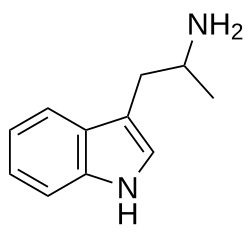
Alpha-methyltryptamine (aMT or AMT) is a synthetic tryptamine with a methyl group attached to the alpha carbon of the ethylamine side chain. Unlike many simple tryptamines, it has both stimulant and hallucinogenic properties. It was investigated as an antidepressant in the 1960s, but its development was abandoned after concerns about toxicity and psychosis. Later reports of non-medical use include serious intoxications and fatalities.
Chemistry and early development
AMT is 2-(1H-indol-3-yl)-1-methylethanamine. It has a primary amine and an asymmetric alpha carbon, so R- and S-enantiomers exist. The compound was developed by the Upjohn Company and marketed in the 1960s under the name Indopan in some countries. It was subsequently withdrawn after its adverse psychiatric and physical effects became a concern.
The World Health Organization reviewed AMT in 2014 and noted its clandestine manufacture, lack of recognised therapeutic use and reports of serious harm. The review recommended continued surveillance rather than international scheduling at that time (WHO critical review of alpha-methyltryptamine, 2014).
Pharmacology
AMT has a mixed monoaminergic profile. It interacts with serotonin receptors and inhibits the reuptake of serotonin, dopamine and norepinephrine. It also inhibits monoamine oxidase, particularly MAO-A, and has been described as a monoamine-releasing agent in experimental systems. This combination helps explain why its effects extend beyond those associated with many unsubstituted psychedelic tryptamines.
The DEA’s 2025 review describes AMT as a central nervous system stimulant with hallucinogenic properties. It also summarises animal evidence of locomotor stimulation and interactions with serotonin and dopamine systems (DEA drug and chemical evaluation: AMT, 2025).
Reported effects and adverse reactions
Human reports describe perceptual changes and hallucinations alongside stimulation. The clinical record also includes restlessness, irritability, muscle tension, insomnia, nausea and vomiting. Physical findings reported in toxicological sources include increased heart rate and blood pressure, dilated pupils, sweating and impaired coordination.
Because AMT also affects monoamine metabolism, its adverse effects can extend beyond those usually associated with classic psychedelics. Severe agitation, hyperthermia and cardiovascular complications are concerns in reported intoxications.
Clinical and forensic findings
The WHO review noted fatal intoxications involving AMT, although other drugs were present in some cases. The DEA’s 2025 fact sheet also summarises emergency-department admissions and a reported death associated with AMT. These records raise serious toxicological concerns, but mixed exposures make it difficult to attribute every symptom or outcome to AMT alone.
Dependence and research limitations
The WHO review found no formal studies of AMT dependence potential in humans or animals. Its long-term effects are also poorly characterised. Although historical clinical investigations and modern forensic reports provide more information than exists for many newer tryptamines, they do not establish a comprehensive modern safety profile.
Related tryptamines
AMT is related to 5-MeO-AMT, alpha-ethyltryptamine (AET) and other alpha-substituted tryptamines. The alpha-methyl group and primary amine give it a pharmacological profile that differs from simple N,N-dialkyltryptamines such as DET and DPT.