Empathogens
Drugs described as empathogens are described in terms of changes in social and emotional experience: closeness, openness or a different sense of how one relates to others. Entactogen is another term used in much the same area of psychopharmacology. Neither word describes a chemical structure, and neither is a promise about what a compound will do to a particular person.
MDMA is the familiar reference point, though comparisons with it can be misleading. Benzofurans, aminoindanes and substituted phenethylamines appear in related research and market histories. They do not all have the same molecular targets, clinical evidence or toxicological profile. The distinctions become clearer when those families are considered separately.
What Does “Empathogen” Actually Mean?
Empathogen emphasizes effects described as increased empathy; entactogen emphasizes an inward sense of emotional contact. The terms describe experience; they identify neither a receptor mechanism nor a recognized class of treatments. In a directory, these terms group related literature without providing a biological definition.
Controlled work with MDMA has explored emotional processing, social responses and several physiological effects. Its actions involve monoamine transporters and the release of serotonin, noradrenaline and dopamine, though not to the same extent. Calling it merely ‘serotonergic’ misses much of the mechanism. A clinical review of MDMA’s pharmacology and adverse effects discusses both the observed effects and the substantial complications that can occur.
Effects and chemistry are two different maps
Chemical structure and reported experience line up only partly. Related molecules may feel quite different, while unrelated structures can influence some of the same neurotransmitter systems. A name placed under ’empathogens’ is therefore a starting point for questions about mechanism and evidence—not a reliable description of the experience it produces.
Three Groups Covered on This Site
Benzofurans
The benzofuran category includes 5-APB, 6-APB, 5-MAPB and 6-APDB. Several members have been studied for activity at serotonin, dopamine and noradrenaline transporters and at serotonin receptors. These overlapping activities invite comparison, but the findings still need to be assessed for each compound.
One comparative study of psychoactive benzofurans found 5-HT2B receptor activity among the benzofurans tested. The result has attracted attention because sustained activation of this receptor is implicated in drug-related valvular heart disease. It does not establish that every benzofuran causes that outcome in humans, or tell us how likely it is after any particular exposure. That longer-term question remains unsettled.
The MDxx directory
The directory’s MDxx Family section includes MDAI, although it belongs to a different chemical family. MDAI is an aminoindane, not a methylenedioxyamphetamine. It appears in the same broader discussion because of historical and pharmacological comparisons, not because it has the same scaffold as MDMA.
A small human-volunteer study investigated acute effects of MDAI and compared the findings with previously reported MDMA data. Those observations are useful, although the small study cannot support broad conclusions. In particular, it cannot establish long-term safety or clinical effectiveness by analogy.
Empathogenic phenethylamines
The empathogenic phenethylamines category includes PMA and PMMA. Their presence in an empathogen-related directory must not obscure the clinical evidence: both are associated with severe poisoning, including dangerous hyperthermia and serotonergic complications. They are not straightforward variants of MDMA from a toxicological standpoint.
How Entactogenic Effects Are Studied
Researchers study monoamine release and reuptake, receptor activity and—in human studies—changes in mood, social perception and physiology. Each method examines a different aspect of the response. Transporter activity can suggest why a compound might have certain effects; it cannot, by itself, demonstrate empathy or predict how people will respond in a clinical setting.
There is no simple biological readout for ‘feeling close to other people’. Even careful human experiments have to address expectation, context, blinding and how subjective outcomes are measured. Neurotransmitter measurements in cell cultures are even further removed from interpersonal experience. Claims about poorly studied compounds often skip over that gap.
What receptor data cannot tell us
Suppose a new substance affects the serotonin transporter in vitro. The observation is worth reporting, but it says little on its own about absorption, active metabolites, cardiovascular strain or the full time course in humans. Work on different MDMA enantiomers also illustrates how different molecular forms can behave differently even under controlled study conditions.
Health Risks Beyond the Subjective Experience
Medical concerns depend on the compound and the circumstances. Excessive serotonergic activity can contribute to serotonin toxicity, particularly with other serotonergic agents. Severe intoxication may also involve overheating, cardiovascular stress, seizures or disturbances in fluid and electrolyte balance. A positive emotional experience, if reported, provides no protection against those physiological effects.
A compound may feel only mildly stimulating while still producing dangerous physiological changes, or its effects may emerge later than expected. The documented poisonings involving PMA and PMMA are a strong reason to separate subjective impressions from clinical risk.
Evidence for many newer entactogens is thin: animal or cell studies may be available, but controlled human studies often are not. The safety guide explains why mixed exposures and uncertain product identity can make the available clinical evidence hard to interpret.
Identity, Purity, and the Problem of Assumptions
A commercial name or an account of effects cannot confirm chemical identity. Forensic laboratories use separation methods, mass spectrometry and appropriate reference information to determine what a sample contains. Even after identifying the principal ingredient, unanswered questions may remain about additional compounds and the significance of the exposure.
A certificate of analysis may document a sample’s composition, but it should not be read as a clinical endorsement. The quality standards guide describes the separate questions of identity, purity, and evidence of safety.
Clinical Research and Legal Status
MDMA-assisted psychotherapy has generated a substantial clinical literature, but the research was conducted under defined conditions with a specific drug. Those findings do not establish clinical benefits or safety for a benzofuran or an aminoindane. The wider review of psychedelic medicine and MDMA research discusses the strengths and limitations of that evidence. A research study is not a regulatory approval.
Legal treatment also varies by compound and jurisdiction. Some substances are specifically scheduled; related analogues may be covered by generic or analogue laws. For terminology and regulation, see Research Chemical Legality or the larger Research Chemicals guide.
Frequently Asked Questions
Is an empathogen a chemical class?
No. It is principally an effect-based term. The category includes compounds from different structural families that do not necessarily share the same complete pharmacology.
Are empathogens the same as stimulants?
Not exactly. There is overlap, especially because several entactogens affect monoamines and can produce sympathetic activation. But the terms emphasize different features, and neither predicts all of a compound’s effects.
Does a resemblance to MDMA establish comparable safety?
No. Similar subjective reports or transmitter activity are not enough to establish comparable metabolism, cardiovascular effects, or longer-term outcomes.
Why are PMA and PMMA included if they are particularly hazardous?
They appear in a historical and chemical discussion of substituted phenethylamines associated with entactogen markets. Their inclusion is not an endorsement or a claim that they behave like MDMA.
The evidence reviewed here provides scientific context, not treatment recommendations or guidance on consumption.
Showing all 7 results
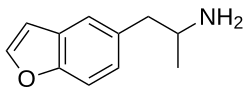
5-APB
Price range: $520.00 through $8,900.00Select options This product has multiple variants. The options may be chosen on the product page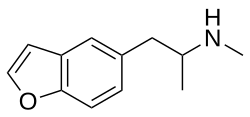
5-MAPB
Price range: $520.00 through $8,900.00Select options This product has multiple variants. The options may be chosen on the product page
6-APB
Price range: $520.00 through $8,900.00Select options This product has multiple variants. The options may be chosen on the product page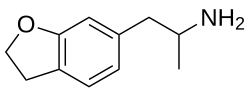
6-APDB
Price range: $520.00 through $8,900.00Select options This product has multiple variants. The options may be chosen on the product page
MDAI
Price range: $520.00 through $8,900.00Select options This product has multiple variants. The options may be chosen on the product pagePMA
Price range: $350.00 through $2,745.00Select options This product has multiple variants. The options may be chosen on the product pagePMMA
Price range: $350.00 through $2,745.00Select options This product has multiple variants. The options may be chosen on the product page