Tryptamines
Tryptamines are a broad chemical family, not a synonym for one particular psychedelic. The structure appears in naturally occurring compounds, neurotransmitters and a range of synthetic molecules. Serotonin itself is a tryptamine, as are psilocin and DMT. In research-chemical discussions, the name usually refers to psychedelic derivatives, but the family is much wider than that subset.
This page focuses on psychedelic tryptamines and their pharmacology. They form one of the main branches of the psychedelics category, alongside lysergamides and phenethylamines.
The Tryptamine Structure
A tryptamine contains an indole ring connected to an ethylamine side chain. The indole system consists of a benzene ring fused to a five-membered nitrogen-containing ring. Different substitutions on the ring or amine produce a large number of derivatives, and those changes can affect receptor activity, metabolism and duration.
The connection to serotonin is also relevant to their pharmacology. Serotonin is 5-hydroxytryptamine, an endogenous signalling molecule with roles in mood, sleep, appetite and sensory processing. Many psychedelic tryptamines interact with serotonin receptors, but they do not all have the same receptor profile or pharmacological effects.
Naturally Occurring and Synthetic Tryptamines
Psilocybin and psilocin
Psilocybin occurs in several mushroom species. After it enters the body, it is dephosphorylated to psilocin, which is the principal active metabolite responsible for its psychedelic effects. Psilocin interacts with several serotonin receptors, with 5-HT2A activity playing a central role in the characteristic changes in perception and cognition.
Their metabolic relationship matters when interpreting measurements. A study that measures psilocybin in a sample is not measuring the same thing as one that measures circulating psilocin. Their concentrations change over time, and the analytical method must be appropriate to the question being asked.
DMT and related compounds
N,N-dimethyltryptamine (DMT) is found in a range of plants and other natural sources. It is rapidly metabolised, in large part by monoamine oxidase A, which helps explain why its effects and pharmacokinetics differ from those of psilocybin or LSD. In traditional ayahuasca preparations, beta-carboline alkaloids inhibit MAO-A and alter the metabolism of DMT. That interaction is pharmacologically important and should not be treated as a property of DMT alone.
5-MeO-DMT is another naturally occurring tryptamine, but its receptor profile differs from that of DMT. It has substantial activity at 5-HT1A as well as 5-HT2A receptors. Similar names do not mean that the two compounds have identical effects or safety considerations.
Synthetic and substituted tryptamines
Research-chemical directories include compounds such as 4-AcO-DMT and other 4- or 5-substituted tryptamines. Some are structurally related to naturally occurring molecules; others have additional substitutions on the amine side chain. The UNODC overview of tryptamines reported as new psychoactive substances lists compounds including 5-MeO-DMT, 5-MeO-DPT, AMT and 4-AcO-DMT.
4-AcO-DMT is often discussed in relation to psilocin because of its structural similarity. However, the extent and importance of its conversion in humans are not as well established as the conversion of psilocybin to psilocin. The extent of this conversion in humans therefore remains uncertain.
How Tryptamines Interact With Serotonin Receptors
Many psychedelic tryptamines act at 5-HT2A receptors, but their activity is not limited to this subtype. Depending on the molecule, 5-HT1A and 5-HT2C receptors may also be involved. Some tryptamines also act at other targets, and this can contribute to effects that do not fit neatly into a simple psychedelic description.
Binding affinity, receptor efficacy and functional selectivity are separate measurements. Two tryptamines can bind to the same receptor but activate it to different degrees or produce different downstream signalling. Metabolism introduces further differences: an active metabolite may contribute to the observed effects, while rapid enzyme breakdown can shorten exposure to the parent compound.
What the Evidence Can and Cannot Tell Us
Psilocybin and DMT have been studied more extensively than many synthetic tryptamines, although the amount and type of evidence still differ between them. For newer derivatives, published information may consist of receptor assays, animal studies, forensic detections or isolated clinical cases. That is enough to identify questions for further research, but often not enough to describe a reliable human dose-response relationship or long-term risk profile.
The UNODC review of tryptamine-related NPS notes that toxicological studies remain limited for several compounds. Clinical reports have described agitation, restlessness, gastrointestinal symptoms and muscle tension with some substituted tryptamines; severe cases and fatalities have also appeared in the literature. Such reports should be read as signals of potential harm, not as a complete estimate of risk.
Adverse Effects and Interactions
Acute effects can include changes in perception, anxiety, confusion, nausea, agitation and increases in heart rate or blood pressure. The pattern depends on the compound and the circumstances. Some substituted tryptamines have been associated with severe agitation, seizures, hyperthermia or muscle injury in case reports. A compound’s membership in the tryptamine family does not make it equivalent to psilocybin.
Drug interactions also depend on the specific molecule. Tryptamines that influence serotonin signalling may interact with other serotonergic substances, while DMT’s metabolism through MAO-A creates a different set of considerations from compounds that are cleared by other pathways. Without compound-specific data, broad claims about interactions should be treated cautiously.
Analytical Identification
LC-MS/MS and high-resolution mass spectrometry are important tools for identifying tryptamines in biological samples and seized materials. Isomeric compounds may require additional separation or structural confirmation. A test that detects one member of the group may not detect another, and an immunoassay designed for common drugs is not a comprehensive screen for novel tryptamines.
Analytical confirmation establishes what was detected under the method’s conditions. It does not automatically determine purity, concentration throughout a sample or the likely clinical outcome of an exposure. Those are separate questions that require additional evidence.
Frequently Asked Questions
Is serotonin a tryptamine?
Yes. Serotonin is 5-hydroxytryptamine, an endogenous tryptamine neurotransmitter. The psychedelic tryptamines are a smaller subset of the wider chemical family.
Are psilocybin and psilocin the same compound?
No. Psilocybin is converted in the body to psilocin. Psilocin is the principal active metabolite associated with the psychedelic effects.
Are synthetic tryptamines as well studied as psilocybin?
Generally not. Many have limited human evidence and are known mainly through laboratory studies, toxicology reports or case literature.
Showing 1–16 of 78 results
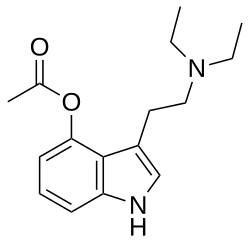
4-AcO-DET freebase
Price range: $370.00 through $1,980.00Select options This product has multiple variants. The options may be chosen on the product page
4-AcO-DET fumarate
Price range: $350.00 through $1,950.00Select options This product has multiple variants. The options may be chosen on the product page4-AcO-DiPT freebase
Price range: $370.00 through $1,980.00Select options This product has multiple variants. The options may be chosen on the product page4-AcO-DiPT fumarate
Price range: $350.00 through $1,950.00Select options This product has multiple variants. The options may be chosen on the product page4-AcO-DMT freebase
Price range: $370.00 through $1,980.00Select options This product has multiple variants. The options may be chosen on the product page4-AcO-DMT fumarate
Price range: $350.00 through $1,950.00Select options This product has multiple variants. The options may be chosen on the product page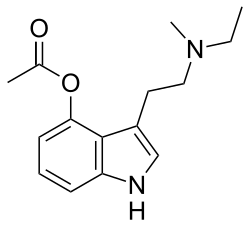
4-AcO-MET freebase
Price range: $370.00 through $1,980.00Select options This product has multiple variants. The options may be chosen on the product page4-AcO-MET fumarate
Price range: $350.00 through $1,950.00Select options This product has multiple variants. The options may be chosen on the product page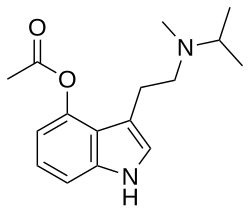
4-AcO-MiPT freebase
Price range: $370.00 through $1,980.00Select options This product has multiple variants. The options may be chosen on the product page4-AcO-MiPT fumarate
Price range: $350.00 through $1,950.00Select options This product has multiple variants. The options may be chosen on the product page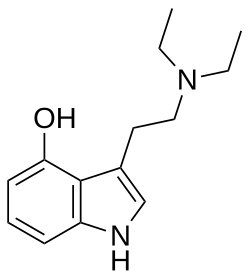
4-HO-DET freebase
Price range: $370.00 through $1,980.00Select options This product has multiple variants. The options may be chosen on the product page4-HO-DET fumarate
Price range: $350.00 through $1,950.00Select options This product has multiple variants. The options may be chosen on the product page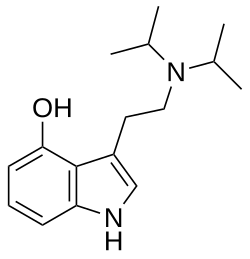
4-HO-DiPT freebase
Price range: $370.00 through $1,980.00Select options This product has multiple variants. The options may be chosen on the product page4-HO-DiPT fumarate
Price range: $350.00 through $1,950.00Select options This product has multiple variants. The options may be chosen on the product page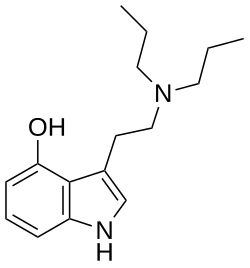
4-HO-DPT freebase
Price range: $370.00 through $1,980.00Select options This product has multiple variants. The options may be chosen on the product page4-HO-DPT fumarate
Price range: $350.00 through $1,950.00Select options This product has multiple variants. The options may be chosen on the product page