Phenidates
Methylphenidate is familiar from clinical medicine, particularly its use in treating attention-deficit/hyperactivity disorder (ADHD) and, in some settings, narcolepsy. The wider group of phenidates includes methylphenidate and a number of related compounds that have appeared in research-chemical discussions. Their shared name can make them sound more alike than the evidence warrants.
Phenidates differ from amphetamines in both structure and pharmacology. Methylphenidate is generally described as a dopamine and noradrenaline reuptake inhibitor, whereas many amphetamines act as transporter substrates and promote neurotransmitter release. The stimulants section covers phenidates alongside amphetamines, cathinones and phenmetrazines.
A piperidine-based structure
Methylphenidate contains a piperidine ring connected to an aromatic ring through an ester-containing side chain. This arrangement differs from the phenethylamine backbone found in amphetamine, even though both can increase dopamine and noradrenaline signalling. Changes to the ester group, aromatic ring or other parts of the molecule give rise to related phenidates.
Examples discussed in the literature include ethylphenidate, isopropylphenidate, methylnaphthidate and fluorinated analogues such as 4F-MPH and 4F-EPH. 3,4-CTMP is another related compound, but it should not be treated as pharmacologically identical to methylphenidate. Sharing part of a scaffold does not establish the same potency, duration or clinical effects.
Reuptake inhibition, rather than release
Methylphenidate acts mainly at the dopamine transporter (DAT) and noradrenaline transporter (NET). These proteins normally clear neurotransmitters from the synaptic space. When their activity is blocked, dopamine and noradrenaline remain available for longer and signalling in the relevant neural circuits changes.
Amphetamine reaches a similar broad outcome by a different route. It can enter nerve terminals and promote monoamine release, while methylphenidate is generally characterised as a reuptake inhibitor. The review The pharmacology of amphetamine and methylphenidate compares these mechanisms and explains why the distinction matters in clinical pharmacology.
The comparison becomes less reliable when extended to newer analogues. A fluorine substitution or a change to the ester group may alter transporter affinity, selectivity or metabolism. For many research-chemical phenidates, the available evidence consists mainly of in-vitro assays and animal work, not controlled studies in people.
Why methylphenidate is not a stand-in for every analogue
Methylphenidate has been studied and used clinically for decades. Its therapeutic use is supported by a substantial body of evidence. Most unapproved phenidate analogues lack a comparable body of clinical research. A close chemical relationship may help researchers decide what to investigate, but it cannot establish that an analogue has the same efficacy, adverse-effect profile or suitability for medical use.
Some analogues appear in forensic or toxicological reports, but the human record is often sparse. Transporter data can describe one part of a compound’s likely action; they cannot show how it behaves across different individuals, how it is metabolised in a clinical setting or what repeated exposure might mean over time.
Adverse effects and interactions
Stimulant effects associated with phenidates may include increased alertness and reduced fatigue. Unwanted effects can include insomnia, anxiety, restlessness, appetite suppression, a faster heart rate and raised blood pressure. More serious complications, including agitation, psychotic symptoms, arrhythmias and seizures, have also been reported in stimulant toxicity.
Other medicines and substances can change the overall response. Combining phenidates with additional stimulants may increase cardiovascular strain, while pharmacodynamic or metabolic interactions can make the effects harder to interpret. There is also the basic uncertainty of product identity: a label does not prove that a sample contains the stated analogue.
Testing and the gaps in current research
GC-MS and LC-MS/MS are commonly used to identify phenidates and their metabolites. High-resolution mass spectrometry can help characterise unfamiliar compounds, and NMR may be useful when more detailed structural confirmation is needed. Closely related analogues can require validated separation methods and reference standards.
For many members of this group, the missing evidence extends well beyond receptor or transporter binding. Better information is needed about metabolism, active metabolites, pharmacokinetics and clinically relevant adverse outcomes. Until those data are available, methylphenidate’s clinical history should not be used as a proxy for the safety of its analogues.
Questions about phenidates
Are phenidates amphetamines?
No. They can produce stimulant effects, but their structures differ. Methylphenidate is piperidine-based and is generally described as a DAT and NET reuptake inhibitor.
What does methylphenidate research tell us about 4F-MPH?
It offers a point of comparison, not a substitute for compound-specific evidence. The fluorinated analogue needs its own pharmacological, metabolic and toxicological assessment.
Showing all 6 results
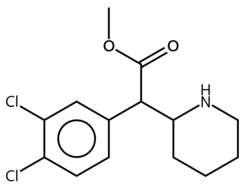
3,4-CTMP
Price range: $460.00 through $8,900.00Select options This product has multiple variants. The options may be chosen on the product page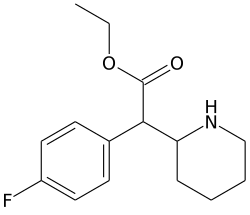
4F-EPH
Price range: $460.00 through $8,900.00Select options This product has multiple variants. The options may be chosen on the product page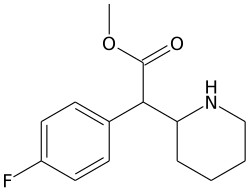
4F-MPH
Price range: $460.00 through $8,900.00Select options This product has multiple variants. The options may be chosen on the product page
Ethylphenidate
Price range: $460.00 through $8,900.00Select options This product has multiple variants. The options may be chosen on the product pageIsopropylphenidate
Price range: $460.00 through $8,900.00Select options This product has multiple variants. The options may be chosen on the product pageMethylnaphthidate
Price range: $460.00 through $8,900.00Select options This product has multiple variants. The options may be chosen on the product page