Benzofurans
Chemists can describe a benzofuran ring quite simply: a benzene ring fused to a five-membered ring containing oxygen. The biological effects of a particular benzofuran are much harder to summarize. Several psychoactive derivatives have been studied because of their effects on monoamine systems also involved in MDMA pharmacology. Shared activity makes the comparison worthwhile, provided each molecule is examined on its own.
The parent empathogens category groups these drugs partly by their reported effects. This page follows their chemistry, with particular attention to 5-APB, 6-APB, 5-MAPB and 6-APDB. Comparing them does not mean that findings for one compound apply to the others.
Where Psychoactive Benzofurans Fit Chemically
Among the benzofuran-related compounds investigated as NPS are aminoalkylbenzofurans and related derivatives. The position of a side chain, or whether part of the ring has been chemically reduced, helps determine the name. In names such as 5-APB and 6-APB, the number identifies the attachment position, which can change activity at receptors and transporters.
Other changes are less obvious to a non-chemist. A dihydrobenzofuran differs from an unsaturated benzofuran, and modifications to an amino group can matter as well. These features may influence metabolism and transporter activity. They help describe the structure but do not allow potency or safety to be inferred directly from a name.
Why 5-APB and 6-APB are studied together
5-APB and 6-APB are close enough structurally that scientists have tested them side by side. Transporter and serotonin-receptor experiments reveal areas of overlap, but also differences. Where a finding comes from only one of the two isomers, assigning it to the other would go beyond the evidence.
Related compounds do not have identical evidence bases
The directory also contains 5-MAPB and 6-APDB. These compounds illustrate a common difficulty with emerging-drug literature: frequently cited experiments may have included some related substances but not every analogue later discussed online. The 2015 comparative work examined several APB and APDB compounds; it was not a full survey of all subsequent benzofurans.
A 2023 study of drug discrimination and movement in animals provides a different kind of comparison. In animal experiments, 6-APB, 5-MAPB and 5-APDB showed differing stimulant-like responses alongside certain MDMA-like discriminative-stimulus properties. These findings describe behavior in those animal models rather than human emotional experience, and they indicate pharmacological differences between the three substances.
Monoamine Transporters and Serotonin Receptors
Serotonin, dopamine and noradrenaline transporters regulate how much of each transmitter remains available for signaling. Some benzofurans can inhibit uptake or promote release in laboratory systems. Those results help explain why the compounds attract interest in stimulant and entactogen research. They still leave open questions about the effects of metabolism and the concentrations reached in people.
In a comparative pharmacological study, Rickli and colleagues tested selected benzofurans in human transporter-expressing cells and serotonin-receptor assays. Their results generally showed stronger inhibition of noradrenaline and serotonin uptake than of dopamine uptake, with differences between the compounds examined. The study therefore found no single pattern of activity that fully described all the compounds tested.
The 5-HT2B finding and what it does not prove
Several tested compounds activated 5-HT2B receptors. Because sustained activity at this receptor has been associated with drug-induced heart-valve disease, the result deserves attention. It is a warning signal for further study, not proof that every benzofuran produces valve damage in people. Assessing human risk requires information about exposure and other evidence that an in-vitro assay alone cannot provide.
This leaves a question for longer-term research: whether, and under what conditions, the receptor activity translates into clinical harm.
What Is Known About Human Effects?
For most research benzofurans, controlled human evidence is scarce. Reports from non-clinical settings can be difficult to interpret, particularly when chemical identity was never confirmed or another drug was involved. Descriptions of emotional openness or stimulation may suggest questions to investigate, but leave clinical safety largely unaddressed.
Potential complications involving serotonergic and sympathetic activity include hyperthermia, agitation, raised heart rate or blood pressure, and interactions with other monoaminergic drugs. The likelihood and severity cannot be assumed equal across analogues. The research chemical safety guide addresses the additional uncertainty created by combination exposures.
How to read a case report
A case report captures a particular patient’s circumstances and sometimes includes valuable analytical confirmation. It cannot always isolate the contribution of a single compound, and the cases most likely to reach publication are often the most serious. Such reports document possible harm, but without knowing how many people were exposed, researchers cannot use them to calculate population risk.
A published fatal co-intoxication involving 5-MAPB and alpha-methyltryptamine illustrates the attribution problem when multiple substances are present. Both substances must be considered. Separating their individual physiological contributions may nevertheless be impossible, even when the clinical outcome is well documented.
Laboratory Identification and Structural Questions
Benzofuran identification typically involves chromatographic methods and mass spectrometry. Positional isomers and unfamiliar derivatives may require reference materials or additional structural work before the laboratory can be confident. Neither appearance nor a familiar product name provides that confirmation.
The COA guide covers what a laboratory report can support. Even high-quality identification and purity results do not establish how a compound is metabolized, its toxicity, or its long-term effects.
How Benzofurans Relate to Other Empathogens
Comparisons with MDMA are understandable because monoamine systems overlap. They become misleading when similar transporter findings are presented as equivalent clinical profiles. The MDxx Family section discusses methylenedioxy-related chemistry, including the aminoindane MDAI; the empathogenic phenethylamines section covers PMA and PMMA, where severe toxicity is particularly well documented. The evidence for each group has to be read on its own terms.
Legal rules also vary across compounds and countries. For the general principles, see Research Chemical Legality.
Frequently Asked Questions
Is 6-APB the same substance as 5-APB?
No. They are related positional isomers, not interchangeable names. Their similarities warrant comparison, but measured findings for one should not automatically be assigned to the other.
Do benzofurans work exactly like MDMA?
No. Several show overlapping monoamine transporter activity, but their receptor profiles and metabolic behavior can differ. Similarities in laboratory tests do not prove identical human effects.
Does 5-HT2B receptor activity mean heart-valve damage is inevitable?
No. It identifies a mechanistic concern linked to valvular disease under certain conditions. The risk for a specific compound and exposure pattern requires further evidence.
Are all benzofurans equally well studied?
Far from it. The available evidence differs among analogues and types of study. When reading a claim, check whether the named compound was actually tested.
This article summarizes research findings and unresolved questions. It does not establish that benzofuran exposure is safe or offer advice about consumption.
Showing all 4 results
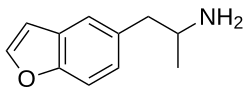
5-APB
Price range: $520.00 through $8,900.00Select options This product has multiple variants. The options may be chosen on the product page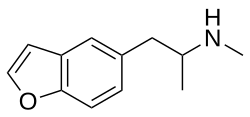
5-MAPB
Price range: $520.00 through $8,900.00Select options This product has multiple variants. The options may be chosen on the product page
6-APB
Price range: $520.00 through $8,900.00Select options This product has multiple variants. The options may be chosen on the product page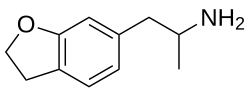
6-APDB
Price range: $520.00 through $8,900.00Select options This product has multiple variants. The options may be chosen on the product page