Lysergamides
LSD is often treated as the reference point for psychedelic research, but it is not the only lysergamide that has appeared in scientific literature or drug-monitoring reports. Over the years, chemists have described a number of related compounds, some with changes to the indole nitrogen and others with modifications to the amide portion of the molecule. Even differences that look small on a structural diagram need to be tested for their pharmacological consequences.
Lysergamides sit within the broader psychedelics category. Their defining feature is the ergoline-derived lysergic acid framework, which distinguishes them from the simpler tryptamines and the phenethylamines.
The Lysergamide Structure
Lysergic acid is a complex natural-product scaffold associated with ergot alkaloids. LSD, or lysergic acid diethylamide, combines this framework with a diethylamide group. The molecule has several fused rings and stereochemical features that are important to its biological activity. A change at one position can affect how it binds to serotonin receptors, how it is metabolised, or how confidently an analytical laboratory can distinguish it from a related compound.
The UNODC overview of lysergamides describes the group as derivatives of lysergide and lists compounds reported to its Early Warning Advisory, including ALD-52, 1P-LSD, 1cP-LSD, 1B-LSD, 1V-LSD and LSZ. The list is useful for understanding the range of structures being monitored; it does not imply that every listed compound has been studied to the same depth.
How LSD Analogues Differ
N1-acyl derivatives
Some analogues carry an acyl group on the indole nitrogen. Examples include ALD-52 and 1P-LSD, with related compounds such as 1B-LSD and 1cP-LSD. In these molecules, the added group changes the structure at the N1 position. Laboratory work has examined whether enzymes in human serum and liver can remove the acyl group, potentially forming LSD.
The evidence is more specific for some compounds than for others. A small human pharmacokinetic study of 1P-LSD reported that LSD, rather than the parent compound, was detected in serum and urine after administration to two volunteers. The authors discussed the findings as support for conversion to LSD, although the very small sample limits what the result can tell us about the wider population. The published 1P-LSD pharmacokinetic study supports a possible mechanism while leaving much of the human pharmacology unresolved.
Work on several 1-acyl lysergamides has also found deacylation in human serum or liver preparations. That is evidence of a possible metabolic pathway, not proof that all analogues are converted at the same rate or to the same extent. The research on 1-acyl-substituted lysergamides discusses the limits of what can be inferred from these experiments.
Changes to the amide group
Other lysergamides differ at the amide end of the molecule rather than through an N1-acyl substitution. LSZ, for example, has a dimethylazetidide group. These changes can alter receptor interactions and pharmacological activity in ways that are not captured by the phrase “LSD analogue”. A compound may share the core scaffold while differing in potency, receptor profile or metabolism.
Pharmacology and the Serotonin System
LSD and related lysergamides interact with several serotonin receptor subtypes. The 5-HT2A receptor is especially important to the characteristic psychedelic effects, although 5-HT1A and other targets can contribute to the overall pharmacological profile. Researchers also study how a ligand activates intracellular signalling pathways after binding. Two molecules with similar affinity can produce different functional responses.
That distinction is relevant when interpreting data from receptor-binding screens. A low binding constant does not, by itself, tell us how much a compound activates a receptor in a living brain, how long the effect lasts, or what adverse effects may occur. Animal behavioural models can add information, but they do not replace controlled human research.
Duration, Metabolism and the Limits of Comparison
LSD is known for a relatively long period of action compared with several other classical psychedelics. Whether its analogues follow the same time course needs to be established with pharmacokinetic data. A small structural change can affect absorption, enzyme recognition, active metabolites and elimination. For some newer lysergamides, those properties have not been adequately studied in humans.
Metabolism can also complicate interpretation. If a compound is converted to LSD, observed effects may reflect both the original molecule and the metabolite. A laboratory assay that detects only one of them may therefore give an incomplete picture. Studies need validated methods capable of distinguishing closely related compounds and relevant metabolites.
Analytical Identification
Lysergamides can be difficult to identify when only a small sample is available or when the compounds differ by subtle structural changes. LC-MS/MS and high-resolution mass spectrometry are commonly used in forensic analysis, while NMR can provide complementary structural information when enough material is available. Reference standards are important, especially for distinguishing isomers and confirming a proposed structure.
A sample’s appearance is not a reliable guide to its contents. Blotter paper, pellets and powders can contain different substances or mixtures, and the label supplied with a sample may be inaccurate. A confirmed identity also says nothing by itself about concentration or purity.
Risks and the State of the Evidence
For LSD, there is a substantial body of controlled human research compared with most newly encountered lysergamides. For many analogues, the literature is still dominated by chemical analysis, receptor assays, animal work and isolated clinical or forensic reports. With such uneven evidence, neither a familiar name nor structural resemblance reliably predicts how a compound will behave.
Acute psychedelic effects can include anxiety, confusion, impaired judgement and distressing changes in perception. Physical effects may include increases in heart rate or blood pressure. The severity and pattern depend on the compound and circumstances. The absence of published case reports for a newly identified analogue should not be read as evidence that adverse effects do not occur.
Legal Context
International and national controls do not always move at the same pace. Some lysergamides are specifically named in legislation; others may be covered by analogue provisions or broader substance definitions. UNODC monitoring lists are not legal advice, and the status of a compound should be checked against current law in the relevant jurisdiction.
Frequently Asked Questions
Are all lysergamides prodrugs for LSD?
No. Evidence supports conversion to LSD for some N1-acyl derivatives, but it cannot be generalised to every lysergamide. Compounds such as LSZ differ at another part of the structure and should be considered separately.
Does a similar structure mean similar effects?
Not necessarily. Structural resemblance can suggest which experiments are worth doing, but receptor activity, metabolism and human effects must be established for each compound.
Is 1P-LSD as well studied as LSD?
No. There is a small human pharmacokinetic study and supporting laboratory research, but the evidence base is much narrower than the one available for LSD.
Showing 1–16 of 66 results
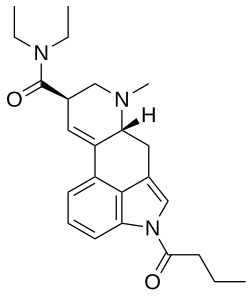
1B-LSD blotters
Price range: $400.00 through $2,000.00Select options This product has multiple variants. The options may be chosen on the product page1B-LSD liquid
Price range: $390.00 through $2,745.00Select options This product has multiple variants. The options may be chosen on the product page1B-LSD pellets
Price range: $450.00 through $2,790.00Select options This product has multiple variants. The options may be chosen on the product page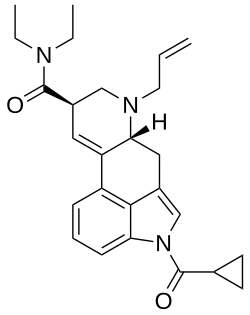
1cP-AL-LAD blotters
Price range: $400.00 through $2,000.00Select options This product has multiple variants. The options may be chosen on the product page1cP-AL-LAD liquid
Price range: $390.00 through $2,745.00Select options This product has multiple variants. The options may be chosen on the product page1cP-AL-LAD pellets
Price range: $450.00 through $2,790.00Select options This product has multiple variants. The options may be chosen on the product page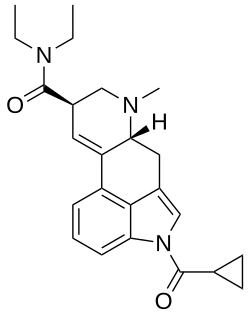
1cP-LSD blotters
Price range: $400.00 through $2,000.00Select options This product has multiple variants. The options may be chosen on the product page1cP-LSD liquid
Price range: $390.00 through $2,745.00Select options This product has multiple variants. The options may be chosen on the product page1cP-LSD pellets
Price range: $450.00 through $2,790.00Select options This product has multiple variants. The options may be chosen on the product page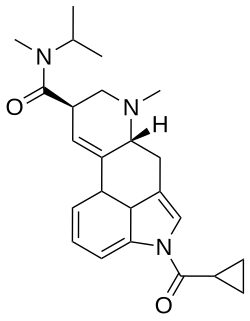
1cP-MiPLA blotters
Price range: $400.00 through $2,000.00Select options This product has multiple variants. The options may be chosen on the product page1cP-MiPLA liquid
Price range: $390.00 through $2,745.00Select options This product has multiple variants. The options may be chosen on the product page1cP-MiPLA pellets
Price range: $450.00 through $2,790.00Select options This product has multiple variants. The options may be chosen on the product page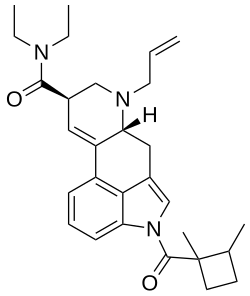
1D-AL-LAD blotters
Price range: $400.00 through $2,000.00Select options This product has multiple variants. The options may be chosen on the product page1D-AL-LAD liquid
Price range: $390.00 through $2,745.00Select options This product has multiple variants. The options may be chosen on the product page1D-AL-LAD pellets
Price range: $450.00 through $2,790.00Select options This product has multiple variants. The options may be chosen on the product page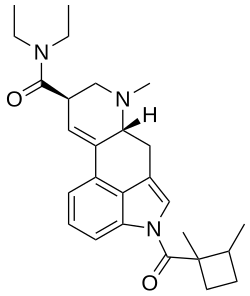
1D-LSD blotters
Price range: $400.00 through $2,000.00Select options This product has multiple variants. The options may be chosen on the product page