Phenmetrazines
Phenmetrazine has an unusual place in stimulant history. It was used as a prescription appetite suppressant during the twentieth century, but the compounds now discussed most often in research-chemical settings are newer analogues. The best-known example is 3-fluorophenmetrazine (3-FPM), which has appeared in the new psychoactive substance market.
The group is relatively small within the wider stimulant category. Its chemistry is distinct from that of amphetamines, phenidates and cathinones, even though the effects associated with these groups can overlap.
A different kind of stimulant scaffold
Phenmetrazine contains a morpholine ring system and a phenyl group. That arrangement gives it a different shape from amphetamine’s more open phenethylamine side chain. Structural differences of this kind can affect how a molecule interacts with monoamine transporters and how metabolic enzymes process it.
Phenmetrazine’s historical medical use provides only limited context for its newer analogues. Clinical experience with the original medicine does not establish the safety of those derivatives. A fluorinated analogue may share the parent scaffold and still behave differently in the body.
Fluorinated isomers: 2-FPM, 3-FPM and 4-FPM
In 3-FPM, a fluorine atom occupies the meta position of the aromatic ring. The 2-FPM and 4-FPM isomers place it at different positions. They share a molecular formula, but positional isomers need not have the same transporter activity or metabolic profile. The exact isomer matters when comparing results from different studies.
A study of fluorinated phenmetrazines found that the 2-, 3- and 4-FPM isomers interacted with dopamine and noradrenaline transporters and could induce monoamine efflux in experimental systems. The findings appear in Fluorinated phenmetrazine “legal highs” act as substrates for high-affinity monoamine transporters. These experiments help describe a mechanism; they are not a controlled assessment of human effects or safety.
What transporter studies suggest
Research on phenmetrazine and its fluorinated analogues has focused largely on catecholamine signalling, especially dopamine and noradrenaline. In the cited experimental work, the fluorinated derivatives acted as transporter substrates at DAT and NET and promoted monoamine efflux in cell-based and synaptosomal preparations. Activity at the serotonin transporter appeared lower in those experiments, although results depend on the compound and assay conditions.
This is not the same profile generally described for phenidates, which inhibit reuptake, and it should not be assumed to match every amphetamine. Two compounds may both be called stimulants while affecting neurotransmitter transport in different ways.
What is known about effects in people?
Human evidence for 3-FPM and related analogues is thin compared with the clinical literature on established medicines. Online accounts and isolated case descriptions may point to questions worth investigating, but they cannot establish a typical response, the frequency of adverse reactions or long-term outcomes.
Potential acute concerns are consistent with the broader stimulant picture: insomnia, anxiety, agitation, increased heart rate and blood pressure, and overheating. More serious stimulant toxicity can involve arrhythmias, seizures, altered mental status and organ complications. The available evidence does not show that these outcomes occur at the same rate with every phenmetrazine analogue.
Distinguishing fluorinated positional isomers can be difficult without a suitable analytical method. GC-MS and LC-MS/MS may be used for screening and confirmation, but chromatographic separation and reference standards become important when the compounds are closely related. High-resolution mass spectrometry can help establish elemental composition; NMR can provide additional structural evidence.
Transporter interactions alone leave much of the clinical profile unexplained. More work is needed on metabolism, active metabolites, pharmacokinetics and adverse outcomes in humans. Phenmetrazine’s medical history cannot fill those gaps for 3-FPM or other newer analogues.
Two points worth keeping separate
Is 3-FPM the same compound as phenmetrazine?
No. It is a fluorinated analogue that retains the phenmetrazine framework, but the additional substituent may alter its pharmacological and metabolic properties.
Can findings for 3-FPM be applied to 2-FPM and 4-FPM?
Not without qualification. They are positional isomers, and the position of the fluorine atom can affect biological activity. Research findings should be tied to the specific isomer tested.
Showing the single result
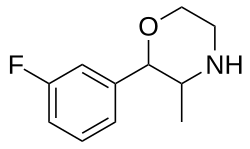
3-FPM
Price range: $390.00 through $8,300.00Select options This product has multiple variants. The options may be chosen on the product page