Amphetamines
The word amphetamine is used rather loosely in everyday conversation. Chemically, though, it refers to a particular molecular framework, and the compounds built from it are not all alike. Some are established medicines with decades of clinical research behind them. Others, including newer substituted derivatives, are known mainly from laboratory studies and forensic reports.
Research-chemical discussions often focus on fluorinated examples such as 2-FMA. They belong to the wider stimulant category, alongside other groups: cathinones, phenidates and other stimulant phenethylamines have their own structural features and pharmacological histories.
The amphetamine scaffold
Amphetamine is a substituted phenethylamine. A phenyl ring is attached to a two-carbon side chain, which ends in an amino group; a methyl group sits on the alpha carbon. Chemists can modify several parts of this structure. Substituents on the aromatic ring, changes around the nitrogen atom or alterations to the side chain may all affect a compound’s metabolism and its interaction with monoamine transporters.
Position matters as much as the identity of the substituent. In names such as 2-fluoroamphetamine and 4-fluoroamphetamine, the number indicates where the fluorine atom sits on the ring. The two compounds are positional isomers: they share a molecular formula, but that does not make them pharmacologically equivalent. The same point applies to comparisons among 2-FMA, 3-FMA and 4-FMA.
Amphetamine also has a chiral centre, so it exists as two enantiomers. These mirror-image forms can differ in their activity at biological targets. A finding for one enantiomer cannot automatically be applied to the other, and results for a racemic mixture need to be read in that context.
How amphetamines alter monoamine signalling
Many amphetamines increase signalling involving dopamine and noradrenaline. Their actions extend beyond individual receptors to neurotransmitter transport and storage. Some enter nerve terminals through monoamine transporters and affect the movement of neurotransmitters between storage vesicles and the cell interior. VMAT2 and the intracellular receptor TAAR1 are among the proteins involved; changes in transporter direction can then increase the amount of dopamine or noradrenaline outside the cell.
The serotonin component varies. Some substituted amphetamines have appreciable serotonergic activity, while others act more strongly on dopamine and noradrenaline systems. That difference is relevant to both their pharmacological profile and the kinds of adverse effects reported. The review Pharmacology and Toxicology of Amphetamine-Type Stimulants surveys these mechanisms across the wider group. The NCBI Bookshelf review of amphetamine provides a more focused account of the parent compound.
Substituted amphetamines in research-chemical literature
Fluorinated derivatives are among the compounds most often encountered in this part of the research-chemical literature. The list includes 2-FA, 2-FMA, 3-FA, 4-FA and 4-FMA. Adding a fluorine atom may look like a modest change on a structural diagram, but its position can influence metabolism and transporter activity. The label alone does not tell us how long a compound acts, how potent it is or what risks it may carry.
Not every amphetamine derivative is discussed solely as a stimulant. Some have a more pronounced serotonergic or entactogenic profile. Para-methoxy compounds such as PMA and PMMA warrant particular attention: serious poisonings have been reported, including cases involving dangerous hyperthermia. Even with a familiar chemical scaffold, the clinical effects may differ substantially and be difficult to predict.
From expected stimulation to acute toxicity
Changes in monoamine signalling can affect wakefulness, attention, movement, appetite, mood and cardiovascular function. Unwanted effects reported with stimulant exposure include insomnia, anxiety, restlessness, tremor, reduced appetite and increases in heart rate or blood pressure. In severe intoxication, the picture can progress to hyperthermia, seizures, arrhythmias, stroke, rhabdomyolysis or acute kidney injury.
There is no single course that applies to every compound or every exposure. The molecule itself matters, as do the amount taken, a person’s health, environmental heat and any other substances involved. Combining stimulants can add to cardiovascular and thermoregulatory stress. Mislabelled products create a separate problem: the name on a packet may not match what is actually present.
What the research can—and cannot—establish
Prescription amphetamines have a substantial clinical literature. Many newer analogues do not. For those compounds, researchers may have transporter assays, animal experiments, forensic detections or a small number of case reports. Such evidence can point to a plausible mechanism or raise an early warning, but it rarely answers questions about human pharmacokinetics, long-term effects or how often a particular complication occurs.
Forensic laboratories use GC-MS and LC-MS methods to distinguish many amphetamine derivatives. High-resolution mass spectrometry and reference standards can be important when structures are closely related. A confirmed identification establishes which compound was detected. It does not, by itself, establish the concentration in every part of a sample, its purity or its safety.
Questions that often come up
Are all amphetamines dopamine-releasing agents?
Many act as monoamine-transporter substrates and promote neurotransmitter release, but the balance between dopamine, noradrenaline and serotonin activity differs across the family. The name alone is not a full mechanism-of-action description.
Does fluorination leave amphetamine’s effects unchanged?
No such assumption is justified. The position of the fluorine atom can matter, and a substituted analogue needs its own pharmacological and toxicological evidence.
How are amphetamines related to cathinones?
Both groups are related to the phenethylamine scaffold, but cathinones have an additional beta-keto group. That structural feature defines a distinct branch; see the page on synthetic cathinones.
Showing all 10 results
2-FA
Price range: $380.00 through $8,100.00Select options This product has multiple variants. The options may be chosen on the product page
2-FEA
Price range: $380.00 through $8,100.00Select options This product has multiple variants. The options may be chosen on the product page
2-FMA
Price range: $380.00 through $8,100.00Select options This product has multiple variants. The options may be chosen on the product page
3-FA
Price range: $380.00 through $8,100.00Select options This product has multiple variants. The options may be chosen on the product page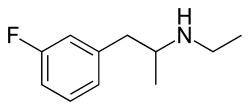
3-FEA
Price range: $380.00 through $8,100.00Select options This product has multiple variants. The options may be chosen on the product page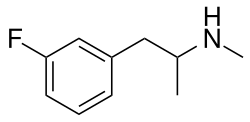
3-FMA
Price range: $380.00 through $8,100.00Select options This product has multiple variants. The options may be chosen on the product page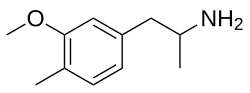
3-MMA
Price range: $450.00 through $8,700.00Select options This product has multiple variants. The options may be chosen on the product page
4-FA
Price range: $380.00 through $8,100.00Select options This product has multiple variants. The options may be chosen on the product page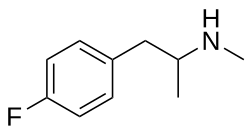
4-FMA
Price range: $380.00 through $8,100.00Select options This product has multiple variants. The options may be chosen on the product page
Fenethylline
Price range: $380.00 through $8,100.00Select options This product has multiple variants. The options may be chosen on the product page