Benzodiazepines
Benzodiazepines are familiar in medicine as drugs used for anxiety, insomnia, seizures and several other conditions. Their pharmacology is well established as a group, but the same cannot be said for every compound sold or detected as a benzodiazepine. Newer derivatives may have little clinical research behind them, and their duration, metabolism and toxicity can differ from those of prescribed medicines.
This page focuses on benzodiazepines encountered in research-chemical and new-psychoactive-substance contexts. They form a major part of the wider sedatives category, although the terms are not interchangeable: not every sedative is a benzodiazepine, and not every compound marketed as a benzodiazepine has the same chemical structure.
How Benzodiazepines Work
Benzodiazepines are positive allosteric modulators of GABA-A receptors. They bind to a regulatory site on the receptor, separate from the site where GABA binds, and enhance the effect of GABA when it is present. GABA is the main inhibitory neurotransmitter in the brain. By strengthening its action, benzodiazepines reduce the likelihood that neurons will fire in response to excitatory input.
This mechanism helps explain several recognised effects: reduced anxiety, sedation, muscle relaxation, anticonvulsant activity and impaired formation of new memories. The balance between these effects varies by compound and by receptor subtype. The review of designer benzodiazepine toxicology describes the shared GABA-A mechanism alongside the substantial gaps in data for newer derivatives.
Prescription Drugs and Novel Derivatives
Classic benzodiazepines such as diazepam, alprazolam and clonazepam have established clinical uses and relatively extensive pharmacological records. Novel or designer benzodiazepines are a more varied group. Some are close structural relatives of medicines; others have been developed or encountered outside routine medical use. The term does not guarantee that a compound has been tested in clinical trials or approved for treatment.
Examples encountered in forensic and drug-monitoring reports include bromazolam and flualprazolam. Other reported compounds include clonazolam, flubromazolam, diclazepam, phenazepam and deschloroetizolam. Their presence in the same broad category does not mean they share a common duration or potency.
Etizolam and related thienodiazepines
Etizolam is often discussed alongside benzodiazepines because it acts at the benzodiazepine site of GABA-A receptors and produces related effects. Chemically, however, it is a thienodiazepine: a sulfur-containing ring replaces one of the benzene rings found in the classical benzodiazepine scaffold. The distinction is useful in analytical and structural descriptions, even though the pharmacology overlaps.
Why the Effects of Novel Benzodiazepines Can Be Hard to Predict
Duration of action depends on absorption, distribution, metabolism and elimination. Some compounds produce active metabolites that remain in the body after levels of the parent substance have declined. Others have limited human pharmacokinetic data, so estimates based on a related medicine may be unreliable. Structural resemblance can guide research, but it cannot substitute for those data.
Online comparisons often overstate what is known about relative potency. They may come from animal experiments, receptor assays, isolated case reports or informal user accounts. Those sources are not interchangeable. A receptor-affinity value does not establish a human dose, and a single intoxication report cannot define the typical effect of a compound.
Acute Effects and Toxicological Risks
Benzodiazepines can cause drowsiness, slowed reaction time, impaired coordination, confusion and anterograde amnesia. At higher exposure, a person may become difficult to wake or lose consciousness. Novel derivatives have been implicated in emergency presentations, impaired driving and deaths, although many reports involve more than one substance.
The combination with opioids or alcohol is a major concern. Both benzodiazepines and opioids depress central nervous system activity, and their combined effects can increase the risk of severe sedation and respiratory depression. A toxicology review of designer benzodiazepines describes the serious outcomes reported in cases involving other central nervous system depressants. Even when an unregulated product carries a familiar benzodiazepine-like name, its effects may be unpredictable.
Tolerance, Dependence and Withdrawal
With repeated use, tolerance can develop to some benzodiazepine effects. Physical dependence may also occur. When a person who has become dependent stops abruptly, withdrawal can involve rebound anxiety, insomnia, tremor, agitation and autonomic symptoms. Severe withdrawal can include seizures and delirium, which is why abrupt discontinuation after sustained exposure can be dangerous.
The risk is influenced by the compound’s half-life, duration of exposure, amount taken and individual factors. For newer derivatives, these variables may be poorly characterised. It is not safe to assume that withdrawal from one novel benzodiazepine will follow the same course as withdrawal from a prescribed medicine.
Identification in Clinical and Forensic Testing
Routine benzodiazepine immunoassays do not detect every member of the class equally well. Their performance depends on the antibody and the metabolites targeted by the test. Some novel benzodiazepines may be missed, while a positive screen does not identify the exact compound. Confirmatory testing by LC-MS/MS or high-resolution mass spectrometry is often needed.
Metabolites add complexity. A laboratory may detect a breakdown product rather than the original substance, and some metabolites are shared by more than one compound. Interpretation therefore depends on the method, reference standards and the full toxicological context. A screening result alone should not be treated as a complete account of exposure.
Regulation and the Meaning of “Research Chemical”
Legal controls vary between jurisdictions. Some benzodiazepine derivatives are specifically scheduled, while others may be covered by generic definitions or medicines legislation. Status can change as new compounds appear and authorities review the evidence. Marketing a substance as a research chemical does not determine whether it is legal, clinically suitable or safe.
Frequently Asked Questions
Are designer benzodiazepines chemically identical to prescription benzodiazepines?
No. They are a varied group of related compounds. Some are close structural analogues, while others, such as etizolam, belong to a neighbouring chemical class but share relevant pharmacology.
Can novel benzodiazepines be detected by a standard drug test?
Not reliably. Some may cross-react with a screening assay, while others can be missed. Confirmatory laboratory analysis is needed to identify a specific compound.
Why is withdrawal a concern?
Repeated exposure can produce physical dependence. Abrupt withdrawal after sustained use may cause severe symptoms, including seizures, and requires medical assessment.
Showing all 16 results
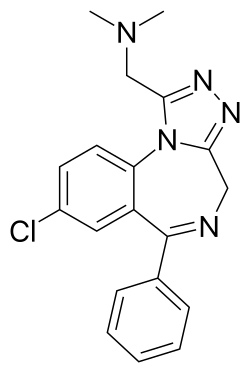
Adinazolam
Price range: $520.00 through $8,900.00Select options This product has multiple variants. The options may be chosen on the product page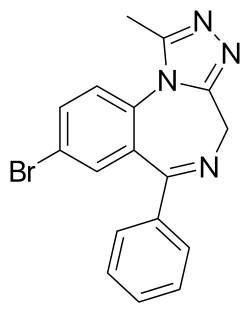
Bromazolam
Price range: $520.00 through $8,900.00Select options This product has multiple variants. The options may be chosen on the product page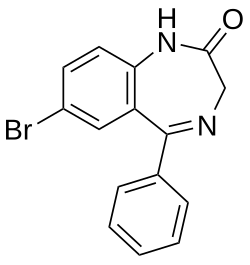
Bromonordiazepam
Price range: $520.00 through $8,900.00Select options This product has multiple variants. The options may be chosen on the product page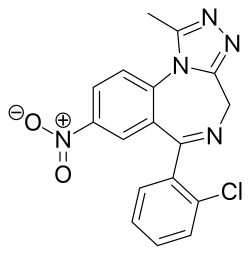
Clonazolam
Price range: $520.00 through $8,900.00Select options This product has multiple variants. The options may be chosen on the product page
Deschloroetizolam
Price range: $520.00 through $8,900.00Select options This product has multiple variants. The options may be chosen on the product pageDiclazepam
Price range: $520.00 through $8,900.00Select options This product has multiple variants. The options may be chosen on the product pageEtizolam
Price range: $520.00 through $8,900.00Select options This product has multiple variants. The options may be chosen on the product pageFlualprazolam
Price range: $520.00 through $8,900.00Select options This product has multiple variants. The options may be chosen on the product pageFlubromazepam
Price range: $520.00 through $8,900.00Select options This product has multiple variants. The options may be chosen on the product pageFlubromazolam
Price range: $520.00 through $8,900.00Select options This product has multiple variants. The options may be chosen on the product pageFlubrotizolam
Price range: $520.00 through $8,900.00Select options This product has multiple variants. The options may be chosen on the product pageFluetizolam
Price range: $520.00 through $8,900.00Select options This product has multiple variants. The options may be chosen on the product pageFlunitrazolam
Price range: $520.00 through $8,900.00Select options This product has multiple variants. The options may be chosen on the product pageMetizolam
Price range: $520.00 through $8,900.00Select options This product has multiple variants. The options may be chosen on the product pageNifoxipam
Price range: $520.00 through $8,900.00Select options This product has multiple variants. The options may be chosen on the product pagePyrazolam
Price range: $520.00 through $8,900.00Select options This product has multiple variants. The options may be chosen on the product page