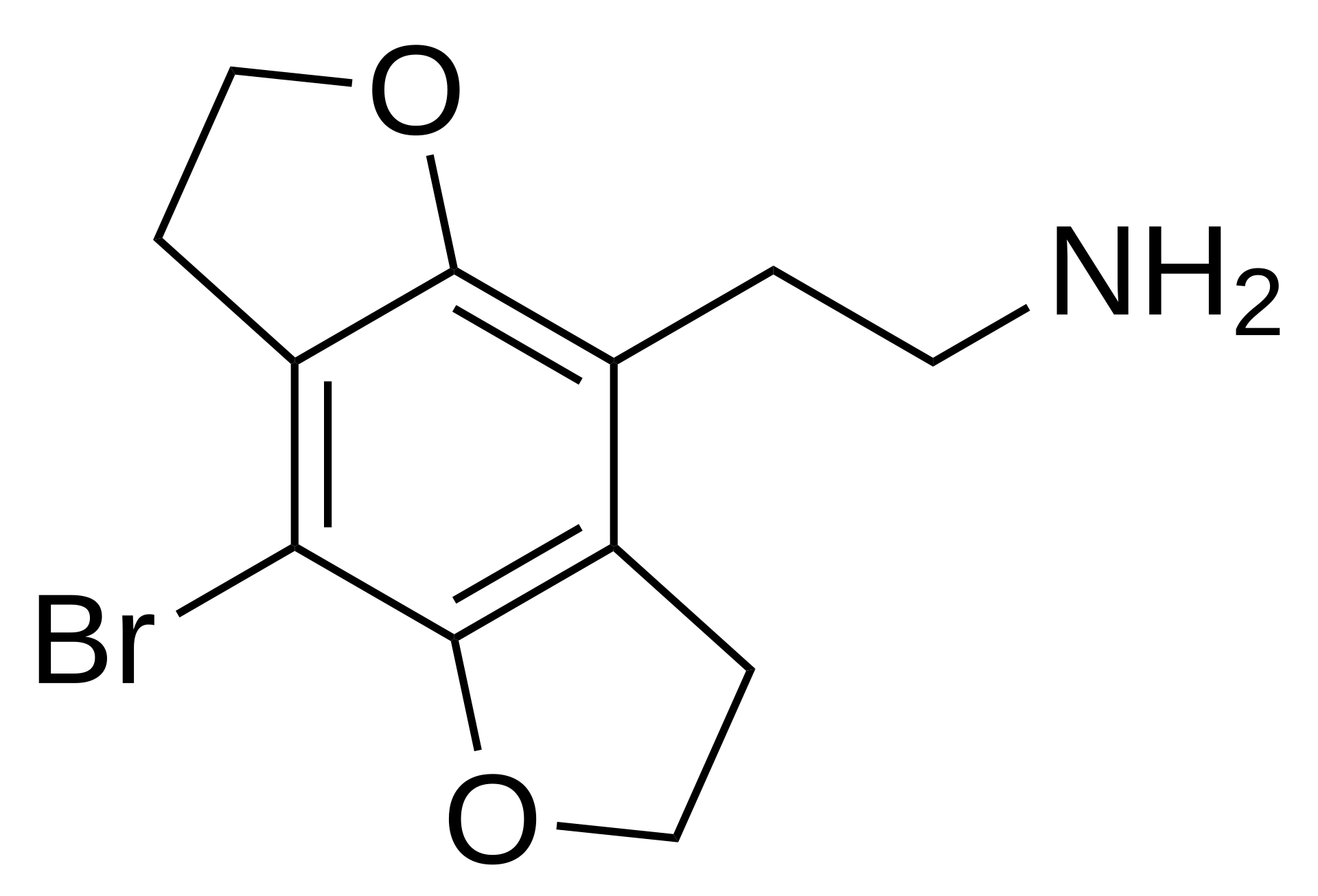
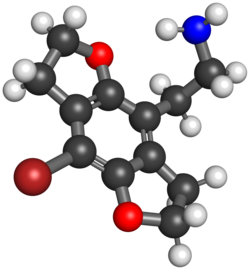
2C-B-FLY is a synthetic psychedelic in the FLY family of substituted phenethylamines. It is structurally related to 2C-B, but its methoxy-substituted aromatic ring is incorporated into a fused dihydrofuran system. The compound has been discussed in research-chemical circles for years, although recent forensic monitoring has only begun to identify it in drug materials. Its human effects and toxicity remain poorly characterised.
Chemistry and identification
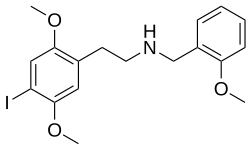
2C-B-FLY retains the phenethylamine backbone and a bromine substituent associated with 2C-B. The main structural difference is the pair of oxygen-containing rings fused to the aromatic system, which gives the compound its “FLY” designation. It is not an N-benzyl derivative and should not be confused with 25B-NBOMe or 25B-NBOH.
The Center for Forensic Science Research and Education reported its first laboratory identification in a drug material in February 2025. The sample also contained PCP. As of the June 2025 monograph, the laboratory had not identified 2C-B-FLY in toxicology cases (CFSRE 2C-B-FLY monograph, 2025).
Pharmacology
Available pharmacological descriptions identify 2C-B-FLY as a partial agonist at the 5-HT2A receptor, with high affinity also reported at 5-HT2B, 5-HT2C and 5-HT2D. These receptor interactions are consistent with psychedelic activity, but the full functional profile and the contribution of individual targets have not been established in humans.
Subjective effects
The PsychonautWiki profile of 2C-B-FLY lists psychedelic effects and sensory changes from anecdotal reports. Controlled human studies have not established a typical experience or how it differs from 2C-B.
Visual and cognitive effects
User descriptions mention changes in colour, visual patterning, altered perception of movement and shifts in thought or mood. Some accounts compare the experience with other 2C compounds, but those comparisons do not establish equivalent potency or duration.
Physical effects
Reports include stimulation, nausea, muscle tension and changes in heart rate. The frequency and severity of these effects are unknown. The recent CFSRE identification did not involve a clinical toxicology case, so it provides no direct evidence about adverse reactions in people.
Toxicity and research limitations
There is little published human toxicology for 2C-B-FLY. Its receptor activity is documented more clearly than its clinical effects, and the available forensic monitoring remains limited. The CFSRE had identified one drug-material sample but no toxicology cases by June 2025.
Its affinity at 5-HT2B is a pharmacological observation, not proof of a particular cardiac outcome in humans. The acute toxic range, metabolism, dependence potential and long-term effects remain unknown.
Related compounds
2C-B-FLY is related to 2C-B and other FLY compounds, including 2C-E-FLY. It is structurally distinct from 25B-NBOMe and 25B-NBOH, which are N-benzyl derivatives of 2C-B.

Reviews
There are no reviews yet.