
Flualprazolam is a synthetic triazolobenzodiazepine and a fluorinated analogue of alprazolam. It was described in a patent in the 1970s but was never marketed as a medicine. The compound appeared on the illicit drug market in the late 2010s and has been found in counterfeit alprazolam tablets. Reports describe strong sedation, memory impairment and disinhibition, while forensic investigations have linked it to impaired driving and polydrug deaths.
Chemistry and history
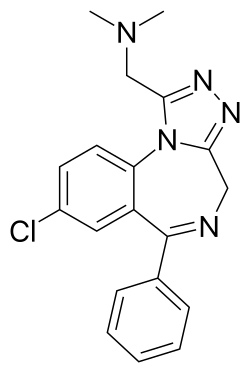
Flualprazolam has the triazolobenzodiazepine structure of alprazolam, with a fluorine atom on the phenyl ring. It is often described as the ortho-fluoro analogue of alprazolam. The compound was patented in 1976, but there is no record of it being developed into an approved pharmaceutical product.
It was identified on the European drug market in 2017–2018 and later appeared in samples from North America and other regions. It has been sold in tablets and powders, sometimes under the name of alprazolam or other pharmaceutical benzodiazepines.
Pharmacology
Flualprazolam acts at the benzodiazepine site of the GABAA receptor, enhancing GABA-mediated inhibition. Its effects are expected to resemble those of alprazolam and other triazolobenzodiazepines. However, direct pharmacological and pharmacokinetic data are limited, and structural similarity does not establish an identical potency or duration.
Animal experiments described in the original patent reported sedative, tranquilising and muscle-relaxant activity. The WHO review found no comprehensive studies of its acute or chronic toxicology and no controlled studies of dependence or abuse potential (WHO critical review, 2019).
Subjective effects
The PsychonautWiki profile of flualprazolam compares its effects with alprazolam, although user accounts place greater emphasis on sedation and memory suppression. These descriptions are anecdotal and do not establish a predictable response.
Physical effects
Reported effects include pronounced sedation, muscle relaxation, dizziness and reduced motor coordination. Some users describe a rapid onset of drowsiness and difficulty remaining alert. In more severe intoxications, loss of consciousness and central nervous system depression have been reported.
Cognitive effects
Anxiety suppression and disinhibition are commonly described. Memory impairment is another recurring effect, and some accounts mention periods of amnesia. These effects can make it difficult for an intoxicated person to judge their own level of impairment.
Clinical and forensic findings
Clinical reports describe sedation, impaired speech and central nervous system depression after suspected exposure. Flualprazolam has also been identified in impaired-driving investigations, where motor and functional impairment was observed.
A case series quantified flualprazolam in nine deaths. All cases involved more than one drug, and the authors did not attribute any of the deaths to flualprazolam alone; the findings were considered consistent with combined sedative toxicity (Rice and colleagues, 2021). The WHO review also found no dedicated preclinical studies of acute or chronic toxicity and no controlled studies of dependence potential.
Dependence and safety
No controlled study has quantified flualprazolam dependence. Its GABAA activity and similarity to alprazolam suggest that tolerance and physical dependence are possible. The sudden discontinuation of benzodiazepines after regular use can lead to severe withdrawal, including seizures.
Combining flualprazolam with opioids, alcohol or other sedatives can increase central nervous system depression and the risk of unconsciousness or respiratory complications. The presence of flualprazolam in counterfeit tablets also means that the identity and amount of the substance may be uncertain.
Related compounds
Flualprazolam is related to Alprazolam, Triazolam and other triazolobenzodiazepines. Its fluorinated phenyl group distinguishes it from alprazolam.

Reviews
There are no reviews yet.