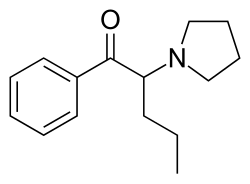
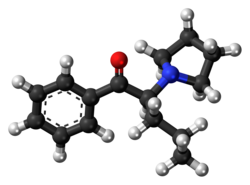
α-Pyrrolidinopentiophenone (α-PVP), also known as flakka, is a synthetic cathinone in the pyrovalerone family. It is a potent dopamine and norepinephrine reuptake inhibitor, with little activity at the serotonin transporter. α-PVP became prominent on illicit drug markets in the early 2010s and has been linked to severe stimulant intoxications, psychosis, cardiovascular complications and deaths.
Chemistry and history
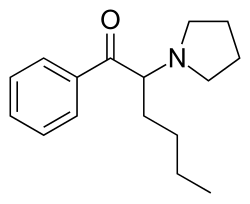
α-PVP contains a phenyl ring, a ketone group and a pyrrolidine ring attached to the alpha carbon of a five-carbon side chain. It is structurally related to pyrovalerone and MDPV, but lacks MDPV’s methylenedioxy ring. The compound was reported in Europe in the early 2010s and later became particularly visible in forensic and clinical reports from the United States and other countries.
Pharmacology
α-PVP acts mainly as a dopamine and norepinephrine reuptake inhibitor. The 2025 ACMD review summarises reported inhibition values of about 32 nM at DAT, 37.4 nM at NET and 117,600 nM at SERT. Unlike cathinones such as mephedrone, α-PVP is not a transporter substrate that promotes monoamine release; it blocks uptake, allowing extracellular dopamine and norepinephrine to accumulate (ACMD, 2025).
Animal studies show strong locomotor and reinforcing effects. A review of MDPV and related compounds describes α-PVP as sharing the potent catecholamine-transporter inhibition that contributes to the abuse liability of this group (Neuropharmacology of MDPV and related analogues, 2017).
Subjective effects
The PsychonautWiki profile of α-PVP describes a strong stimulant experience. Reports include euphoria, increased energy and wakefulness, but the clinical literature also documents severe agitation, paranoia, hallucinations and delirium. Such adverse reactions feature prominently in accounts of the compound’s use.
Physical effects
Reported effects include tachycardia, elevated blood pressure, sweating, increased body temperature and reduced appetite. Severe intoxication may involve hyperthermia, seizures, rhabdomyolysis, metabolic disturbance and acute kidney injury.
Cognitive and behavioural effects
Agitation, aggression, paranoia, delusions and hallucinations have been reported. Some patients develop delirium or markedly disorganised behaviour. The intense psychomotor activation can coexist with impaired judgement and loss of behavioural control.
Clinical and forensic findings
The Swedish STRIDA project reported 42 analytically confirmed cases in which α-PVP was the only stimulant detected. Tachycardia was recorded in 80%, agitation in 70%, hypertension in 33%, hallucinations in 20% and delirium in 18%. Two cases were fatal, although other psychoactive substances were present in some patients (Beck and colleagues, 2016).
A wider European assessment recorded 115 deaths in which α-PVP was detected between 2012 and 2015. In 21 cases it was considered the cause of death or likely to have contributed; in seven of those, it was the only drug detected. Most cases involved additional substances, which complicates interpretation (EMCDDA risk assessment of α-PVP, 2016).
Toxicity and research limitations
Clinical reports establish that α-PVP can cause severe and sometimes fatal sympathomimetic toxicity. However, concentrations in biological samples vary widely, and the presence of other drugs often makes it difficult to identify a single cause. A 2025 controlled human study adds acute pharmacological observations, but does not establish the long-term effects of repeated exposure (De la Rosa and colleagues, 2025).
Related compounds
α-PVP is related to α-PHP, α-PBP, MDPV and MDPHP. These pyrrolidinophenones share a stimulant profile dominated by dopamine and norepinephrine transporter inhibition.

Reviews
There are no reviews yet.