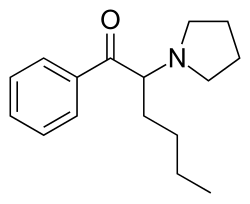
α-Pyrrolidinohexanophenone (α-PHP) is a synthetic cathinone in the pyrovalerone family. It is a potent stimulant that inhibits dopamine and norepinephrine reuptake, with much weaker activity at the serotonin transporter. α-PHP appeared on drug markets in the mid-2010s and has since been detected in emergency-department and forensic investigations. Clinical reports describe agitation, psychosis, cardiovascular strain and, in some cases, severe or fatal intoxication.
Chemistry and history
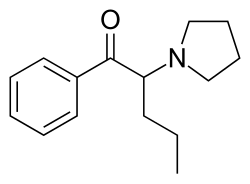
α-PHP contains a phenyl ring, a ketone group and a pyrrolidine ring attached to the alpha carbon. Its side chain is longer than that of α-PVP, making it a higher homologue in the pyrrolidinophenone series. It is structurally related to α-PiHP, which is a branched-chain positional isomer, and to MDPHP, which carries a methylenedioxy group on the aromatic ring.
α-PHP was first identified on the Japanese illicit drug market in 2014. It later appeared in European forensic casework and was included in the UK Advisory Council on the Misuse of Drugs’ updated assessment of synthetic cathinones (ACMD, Synthetic cathinones: an updated harms assessment, 2025).
Pharmacology
α-PHP is a strong inhibitor of the dopamine transporter (DAT) and norepinephrine transporter (NET). The ACMD review summarises reported inhibition values of approximately 35.7 nM at DAT, 43 nM at NET and 127,500 nM at the serotonin transporter (SERT). This large difference is consistent with a predominantly dopaminergic and noradrenergic stimulant profile rather than an MDMA-like entactogenic action.
A 2025 study examined acute behavioural effects and pharmacokinetics in male and female mice, alongside seven analytically confirmed non-fatal clinical intoxications. The human cases included psychomotor agitation, tremors or fasciculations, hallucinations, tachycardia, chest pain, hyperthermia and rhabdomyolysis. The animal study also found sex-related differences in measured drug and metabolite levels, although these findings cannot be translated directly into human effects (Bassi and colleagues, 2025).
Reported effects
The PsychonautWiki profile of α-PHP and clinical reports describe a strong stimulant effect. User accounts mention euphoria, increased energy and wakefulness, but also restlessness, anxiety and a tendency towards repeated use. These anecdotal reports cannot predict an individual’s subjective response.
Physical effects
Clinical presentations include tachycardia, elevated blood pressure, sweating, hyperthermia and chest discomfort. More severe cases have involved rhabdomyolysis, breathing difficulties, renal complications and altered consciousness.
Cognitive and behavioural effects
Agitation, aggression, confusion, disorientation, paranoia and psychosis have been reported. The ACMD review also describes impaired balance and behaviour, restlessness and drowsiness in some toxicology cases. The range of presentations suggests that intoxication does not always resemble straightforward stimulation.
Clinical toxicity and research limitations
α-PHP has been detected in both non-fatal and fatal forensic investigations, often alongside other stimulants, opioids, benzodiazepines or alcohol. A 2024 review of α-PHP and α-PiHP describes the limitations of interpreting mixed-drug cases and the need to distinguish the two structural isomers (Review of α-PHP and α-PiHP, 2024).
The transporter data and clinical reports establish a substantial stimulant-related concern, but they do not define a universal concentration threshold for toxicity. Long-term effects and dependence potential remain less well characterised than acute intoxication.
Related compounds
α-PHP is related to α-PVP, α-PiHP, MDPV and MDPHP. It is the straight-chain structural counterpart of α-PiHP.

Reviews
There are no reviews yet.