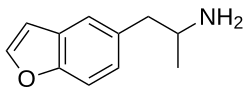
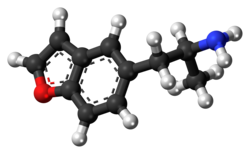
5-(2-Aminopropyl)benzofuran (5-APB) is a synthetic entactogen and stimulant belonging to the benzofuran family. It is structurally related to MDA and MDMA, with a benzofuran ring in place of the methylenedioxyphenyl group. 5-APB appeared on the recreational drug market under the name “Benzofury” and is known for a combination of stimulation, euphoria and empathogenic effects. Laboratory studies have shown that it releases dopamine, norepinephrine and serotonin, while clinical reports have documented serious cardiovascular and neurological toxicity.
Chemistry and history
5-APB is an aminopropyl-substituted benzofuran. The aminoalkyl chain is attached at the 5-position of the benzofuran ring. It is a positional isomer of 6-APB, which has the same side chain attached at the 6-position. The two compounds are related to MDA, but differences in the position of the oxygen-containing ring can affect their pharmacology.
5-APB was first synthesised in 1993 during research into non-neurotoxic alternatives to MDMA. It did not become widely known until the early 2010s, when it appeared on the research-chemical market and was sold alongside other benzofurans as “Benzofury”. The UK Advisory Council on the Misuse of Drugs recommended control of 5-APB and related compounds in 2013.
Pharmacology
5-APB acts as a substrate-type releasing agent at the dopamine, norepinephrine and serotonin transporters (DAT, NET and SERT). In vitro studies also found activity at serotonin receptors, including partial agonism at 5-HT2A and agonism at 5-HT2B. Its transporter profile is closer to MDA and MDMA than to methamphetamine, with a strong serotonergic component (Rickli and colleagues, 2015).
In rat studies, 5-APB increased extracellular dopamine and serotonin and produced sustained behavioural activation. The researchers found that it was more potent than MDA in several transporter-release measures, although animal results cannot be translated directly into human potency (Brandt and colleagues, 2020).
Subjective effects
The PsychonautWiki profile of 5-APB describes both stimulant and entactogenic effects. Users often compare the experience with MDA, with emotional openness and sensory enhancement alongside a noticeable increase in energy.
Physical effects
Stimulation is commonly reported, although some users describe a mixture of energy and physical relaxation. Increased heart rate, abnormal heartbeat, sweating and dehydration are also mentioned. Muscle tension, contractions, jaw clenching and reduced appetite may occur. Some reports describe a warm or tingling bodily sensation.
Emotional and cognitive effects
Empathy, affection, sociability and emotional openness are recurring themes. Users also describe euphoria, disinhibition, increased appreciation of music and a heightened interest in social interaction. Faster thoughts and increased wakefulness may accompany these effects.
Less comfortable reports include anxiety, confusion, agitation and difficulty sleeping after the main effects have faded. Some users describe a more forceful or physically uncomfortable stimulation than with MDMA.
Visual and sensory effects
Visual changes are not usually the defining feature, but reports include brighter colours, increased visual detail and altered perception of movement. Auditory and tactile sensitivity may also be heightened. Some accounts describe more pronounced perceptual changes, but reports differ.
Clinical toxicity
Clinical reports show that 5-APB can cause serious acute toxicity. A case of analytically confirmed exposure described agitation and paranoid behaviour after 6-APB and cannabis use, while another report documented a fatal 5-APB intoxication in which the compound was the principal toxicological finding (Fatal blood concentration of 5-APB, 2018).
Laboratory studies have also raised concerns about vasoconstriction and cardiovascular effects. 5-APB activates 5-HT2-dependent vascular responses in experimental models, which may contribute to elevated blood pressure and other cardiovascular complications (Dawson and colleagues, 2013).
Toxicity and research limitations
The human toxicological profile remains incomplete. Published cases include severe cardiovascular and neurological reactions, and at least one fatal exposure in which 5-APB was considered the main toxicological agent. The exact relationship between blood concentration and clinical outcome remains uncertain.
Repeated or high exposure may carry risks to cardiovascular and nervous system function. The animal and in-vitro studies provide reasons for concern, but they do not establish the long-term effects of repeated human exposure.
Related compounds
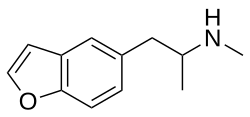
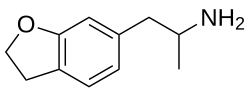
5-APB is related to 5-MAPB, 6-APB and 6-APDB. It is also structurally related to MDA and MDMA, although the benzofuran ring gives it a distinct chemical structure.
Reviews
There are no reviews yet.