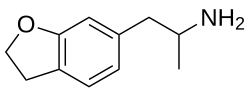
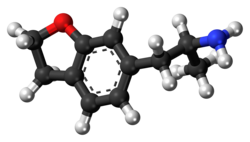
6-(2-Aminopropyl)-2,3-dihydrobenzofuran (6-APDB) is a synthetic entactogen and stimulant in the benzofuran family. It is the saturated-ring analogue of 6-APB and is structurally related to MDA and MDMA. Laboratory studies suggest a more serotonin-oriented profile than that of some related benzofurans, with markedly weaker activity at the dopamine transporter. Human data are limited, and its subjective and toxicological profiles remain largely anecdotal.
Chemistry
6-APDB contains an aminopropyl side chain attached to the 6-position of a 2,3-dihydrobenzofuran ring. The dihydro group distinguishes it from 6-APB, which has an unsaturated benzofuran ring. It is also related to 5-APDB, the positional isomer with the side chain at the 5-position.
The structural change from 6-APB to 6-APDB is important because saturation of the benzofuran ring changes the compound’s activity at monoamine transporters.
Pharmacology
In vitro testing found that 6-APDB inhibits norepinephrine and serotonin uptake, while showing very weak activity at the dopamine transporter. In the study by Rickli and colleagues, 6-APDB was substantially less active at DAT than its unsaturated analogue 6-APB. Its SERT activity remained measurable, suggesting a more serotonin-oriented profile (Rickli and colleagues, 2015).
The study also found that several benzofurans interacted with serotonin receptors, including 5-HT2A and 5-HT2B. The precise contribution of these interactions to the effects of 6-APDB has not been established in humans.
Subjective effects
The PsychonautWiki profile of 6-APDB lists stimulation, relaxation, disinhibition and euphoria. These descriptions come from anecdotal accounts, which cannot establish a consistent clinical profile.
Physical effects
Reports describe stimulation alongside physical relaxation. Some users mention bodily warmth, tactile enhancement and a sense of physical comfort. Other accounts describe increased heart rate, sweating, dehydration, appetite suppression and muscle tension. The balance between energy and relaxation varies between reports.
Emotional and cognitive effects
Reported effects include euphoria, empathy, disinhibition and increased appreciation of music. Some accounts describe a calm or emotionally open state, while others mention faster thoughts and increased wakefulness. Anxiety and confusion may occur, but the available reports are too limited to establish how frequently these effects appear.
Visual and sensory effects
Visual effects are not consistently described as prominent. Some users report enhanced colour perception and visual detail, while others describe changes in the perception of movement or sound. These observations are based on individual accounts rather than controlled measurements.
Toxicity and clinical reports
A 2019 forensic conference report described a fatal poisoning involving both 5-APB and 6-APDB as the only drugs identified in the toxicological analysis. Because both compounds were present, the report cannot determine the independent contribution of 6-APDB to the death (Boucher and colleagues, 2019).
There is little other clinical information on 6-APDB. Its weaker dopamine-transporter activity in vitro does not establish that it is safer than 6-APB, since effects on serotonin and norepinephrine systems may also contribute to acute toxicity.
Research limitations
The available pharmacological evidence comes mainly from in-vitro transporter assays. There are no well-characterised human pharmacokinetic studies or clinical trials, and its metabolism, toxic range and long-term effects remain uncertain. Comparisons with 6-APB and other benzofurans help explain the chemistry, but cannot replace direct evidence.
Related compounds
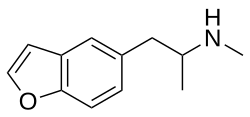
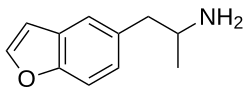
6-APDB is related to 6-APB, 5-APB and 5-MAPB. It is the saturated-ring analogue of 6-APB and belongs to the same broader benzofuran family.
Reviews
There are no reviews yet.