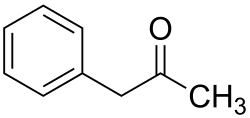
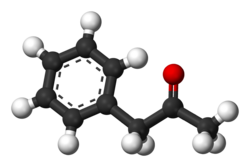
Benzyl methyl ketone (BMK), also known as phenylacetone or 1-phenyl-2-propanone (P-2-P), is an organic ketone used as an industrial and laboratory chemical. It is not a psychoactive drug. BMK is known primarily because it is a regulated precursor associated with the illicit manufacture of amphetamine-type stimulants, and its trade is subject to strict controls in many jurisdictions.
Chemistry
BMK is an aromatic ketone with a phenyl group attached to a two-carbon chain terminating in a carbonyl group. Its chemical identity is 1-phenyl-2-propanone. The names benzyl methyl ketone, phenylacetone and P-2-P refer to the same compound.
It is distinct from PMK, or piperonyl methyl ketone, a different precursor associated with the illicit manufacture of MDMA and related compounds.
Industrial and forensic context
BMK has legitimate uses in chemical research and industrial synthesis, but it is also monitored because of its association with illicit amphetamine and methamphetamine production. The European Union and United Kingdom list 1-phenyl-2-propanone among controlled drug precursor chemicals. The EUDA identifies BMK as one of the precursors historically used in the illicit manufacture of amphetamine and methamphetamine (EUDA, Synthetic drug production in Europe).
The UK precursor-chemical list places 1-phenyl-2-propanone in Category 1, reflecting the level of control applied to chemicals with a recognised role in illicit drug manufacture (UK Government precursor list, updated 2026).
Pharmacology and psychoactive effects
BMK is not classified as a stimulant, depressant or hallucinogen. It does not have an established recreational psychoactive profile, and there is no basis for describing it as producing the effects of amphetamine or methamphetamine simply because it is associated with their illicit manufacture.
Safety and regulation
BMK is a chemical reagent and should be assessed according to its chemical hazards rather than as a recreational drug. Exposure risks depend on the material’s purity, concentration and conditions of contact. Handling and transport are governed by chemical-safety and precursor-control rules.
Its regulatory status varies by jurisdiction. In the European Union and United Kingdom it is subject to precursor controls, including requirements that apply to commercial transactions and record keeping. Those controls are intended to prevent diversion into illicit manufacture.
Related compounds
BMK is related in industrial and forensic contexts to PMK (piperonyl methyl ketone) and other regulated precursor chemicals. These substances are chemically distinct and are associated with different illicit drug-production markets.

Reviews
There are no reviews yet.