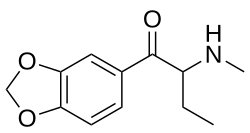
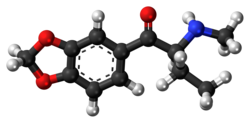
Butylone, also known as βk-MBDB or B1, is a synthetic cathinone with stimulant and entactogenic properties. It is structurally related to methylone and MDMA, but has an additional carbon in the alpha side chain compared with methylone. Butylone appeared in recreational drug products during the 2000s and has been detected in both seized materials and clinical toxicology cases.
Chemistry
Butylone is a methylenedioxy-substituted cathinone. Its structure contains a benzodioxole ring, a β-keto group and an N-methylamino side chain. It is the β-keto analogue of MBDB and is closely related to methylone, differing mainly in the length of the side chain attached to the alpha carbon.
Pharmacology
In vitro studies show that butylone inhibits dopamine and serotonin uptake, while also acting as a substrate at the serotonin transporter and promoting serotonin release. It does not produce the same transporter-mediated release at the dopamine transporter in the experimental models used. This mixed profile has been described as a hybrid mechanism and helps distinguish butylone from compounds that act primarily as monoamine releasers (Butylone and pentylone transporter study, 2018).
Earlier research found that butylone increased extracellular monoamines and locomotor activity in rats. Its pharmacology overlaps with that of MDMA-like entactogens, but the relative contribution of dopamine and serotonin differs.
Subjective effects
The PsychonautWiki profile of butylone describes stimulation alongside entactogenic effects. Users often compare it with methylone or MDMA, but frequently describe more conventional stimulation and less pronounced emotional effects.
Physical effects
Reports include increased energy, physical stimulation and a tingling bodily sensation. Jaw tension, teeth grinding, sweating and increased heart rate are also described. Other reported effects include reduced appetite, nausea, dehydration and difficulty sleeping after the main effects have faded.
Cognitive and emotional effects
Euphoria, faster thinking, increased motivation and disinhibition are common themes in user accounts. Some describe greater sociability and appreciation of music, while others report a less pronounced empathogenic effect than with MDMA. Anxiety, agitation and compulsive redosing are also reported.
Clinical and forensic findings
Butylone has been detected in emergency presentations and post-mortem toxicology. The interpretation of individual cases is often complicated by the presence of other stimulants or depressants. A review of synthetic cathinone intoxications includes butylone among the substances associated with severe clinical presentations and fatal cases (Review of synthetic cathinones, 2019–2022).
Toxicity and research limitations
Butylone’s toxicity in humans is still incompletely understood. Experimental studies indicate significant stimulant and reinforcing activity, while clinical reports describe cardiovascular and neurological complications. The available evidence does not establish a reliable toxic range or the long-term consequences of repeated exposure.
As with other synthetic cathinones, combining butylone with other stimulants or serotonergic substances may increase the likelihood of adverse reactions. Case reports involving several drugs should be interpreted cautiously because they do not isolate the effects of butylone alone.
Related compounds
Butylone is related to Ethylone, Ephylone, 3-MMC and methylone. It is the beta-keto analogue of MBDB and a close structural relative of methylone.

Reviews
There are no reviews yet.