25I-NBOMe, also known as 2C-I-NBOMe or 25I, is a highly potent synthetic psychedelic in the N-benzylphenethylamine family. It is an N-(2-methoxybenzyl) derivative of 2C-I and acts primarily as a serotonin 5-HT2A receptor agonist. First encountered on recreational drug markets around 2010, it has been associated with severe agitation, seizures, hyperthermia, rhabdomyolysis, acute kidney injury and fatal intoxications.
Chemistry and history
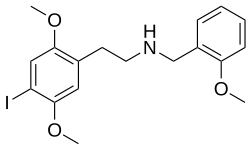
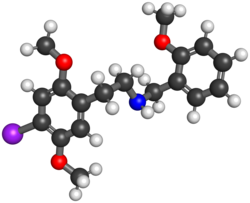
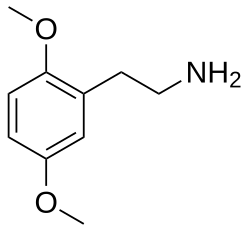
25I-NBOMe is based on the 2C-I phenethylamine structure, with an iodine atom at the 4-position and methoxy groups at the 2- and 5-positions of the aromatic ring. Its nitrogen carries a 2-methoxybenzyl group. This N-benzyl substitution substantially increases its affinity for serotonin receptors compared with the parent 2C compound.
The compound was developed in receptor research before appearing on online drug markets. It has been sold on blotter paper and in other forms, sometimes represented as LSD. The name “25I” is often used informally, but it should not be confused with 2C-I, which lacks the N-benzyl group.
Pharmacology
25I-NBOMe is a potent agonist at the 5-HT2A receptor. Adding the 2-methoxybenzyl group to a 2C phenethylamine markedly increases receptor affinity and hallucinogenic potency. NBOMe compounds can also interact with 5-HT2C, adrenergic and other receptor systems, which may contribute to their stimulant-like and autonomic effects (Pharmacology and toxicology of NBOMe hallucinogens, 2017).
Its metabolism involves cytochrome P450 enzymes, particularly CYP3A4, and includes O-demethylation, hydroxylation and N-dealkylation. Rapid metabolism and the small quantities encountered in biological samples can make analytical confirmation difficult (Metabolism of 25I-NBOMe and 25I-NBOH, 2016).
Subjective effects
The PsychonautWiki profile of 25I-NBOMe describes a strong psychedelic experience involving visual changes, altered cognition and stimulation. User accounts vary, and clinical reports document medically dangerous reactions beyond conventional psychedelic effects.
Visual and sensory effects
Reports describe geometric patterns, intensified colours, movement distortions and changes in depth or perspective. Closed-eye imagery and altered sound perception are also mentioned. These effects are consistent with strong 5-HT2A activation, but their intensity cannot be predicted reliably from anecdotal reports.
Cognitive and emotional effects
Changes in thought, time perception and emotional intensity are reported. Euphoria and stimulation may occur, but anxiety, paranoia, confusion and agitation are also common themes in adverse accounts. Severe intoxication can involve delirium, aggression and loss of behavioural control.
Clinical toxicity
A UK case series described seven patients with analytically confirmed 25I-NBOMe toxicity. All had tachycardia; other findings included hypertension, agitation, hallucinations, seizures, hyperthermia, clonus, metabolic acidosis and acute kidney injury (Hill and colleagues, 2013).
Two fatal cases were reported in the United States after recreational exposure. Post-mortem analysis confirmed 25I-NBOMe in both cases (Pathological findings in two cases of fatal 25I-NBOMe toxicity, 2014). A systematic review of analytically confirmed NBOMe poisonings also found cases requiring intensive care and documented deaths across the class (Armenian and colleagues, 2015).
Toxicity and research limitations
Severe poisoning may involve hyperthermia, seizures, rhabdomyolysis, renal injury and cardiovascular complications. The reported case count cannot establish a reliable exposure-toxicity threshold, and some cases involve uncertain product contents or additional substances. Even so, the analytical case series and fatal reports establish that 25I-NBOMe can cause life-threatening toxicity.
Related compounds
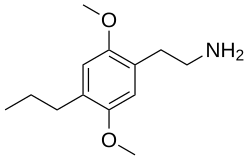
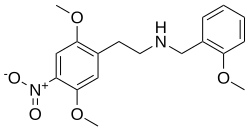
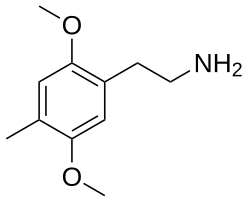
25I-NBOMe is related to 25B-NBOMe, 25C-NBOMe, 25N-NBOMe and 2C-I. It is the N-benzyl derivative of 2C-I; the parent compound does not contain the additional methoxybenzyl group.
Reviews
There are no reviews yet.