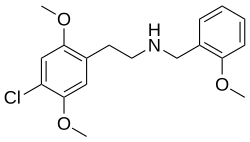
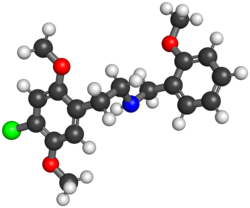
25C-NBOMe, also known as 2C-C-NBOMe or Cimbi-82, is a highly potent synthetic psychedelic in the N-benzylphenethylamine family. It is an N-(2-methoxybenzyl) derivative of 2C-C and acts primarily through serotonin 5-HT2A receptor activation. The compound has been found on blotter paper and in products sold as LSD. Clinical reports include seizures, rhabdomyolysis, acute kidney injury and a fatal intoxication.
Chemistry and history
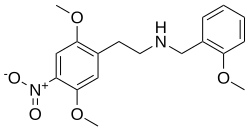
25C-NBOMe is derived from 2C-C, with a chlorine atom at the 4-position and methoxy groups at the 2- and 5-positions of the phenyl ring. The nitrogen carries a 2-methoxybenzyl substituent. This N-benzyl group substantially increases affinity for serotonin receptors compared with the parent 2C compound.
25C-NBOMe emerged on online drug markets around 2010 and has been detected in blotter papers, powders and tablets. It has sometimes been sold as LSD, which can lead to exposure to a much more potent compound than the purchaser expects.
Pharmacology
25C-NBOMe is a potent agonist at the 5-HT2A receptor. Animal studies have shown stronger receptor affinity and behavioural potency than the corresponding 2C-C compound. Its actions at serotonin receptors are consistent with psychedelic effects, while interactions with adrenergic systems may contribute to sympathomimetic toxicity (Comparative neuropharmacology of NBOMe hallucinogens, 2018).
Subjective effects
The PsychonautWiki profile of 25C-NBOMe describes strong psychedelic effects, including visual changes, stimulation and altered cognition. These anecdotal user reports cannot reliably predict intensity or adverse effects.
Visual and sensory effects
Reported effects include geometric patterns, colour enhancement, visual movement and distortions of depth or perspective. Some accounts describe intense closed-eye imagery and changes in the perception of sound and touch.
Cognitive and emotional effects
Reports mention altered thought patterns, time distortion, euphoria and emotional intensity. Anxiety, confusion, paranoia and agitation can also occur. In severe intoxication, delirium and loss of behavioural control have been described.
Clinical toxicity
Two analytically confirmed cases of severe NBOMe intoxication involved 25B-NBOMe and 25C-NBOMe. Both patients developed confusion, agitation, hypertension, tachycardia, hyperthermia and seizures; rhabdomyolysis and liver-function abnormalities were also reported (Two cases of severe intoxication with 25B-NBOMe and 25C-NBOMe, 2014).
A separate Danish case report described a 22-year-old man who developed generalised seizures, acute renal failure and severe metabolic acidosis after exposure to 25C-NBOMe. He died despite intensive treatment (Fatal intoxication with 25C-NBOMe, 2015).
Cardiovascular effects and research limitations
Laboratory and animal research has found potential cardiotoxic effects. A study of 25C-NBOMe and 25D-NBOMe reported reduced cell viability and prolonged QT intervals in rats. These results raise concerns about cardiac rhythm, but cannot establish the risk in humans (Yoon and colleagues, 2019).
The clinical record demonstrates that severe and fatal poisoning can occur. However, the exact relationship between exposure, blood concentration and outcome remains difficult to establish, particularly when the identity of a product or the presence of other substances is uncertain.
Related compounds
25C-NBOMe is related to 25B-NBOMe, 25D-NBOMe and 25C-NBOH. It is the N-benzyl derivative of 2C-C; 25C-NBOH differs by carrying a 2-hydroxybenzyl group.
Reviews
There are no reviews yet.