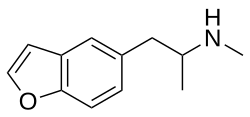
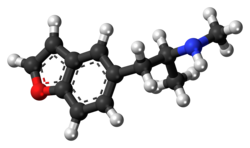
5-(2-Methylaminopropyl)benzofuran (5-MAPB) is a synthetic entactogen in the benzofuran family. It is the N-methyl analogue of 5-APB and is structurally related to MDMA and MDA. 5-MAPB has been sold as a research chemical and is commonly described as producing empathogenic and stimulant effects. Laboratory studies show that it releases monoamines, while clinical case reports have documented acute toxicity involving cardiovascular and neurological symptoms.
Chemistry
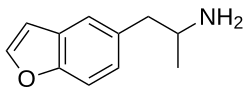
5-MAPB contains a benzofuran ring with an aminopropyl chain attached at the 5-position. The nitrogen is methylated, distinguishing it from 5-APB, which has a primary amine. It is also related to 6-MAPB, the positional isomer with the side chain at the 6-position.
The N-methyl substitution changes the compound’s structure and can affect transporter activity. It should not be assumed that 5-MAPB and 5-APB have identical potency or effects.
Pharmacology
5-MAPB acts as a substrate-type releaser at dopamine, norepinephrine and serotonin transporters. In rat brain synaptosome experiments, it released all three monoamines with nanomolar potency. Its profile was broadly similar to MDMA, although the relative activity at individual transporters differed (Brandt and colleagues, 2020).
Earlier in-vitro research on related benzofurans found that compounds in this family can also interact with serotonin receptors, including 5-HT2B. Those findings should not be treated as a complete receptor profile for 5-MAPB itself (Rickli and colleagues, 2015).
Subjective effects
The PsychonautWiki profile of 5-MAPB describes empathogenic effects alongside stimulation. Users commonly compare it with MDMA, with emotional warmth, sociability and increased appreciation of music among the more frequently mentioned features.
Physical effects
Stimulation and increased physical energy are reported alongside a feeling of bodily warmth or relaxation. Other accounts mention increased heart rate, sweating, jaw tension, dehydration and reduced appetite. Some users describe a tingling or tactilely enhanced sensation.
Emotional and cognitive effects
Empathy, affection, sociability and emotional openness are commonly described. Users also report euphoria, disinhibition, music appreciation and increased interest in social contact. Faster thoughts and wakefulness may occur, while anxiety or confusion can appear when the experience becomes uncomfortable.
Perceptual effects
Some reports describe brighter colours, enhanced tactile perception and changes in the perception of sound. More pronounced visual effects are less central to the reported profile than the emotional and physical effects.
Clinical toxicity
A 2017 emergency-medicine case report described analytically confirmed 5-MAPB exposure in a patient who developed hypertension, tachycardia, sweating, mild hyperthermia, tremor, hyperreflexia, clonus, agitation, disorientation, hallucinations and convulsions. The symptoms were compatible with a severe stimulant or serotonergic toxidrome and improved after intensive symptomatic treatment. The reported elimination half-life was similar to that of MDMA (Hofer and colleagues, 2017).
A 2024 forensic report described a fatal co-intoxication involving 5-MAPB and alpha-methyltryptamine, with benzodiazepines and other stimulants also detected. The presence of several substances prevents the outcome from being attributed to 5-MAPB alone (Fatal AMT and 5-MAPB co-intoxication, 2024).
Research limitations
Although laboratory studies have clarified its monoamine-releasing activity, there are few controlled human studies of 5-MAPB. The clinical cases show that serious cardiovascular and neurological effects can occur, but do not establish a precise toxic range or the frequency of complications.
Its long-term effects, dependence potential and full metabolic profile remain incompletely understood. Research on 5-APB or MDMA offers context, but no direct evidence about 5-MAPB.
Related compounds
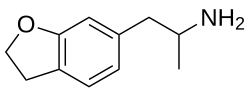
5-MAPB is related to 5-APB, 6-APB and 6-APDB. It is the N-methyl derivative of 5-APB and shares structural features with MDMA, but remains a distinct benzofuran compound.
Reviews
There are no reviews yet.