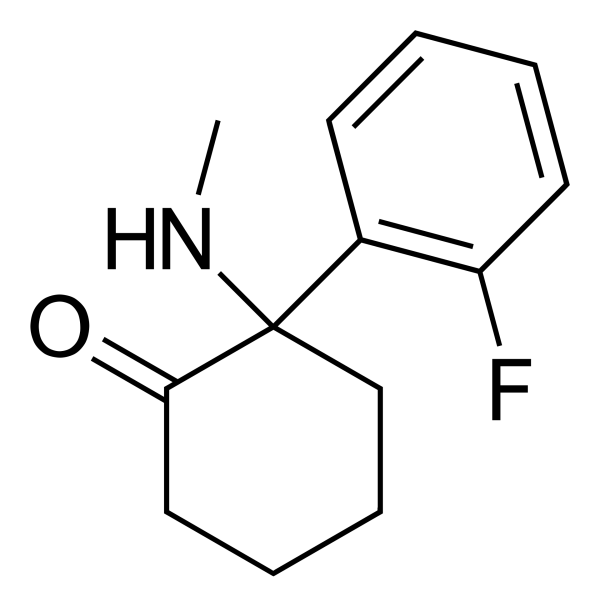
2-Fluorodeschloroketamine (2-FDCK), also known as 2F-DCK, is a synthetic dissociative in the arylcyclohexylamine family. It is structurally related to ketamine and deschloroketamine, with a fluorine atom at the 2-position of the phenyl ring. The compound appeared on the research-chemical market as a ketamine analogue, but its pharmacology and long-term effects have not been studied in depth.
Chemistry and pharmacology
2-FDCK has the same basic cyclohexanone and methylamine framework found in ketamine and deschloroketamine. Its aromatic ring carries an ortho-fluorine substituent. This makes it a fluorinated analogue of deschloroketamine rather than simply another name for ketamine.
It is generally thought to act as an NMDA receptor antagonist, based on its structure and its reported similarity to ketamine and other dissociatives. Direct pharmacological data remain limited, so its receptor profile should not be treated as identical to that of ketamine. The compound was reported on the online research-chemical market around 2017, where it was promoted as a ketamine alternative.
Subjective effects
Descriptions in the PsychonautWiki profile of 2-FDCK are based on user reports. The overall experience is often compared with ketamine, with dissociation and sedation more prominent than stimulation.
Physical effects
Reported physical effects include sedation, dizziness, nausea, pain relief and a loss of motor coordination. Some users describe bodily lightness or physical euphoria, while others experience spatial disorientation and reduced tactile awareness. Accounts differ considerably in the degree of impairment described.
Dissociative and sensory effects
The central feature is a sense of detachment from the body and surroundings. Reports describe tactile and visual disconnection, sometimes developing into an immersive state in which the environment feels distant or unreal. Internal imagery and out-of-body sensations are also mentioned. These experiences are commonly compared with the dissociative effects of ketamine.
Cognitive effects
Users report changes in conceptual thinking, memory and the perception of time. Euphoria may occur alongside confusion or difficulty maintaining a clear train of thought. More intense experiences can involve substantial memory gaps and an inability to respond normally to the environment.
Clinical reports and toxicity
Clinical evidence is limited but includes a case report of a patient who arrived at an emergency department in a dissociated state after reported exposure to 2-FDCK alongside other substances. The patient recovered with supportive care, and metabolites of 2-FDCK were identified in urine (Domanski and colleagues, 2022).
A Hong Kong case series documented 20 analytically confirmed exposures between January and July 2019. In 19 cases, at least one other ketamine-type drug was detected. Reported effects were mainly neurological, including impaired consciousness, agitation and abnormal behaviour, and cardiovascular, including hypertension and tachycardia. Five patients experienced loss of consciousness or convulsions; all recovered after treatment (Tse and colleagues, 2020).
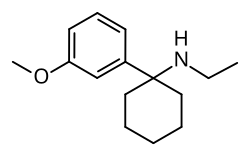
2-FDCK was also detected in a fatal polydrug case together with 3-MeO-PCE, 5-MeO-DMT, amphetamine, cocaine and cannabis. The authors attributed the death to the combined effects of several substances, with 2-FDCK considered the main contributor; the case does not establish that 2-FDCK alone was responsible (Gicquel and colleagues, 2021).
These reports show that serious poisoning can occur, but do not show how likely it is after any given exposure. The compound’s metabolism, toxic range and long-term effects remain incompletely characterised.
Related compounds
2-FDCK is related to ketamine and deschloroketamine, as well as other arylcyclohexylamine dissociatives. The shared chemical framework helps explain their broad pharmacological similarities, but does not mean that their potency, duration or toxicity are interchangeable.

Reviews
There are no reviews yet.