
O-PCE, also known as 2′-oxo-PCE or eticyclidone, is a synthetic dissociative in the arylcyclohexylamine family. It is a ketone-containing analogue of eticyclidine (PCE) and is structurally related to methoxetamine and deschloroketamine. O-PCE is often described as more stimulating and less cognitively suppressive than ketamine, but clinical reports have documented severe intoxications, including a fatal case.
Chemistry
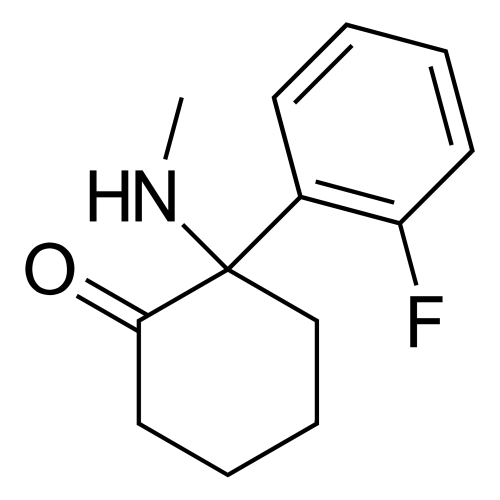
O-PCE is 2-(ethylamino)-2-phenylcyclohexan-1-one. It shares the cyclohexanone and N-ethylamine framework of methoxetamine, but lacks the 3-methoxy group on the phenyl ring. It can be considered the ketone-containing analogue of PCE. The structural relationship to deschloroketamine is also close, although the nitrogen substituent differs.
Pharmacology
O-PCE is expected to act primarily as a non-competitive NMDA receptor antagonist. This mechanism is inferred from its structure and its dissociative effects; a complete receptor-binding profile has not been established. NMDA receptor blockade can disrupt communication between neurons and produce analgesia, altered awareness, motor impairment and dissociation.
Its subjective profile is often described as unusually stimulating for a dissociative. This may reflect additional pharmacological actions, but the contribution of other neurotransmitter systems has not been established in controlled studies.
Subjective effects
The PsychonautWiki profile of O-PCE emphasises both strong stimulation and substantial dissociation. The descriptions are based mainly on user reports, and the source notes that its experience index contains no direct reports for the substance.
Physical effects
Stimulation is one of the most distinctive reported features. Users describe increased energy and physical drive, sometimes compared with conventional stimulants, although the effect may be less functional and more disorienting. Dizziness, increased heart rate, nausea, pain relief and bodily lightness are also reported.
Loss of motor control can become pronounced as dissociation intensifies. Some accounts describe physical euphoria, while others report bodily detachment and reduced coordination.
Cognitive effects
Reported effects include euphoria, conceptual thinking, creativity, déjà vu, depersonalisation, derealisation, disinhibition and changes in time perception. Some users describe immersion and introspection, while others report difficulty with analytical thinking, disrupted memory and slower thoughts.
Mania, delusional thinking and compulsive redosing are concerns in user accounts. The combination of strong stimulation and dissociation may make the experience feel chaotic, particularly when ordinary judgement and memory are impaired.
Auditory and dissociative effects
Auditory suppression, distortion and hallucinations are reported. Tactile and visual disconnection can develop into a more complete dissociative state, with a reduced sense of the body and surroundings. Some accounts describe holes, spaces and voids within the perceived environment.
Clinical intoxications
O-PCE has a documented record of acute poisoning. In October and November 2017, a cluster of 56 intoxications was identified after patients presented with a ketamine-like toxidrome. Laboratory analysis confirmed O-PCE in urine samples. Reported symptoms included impaired consciousness, confusion, agitation, abnormal behaviour, convulsions, nystagmus and unsteady gait. Hypertension, tachycardia, hyperthermia and rhabdomyolysis were also reported, and one case was fatal (Tang and colleagues, 2018).
These cases are important because routine urine immunoassays for ketamine did not reliably detect O-PCE. Specific mass-spectrometric analysis was required to identify the compound.
Metabolism and toxicology
A 2021 study examined O-PCE metabolism using human liver microsomes, urine and hair from a confirmed user. Fifteen metabolites were identified, including products of N-dealkylation, oxidation, dehydration and conjugation. The study proposed several metabolites as useful markers for forensic detection, including 2-en-PCA-N-glucuronide and hydroxylated metabolites (Larabi and colleagues, 2021).
The clinical reports show that severe neurological and cardiovascular toxicity can occur. The contribution of other substances and individual circumstances varies between cases, but the available evidence does not support describing O-PCE as a low-risk dissociative.
Related compounds
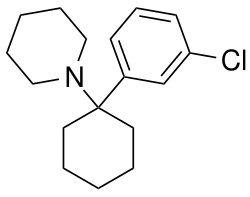
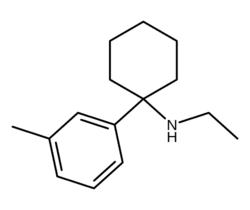
O-PCE is related to Eticyclidine, Methoxetamine, Deschloroketamine, DMXE and 3-MeO-PCE. These compounds share parts of the arylcyclohexylamine framework but differ in their ring substituents and amine groups.

Reviews
There are no reviews yet.