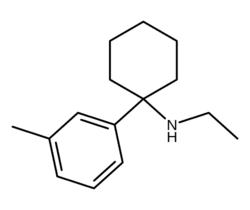
3-Methyl-PCE (3-Me-PCE), also known as 3-methyleticyclidine, is a synthetic dissociative in the arylcyclohexylamine family. It is a ring-methylated derivative of eticyclidine (PCE), with a methyl group at the 3-position of the phenyl ring. The substance was formally identified in Europe in 2023, but little is known about its pharmacology, subjective effects or toxicity.
Chemistry and identification
3-Me-PCE retains the N-ethylcyclohexylamine structure of PCE and differs by a methyl substituent on the meta position of the phenyl ring. It is structurally related to 3-MeO-PCE and 3-HO-PCE, but the methyl group in 3-Me-PCE is neither a methoxy nor a hydroxy substituent.
The European Monitoring Centre for Drugs and Drug Addiction issued a formal notification in March 2024 after Finnish Customs identified the substance in a seizure at Helsinki-Vantaa Airport in April 2023. The powder was labelled as 3-Me-PCE hydrochloride and was confirmed by GC-MS and LC-MS. The notification classifies the compound as an arylcyclohexylamine and gives its other name as 3-methyl eticyclidine (EU Early Warning System notification, 2024).
Pharmacology
There is very little direct information about the pharmacology of 3-Me-PCE. It is classified as a dissociative because of its structural relationship to PCE and other arylcyclohexylamines that act as NMDA receptor antagonists. The European notification notes that dissociative effects are expected on structural grounds, but also makes clear that the available pharmacological and toxicological information is limited.
A synthesis and analytical characterisation of the hydrochloride salt has been reported, but this does not amount to a detailed receptor-binding or functional study. It is therefore not possible to assign a reliable potency or a complete mechanism of action.
Subjective effects
Neither user reports nor controlled human observations offer a well-established account of a typical 3-Me-PCE experience. Its classification as a dissociative is based on its chemical relationship to PCE, not on a detailed study of its subjective effects.
Descriptions of stimulation, sedation, dissociation, hallucinations or cognitive changes should therefore be treated as expectations based on related compounds rather than confirmed effects of 3-Me-PCE itself.
Toxicity and research limitations
No clinical case series has established the acute toxicity, metabolism or long-term effects of 3-Me-PCE. The 2024 notification records an analytically confirmed seizure but includes no clinical observations of intoxicated individuals. Its toxic range, dependence potential and interaction profile remain unknown.
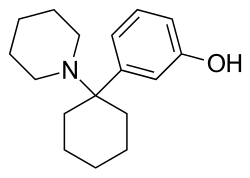
The distinction between 3-Me-PCE, 3-MeO-PCE and 3-HO-PCE is particularly important. They are related compounds, but their substituents differ and the pharmacological properties of one should not be transferred to another without experimental evidence.
Related compounds
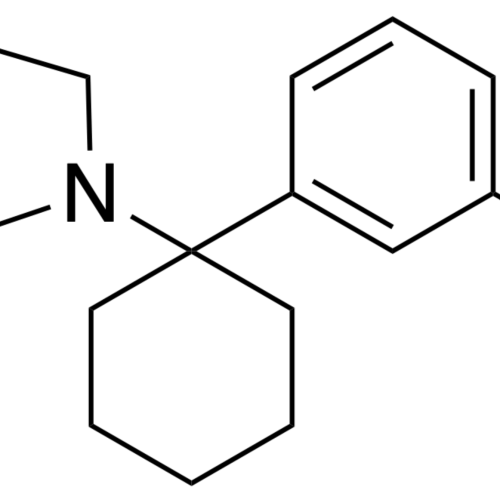
3-Me-PCE is related to PCE, 3-MeO-PCE and 3-HO-PCE. All belong to the eticyclidine branch of the arylcyclohexylamines, but differ in the group attached to the phenyl ring.

Reviews
There are no reviews yet.