
3-Chloroethcathinone (3-CEC) is a synthetic cathinone and a ring-substituted analogue of ethcathinone. It carries a chlorine atom at the 3-position of the phenyl ring and an ethyl group on the amino nitrogen. The compound has been identified in European drug-monitoring and forensic records, but published information about its pharmacology and effects in humans is very limited.
Chemistry
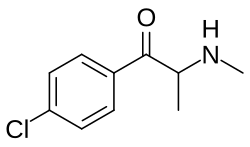
3-CEC is a β-keto amphetamine with a meta-chloro substituent on the aromatic ring. Its structure is closely related to 3-CMC, but 3-CEC has an N-ethyl group rather than an N-methyl group. It is also a higher homologue of 3-chlorocathinone.
The European Monitoring Centre for Drugs and Drug Addiction identified 3-CEC as a higher homologue of 3-CMC in its initial report on 3-CMC. The UK Advisory Council on the Misuse of Drugs also lists 3-CEC as 3-chloroethcathinone, with the structure 1-(3-chlorophenyl)-2-ethylaminopropan-1-one (ACMD, Synthetic cathinones: an updated harms assessment).
Pharmacology
There is no detailed, compound-specific receptor or transporter profile for 3-CEC in the available literature. As a synthetic cathinone, it is expected to affect monoamine signalling, but the balance between dopamine, norepinephrine and serotonin activity has not been established experimentally for this compound.
Findings from 3-CMC or 4-CMC cannot be directly transferred to 3-CEC. The N-ethyl substitution and the position of the chlorine atom both distinguish it from those better-documented cathinones.
Occurrence and reported effects
3-CEC has appeared in European monitoring records and has been included in national assessments of synthetic cathinones. The UK harms assessment lists one post-mortem toxicology detection between 2019 and 2023. This confirms its presence in forensic casework, but gives too little information to attribute specific symptoms or a death to 3-CEC alone.
Reliable human accounts are too scarce to describe a characteristic subjective experience. Stimulation is plausible from its chemical class, but specific claims about euphoria, sociability, visual changes or duration would go beyond the available evidence.
Toxicity and research limitations
No controlled human studies have established the acute toxicity, metabolism, dependence potential or long-term effects of 3-CEC. Its presence in monitoring and forensic datasets should not be confused with a well-characterised clinical profile.
Other chlorinated cathinones have been associated with serious intoxications, but those findings do not establish the same risk profile for 3-CEC. Compound-specific analytical and pharmacological studies are still needed.
Related compounds
3-CEC is related to 3-CMC, 3-MMC and 4-CMC. It is the N-ethyl analogue of 3-CMC and the meta-chloro positional isomer of 4-CEC.

Reviews
There are no reviews yet.