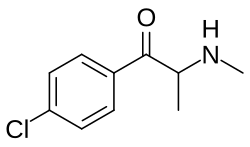
4-Chloromethcathinone (4-CMC), commonly known as clephedrone, is a synthetic cathinone stimulant. It is structurally related to mephedrone, but has a chlorine atom at the 4-position of the phenyl ring instead of a methyl group. 4-CMC has been detected in Europe since at least 2014 and is internationally controlled because of its stimulant effects and documented cases of acute poisoning.
Chemistry and history
4-CMC is a ring-substituted methcathinone with a para-chloro group and an N-methylamine side chain. It is a positional and structural relative of 3-CMC and 4-MMC. The compound is commonly encountered as a powder or crystalline material.
4-CMC was reported on the European drug market in 2014. It was assessed by the World Health Organization’s Expert Committee on Drug Dependence in 2019 and placed in Schedule II of the 1971 Convention on Psychotropic Substances in 2020 (WHO critical review of 4-CMC).
Pharmacology
4-CMC increases extracellular levels of dopamine, norepinephrine and serotonin. Its pharmacological action is similar to that of other synthetic cathinones and amphetamine-type stimulants. Animal studies have found increased locomotor activity and responses resembling those produced by MDMA, cocaine and methamphetamine in drug-discrimination tests.
The WHO review describes 4-CMC as a stimulant with effects across the major monoamine systems. It also notes rewarding effects in experimental models, which are consistent with abuse potential. Controlled studies of dependence in humans or animals were not available at the time of the review.
Reported effects
Human reports describe increased concentration, self-confidence and sociability. These effects are consistent with a stimulant profile, although the available observations do not establish a predictable subjective experience.
Physical effects
Reported adverse effects include increased heart rate, tachycardia, elevated blood pressure and chest pain. Agitation, sweating and sleeplessness have also been described. The cardiovascular effects are a particular concern because they can occur alongside increased physical activity and psychological stimulation.
Cognitive and psychological effects
Some reports describe increased confidence and sociability, while adverse reactions include fear, aggression, agitation, hallucinations and psychosis. The WHO review notes that these effects resemble those associated with other potent psychostimulants and synthetic cathinones.
Clinical toxicity
4-CMC has been analytically confirmed in both fatal and non-fatal intoxications. In many cases, other substances were also detected, making it difficult to attribute every clinical finding to 4-CMC alone. The WHO review records one non-fatal case involving 4-CMC without other reported substances, as well as additional cases involving polydrug exposure.
A broader toxicological analysis of synthetic cathinone intoxications found 4-CMC in multiple post-mortem and non-fatal cases. The study’s sample was weighted towards autopsy material, so the proportion of fatal cases in that dataset should not be interpreted as the fatality rate among all users (Toxicological analysis of synthetic cathinone intoxications, 2022).
Dependence and research limitations
Controlled studies have not quantified the dependence potential of 4-CMC. Its action on monoamine signalling and its rewarding effects in animal models suggest a potential for compulsive use. The long-term consequences, including those of repeated exposure, remain poorly understood.
Related compounds
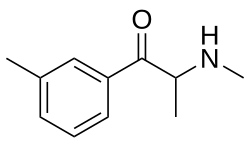
4-CMC is related to 3-CMC, 3-CEC, 3-MMC and 4-MMC. It is the para-chloro analogue of methcathinone and differs from 3-CMC in the position of the chlorine atom.

Reviews
There are no reviews yet.