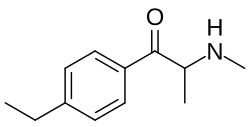
4-Ethylmethcathinone (4-EMC) is a synthetic cathinone stimulant with an ethyl group at the 4-position of the phenyl ring. It is structurally related to mephedrone and other ring-substituted methcathinones. 4-EMC was first reported to European drug-monitoring authorities in 2011, but its pharmacology and clinical effects have been studied much less extensively than those of 3-MMC or 4-CMC.
Chemistry and identification
4-EMC is a β-keto amphetamine with an N-methylamine side chain and a para-ethyl substituent on the aromatic ring. It is sometimes described as a higher homologue of mephedrone, in which the para-methyl group is replaced by an ethyl group.
The first reported seizure was made in Sweden in May 2011. The European Monitoring Centre for Drugs and Drug Addiction listed it as a ring-substituted cathinone closely related to methcathinone and mephedrone (EMCDDA, Synthetic cathinones and injection).
Pharmacology
There is little direct research on the pharmacology of 4-EMC. Its classification as a stimulant is based on its cathinone structure and the known effects of related compounds. Neither its transporter profile nor the relative contributions of dopamine, norepinephrine and serotonin signalling are reliably established in the literature.
Research on other ring-substituted cathinones shows that relatively small changes to the aromatic ring can alter monoamine-transporter activity. It would therefore be misleading to assume that 4-EMC has the same pharmacological profile as mephedrone.
Reported effects
Human evidence is too limited to define a typical 4-EMC experience. Online descriptions sometimes compare it with other stimulant cathinones, but those comparisons are anecdotal and do not establish a consistent profile.
Stimulation, euphoria and increased sociability are plausible class-related effects, but there are insufficient compound-specific observations to describe their intensity, duration or frequency with confidence.
Toxicity and research limitations
Published clinical information on 4-EMC is sparse. The available monitoring records document its appearance on the drug market, but do not provide a robust clinical picture of acute poisoning or long-term harm. There are no controlled studies defining its toxic range, metabolism, dependence potential or interaction profile.
The absence of a substantial case literature should not be interpreted as evidence that 4-EMC is safe. It means that its risks are poorly characterised. Results from better-studied cathinones can provide context, but cannot replace direct research on 4-EMC.
Related compounds
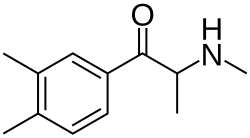
4-EMC is related to 3-MMC, 4-MMC, 3,4-DMMC and other ring-substituted methcathinones. Its para-ethyl group distinguishes it from the para-methyl analogue mephedrone.

Reviews
There are no reviews yet.