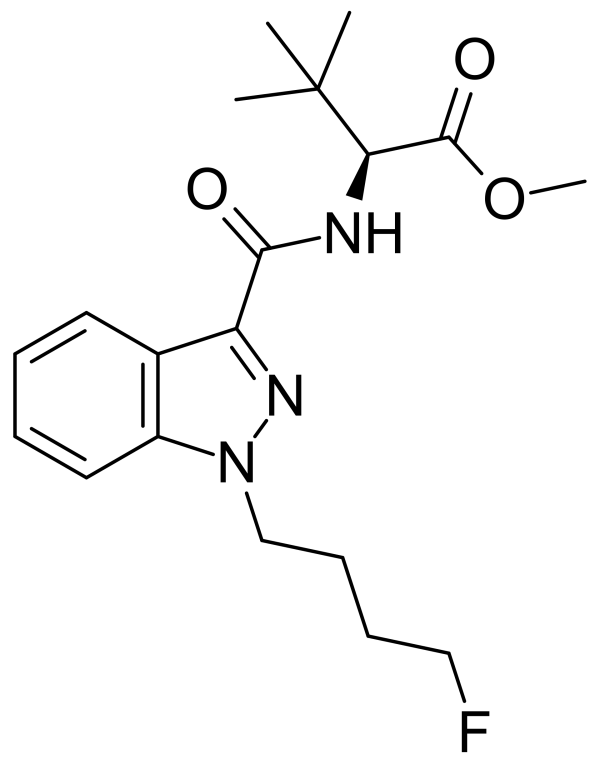
4F-AMB is a fluorinated indazole-carboxamide synthetic cannabinoid identified in chemical and forensic reference literature. The name is used for a valinate-based compound with a 4-fluoropentyl substituent on the indazole nitrogen. It is structurally related to AMB-PINACA and other fluorinated AMB analogues, but direct pharmacological and clinical information specific to 4F-AMB is limited.
Chemistry and identification
Analytical literature lists 4F-AMB as methyl 1-(4-fluoropentyl)-1H-indazole-3-carbonyl-L-valinate, with the molecular formula C19H26FN3O3. The compound contains an indazole core, a fluorinated alkyl chain and a methyl valinate carboxamide group. It should not be confused with 5F-AMB-PINACA, in which the fluorine occupies a different position on the pentyl chain (Zangani and colleagues, 2020).
The abbreviation can be encountered in lists of synthetic cannabinoid reference substances, but the full chemical name is more reliable than the short code when comparing analytical results.
Pharmacology
Compound-specific receptor-binding and functional data for 4F-AMB are sparse. Its structural class suggests interaction with cannabinoid receptors, as is typical of indazole-carboxamide synthetic cannabinoids, but this does not establish its CB1 potency or whether it behaves as a partial or full agonist.
Results for 5F-AMB-PINACA, AMB-FUBINACA or other AMB derivatives should not be treated as direct evidence about 4F-AMB. A change in the position of a fluorine atom or in the N-alkyl chain can alter receptor activity and metabolism.
Reported effects
Reliable human accounts of 4F-AMB are too scarce to establish a characteristic experience. No controlled human study has established its subjective effects, and a detailed list of visual, cognitive or physical reactions is not supported by the available sources.
Severe adverse effects have been documented for other synthetic cannabinoid receptor agonists, including agitation, confusion, seizures and cardiovascular complications. These findings provide context for the broader class, but should not be presented as confirmed clinical outcomes for 4F-AMB itself.
Toxicity and research limitations
No well-characterised clinical case series or human pharmacokinetic study specific to 4F-AMB was identified in the literature reviewed here. Its metabolism, acute toxic range, dependence potential and long-term effects remain uncertain.
Analytical identification is especially important for this group. A result reported under the shorthand “4F-AMB” should be supported by a full structural assignment, since closely related fluorinated AMB compounds may have similar names but different substitution patterns.
Related compounds
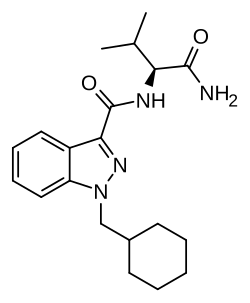
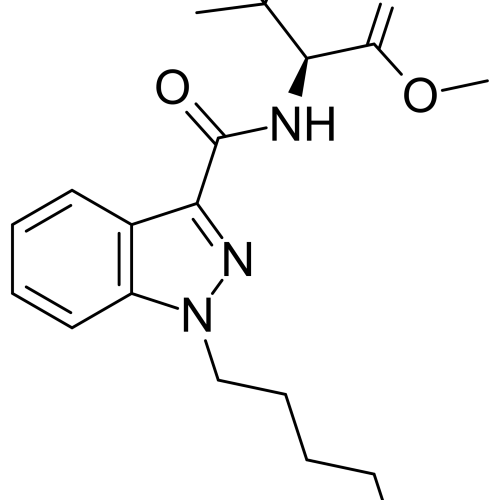
4F-AMB is related to 5F-AMB, 4F-ADB and other indazole-carboxamide synthetic cannabinoids. Its 4-fluoropentyl chain distinguishes it from the corresponding 5-fluoro analogue.

Reviews
There are no reviews yet.