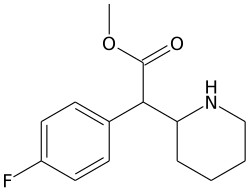
4-Fluoromethylphenidate (4F-MPH) is a synthetic stimulant in the phenidate family and a fluorinated analogue of methylphenidate. It inhibits dopamine and norepinephrine reuptake and has appeared on the research-chemical market as a non-medical stimulant. Unlike several newer phenidates, 4F-MPH has been documented in both non-fatal clinical intoxication and fatal forensic cases.
Chemistry and history
4F-MPH retains the piperidine and methyl ester structure of methylphenidate, with a fluorine atom at the para position of the phenyl ring. It is a chiral compound and is commonly encountered as a mixture of threo and erythro diastereomers. The threo form is the more pharmacologically active component in the methylphenidate family.
4F-MPH appeared on online research-chemical markets in the mid-2010s. It was marketed as a methylphenidate-like stimulant, but its non-medical use and uncertain product composition distinguish it from prescribed methylphenidate.
Pharmacology
An in-vitro study of methylphenidate-based designer drugs found that 4F-MPH inhibits the dopamine transporter (DAT) and norepinephrine transporter (NET) substantially more strongly than the serotonin transporter. Like methylphenidate, it did not produce transporter-mediated monoamine release in the assays used. The results support a stimulant mechanism based mainly on reuptake inhibition (Luethi and colleagues, 2018).
Subjective effects
The PsychonautWiki profile of 4F-MPH includes anecdotal accounts of methylphenidate-like stimulation. Users report increased alertness, concentration and motivation, but also anxiety, restlessness and difficulty sleeping. These accounts cannot predict an individual response.
Cognitive and physical effects
Reported effects include wakefulness, increased focus, faster thinking and reduced appetite. Some users describe euphoria or increased confidence. Unwanted effects include palpitations, elevated heart rate, anxiety, irritability, muscle tension and insomnia.
Clinical and forensic findings
The first analytically confirmed non-fatal intoxication was reported in 2019. A 26-year-old woman presented with neuropsychiatric and cardiovascular symptoms, including confusion, disorientation, incoherent speech, severe psychomotor agitation, palpitations and tachycardia. Symptoms had persisted over several days. Analysis of the seized product and biological samples confirmed 4F-MPH, and the other tested drugs were negative (Papa and colleagues, 2019).
A separate forensic report documented a fatal intoxication in which 4F-MPH was detected post-mortem and listed in the official cause of death. The report also noted a possible structural isomer in the samples, which could not be confirmed because a certified reference standard was unavailable (Shoff and colleagues, 2019).
Metabolism and toxicity
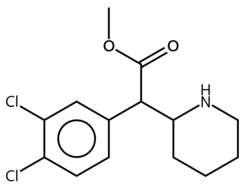
A 2019 metabolism study examined 4F-MPH alongside isopropylphenidate and 3,4-CTMP. It identified multiple phase I metabolites in rat urine and found that hydrolysis to the corresponding carboxy metabolite was an important pathway in pooled human liver S9 fractions (Metabolite identification of methylphenidate-derived NPS, 2019).
The clinical reports show that 4F-MPH can be associated with significant neuropsychiatric and cardiovascular toxicity. They do not establish a reliable concentration threshold or the risk of long-term exposure. Dependence and withdrawal have not been characterised in controlled human studies.
Related compounds
4F-MPH is related to Methylphenidate, Ethylphenidate, 4F-EPH and 3,4-CTMP. It is the para-fluoro analogue of methylphenidate and the methyl ester counterpart of 4F-EPH.

Reviews
There are no reviews yet.