
Isopropylphenidate, also known as IPH or IPPD, is a synthetic stimulant in the phenidate family. It is the isopropyl ester analogue of methylphenidate and acts mainly on dopamine and norepinephrine transporters. Unlike many newer research chemicals, it has been examined in laboratory and animal studies, but there is little controlled information about its effects or safety in humans.
Chemistry and history
Isopropylphenidate retains the piperidine-based phenylacetic acid structure of methylphenidate, but has an isopropyl ester in place of the methyl ester. It is a chiral compound and is usually discussed as a racemic mixture. The compound appeared on the research-chemical market in the mid-2010s as a methylphenidate analogue.
Pharmacology
A 2013 study found that isopropylphenidate had greater affinity and uptake-inhibition activity at the dopamine transporter (DAT) than at the norepinephrine transporter (NET). It was also more resistant than methylphenidate to hydrolysis and transesterification by carboxylesterase 1. In rats, it produced sustained psychostimulant effects measured through locomotor activity (Markowitz, Zhu and Patrick, 2013).
A later in-vitro comparison of methylphenidate-derived research chemicals found that isopropylphenidate inhibited DAT and NET much more strongly than the serotonin transporter and did not produce transporter-mediated monoamine efflux. The results are consistent with a stimulant mechanism based on reuptake inhibition (Luethi and colleagues, 2018).
Metabolism
A 2019 study examined isopropylphenidate metabolism using rat urine and pooled human liver S9 fractions. Researchers identified 17 metabolites in rat urine, including phase I and phase II products. Hydrolysis to the corresponding carboxy metabolite was also observed in the human liver preparation. These findings provide analytical markers for forensic testing, but do not establish human pharmacokinetics or clinical duration (Metabolite identification of methylphenidate-derived NPS, 2019).
Subjective effects
The PsychonautWiki profile of isopropylphenidate draws mainly on users’ descriptions of methylphenidate-like stimulation, with increased wakefulness, focus and motivation. Controlled human observations are too limited to establish a typical experience.
Reported unwanted effects include anxiety, restlessness, increased heart rate, reduced appetite and difficulty sleeping. The available accounts do not establish how frequently these effects occur or how they compare with prescribed methylphenidate.
Toxicity and research limitations
There are no well-characterised clinical case series establishing the acute toxic range, dependence potential or long-term effects of isopropylphenidate. Its DAT activity and stimulant effects in animals provide evidence of pharmacological activity, but cannot be used to predict human potency or safety.
The greater resistance to esterase hydrolysis observed in laboratory work may alter its metabolism compared with methylphenidate. The clinical significance of this difference remains unknown, and human pharmacokinetic studies are lacking.
Related compounds
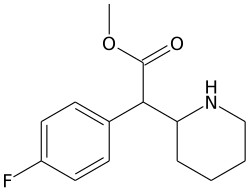
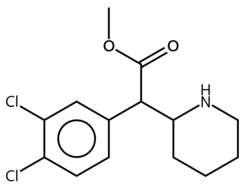
Isopropylphenidate is related to Methylphenidate, Ethylphenidate, 4F-MPH and 3,4-CTMP. It is the isopropyl ester analogue of methylphenidate.

Reviews
There are no reviews yet.