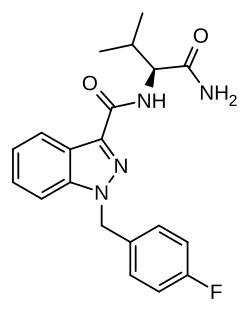
AB-FUBINACA is a synthetic cannabinoid from the indazole-carboxamide family. It was initially developed as a pharmaceutical research candidate, but later appeared in illicit herbal products and was associated with serious intoxications. Laboratory studies identify it as a potent CB1 receptor agonist, while forensic reports document its presence in both non-fatal and fatal cases.
Chemistry and history
AB-FUBINACA contains an indazole-3-carboxamide core, a 4-fluorobenzyl substituent on the indazole nitrogen and a valine-derived amide side chain. It is structurally distinct from ADB-FUBINACA, which has a tert-leucine-derived side chain, and from AMB-FUBINACA, which carries a different amino-acid ester arrangement.
The compound was developed in 2009 as a potential pharmaceutical candidate. Its recreational use was first reported in Japan in 2013. The WHO reviewed it in 2019 and recommended international control because of its abuse potential and reported serious adverse effects (WHO critical review of AB-FUBINACA).
Pharmacology
AB-FUBINACA acts as a potent, high-efficacy agonist at the CB1 receptor. A comparative study of indole- and indazole-based cannabinoids found that the tested compounds, including AB-FUBINACA, were high-potency agonists at CB1 and CB2 receptors, with EC50 values across the panel ranging from 0.24 to 21 nM at CB1 (Banister and colleagues, 2015).
Its full agonist activity helps explain why intoxication can be more severe than the effects typically associated with THC, a partial agonist at cannabinoid receptors.
Reported effects
Human reports describe neuropsychiatric and cardiovascular reactions consistent with potent synthetic cannabinoid intoxication. These include altered perception, agitation, anxiety, paranoia, hallucinations, memory impairment and loss of consciousness.
Neurological and behavioural effects
Clinical reports include confusion, agitation, hallucinations and seizures. Severe cases may involve reduced responsiveness or coma. The clinical presentation can vary considerably, particularly when other substances are present.
Cardiovascular effects
Tachycardia, hypertension and chest discomfort have been reported. These findings are consistent with the broader toxicological profile of potent CB1 agonists, although the contribution of co-ingested drugs must be considered in individual cases.
Clinical and forensic findings
A 2016 forensic report described a rapid death in which ADB-FUBINACA was detected in post-mortem blood at 7.3 ng/mL. The cause of death was certified as coronary arterial thrombosis in combination with synthetic cannabinoid use, rather than attributing the outcome to the cannabinoid alone (Shanks and colleagues, 2016).
Another fatal mixed-intoxication report identified metabolites of ADB-FUBINACA in post-mortem blood, illustrating the value of metabolite analysis when the parent compound is present at low or difficult-to-interpret concentrations (Fatal intoxication involving N-ethylhexedrone and ADB-FUBINACA, 2019).
Metabolism and research limitations
AB-FUBINACA and related compounds are extensively metabolised. Research on the closely related ADB-FUBINACA has identified hydroxylated and other phase I metabolites in human liver microsomes and post-mortem blood. Those findings help explain metabolism within the broader family, but do not fully map the metabolism of AB-FUBINACA itself (Clinical, analytical and forensic review of ADB-FUBINACA and AMB-FUBINACA, 2021).
Human pharmacokinetic data remain limited, and many forensic cases involve more than one drug. The available evidence nevertheless establishes a serious risk of acute toxicity and no recognised therapeutic use.
Related compounds
AB-FUBINACA is related to ADB-FUBINACA, AB-PINACA and AB-CHMINACA. The fluorobenzyl substituent distinguishes it from the pentyl- and cyclohexylmethyl-substituted analogues.

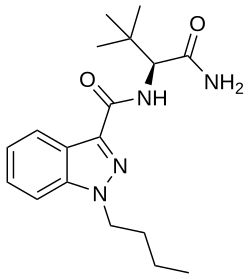
Reviews
There are no reviews yet.