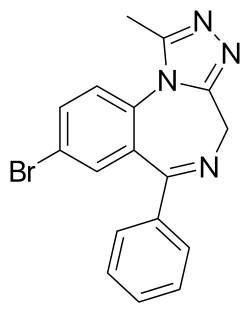
Bromazolam is a synthetic triazolobenzodiazepine closely related to alprazolam. It was originally investigated as a possible pharmaceutical compound but was never approved for medical use. It appeared on the illicit drug market in Europe in 2016 and has since been detected in counterfeit tablets, powders, liquids and other products. Toxicology reports increasingly identify it in cases of severe sedation and mixed-drug poisoning.
Chemistry and history
Bromazolam has the triazolobenzodiazepine structure found in alprazolam and triazolam. The main structural distinction from alprazolam is the bromine substituent in place of chlorine on the fused benzodiazepine ring system. The compound was synthesised decades before it appeared on the illicit market, but it never became an approved medicine.
Its first documented detection by authorities was in Sweden in 2016. Since then, it has been identified in samples from numerous countries and has become one of the more frequently encountered novel benzodiazepines in forensic casework (WHO critical review, 2023).
Pharmacology
Bromazolam acts at the benzodiazepine binding site of the GABAA receptor, where it enhances the effect of the inhibitory neurotransmitter GABA. Laboratory studies show positive allosteric modulation of GABAA receptor signalling. Its activity is consistent with the mechanism of established benzodiazepines, although the full pharmacological profile has not been mapped.
Available pharmacokinetic information suggests that bromazolam is metabolised through hydroxylation and glucuronidation. Several cytochrome P450 enzymes contribute to its metabolism, including CYP3A4 and CYP2C19. The limited number of human samples studied makes it difficult to establish how these pathways vary between individuals.
Reported effects
Descriptions of non-medical use are mostly anecdotal. The WHO review records reports of hypnotic and sedative effects, muscle relaxation and, in some accounts, euphoria. Some users have described memory loss, while others reported less amnesia than they experienced with other benzodiazepines. These reports are not based on controlled comparisons.
Sedation and physical effects
Sedation is a central feature of bromazolam intoxication. Clinical reports include marked drowsiness, reduced responsiveness, impaired coordination and, in severe cases, unconsciousness. Muscle relaxation is also reported. The degree of impairment can be difficult to judge from outward behaviour, particularly when memory formation is affected.
Cognitive effects
Reported effects include anxiety reduction, disinhibition and memory impairment. Some users describe a sense of calm or increased confidence, while others experience confusion and gaps in memory. The available reports do not establish how often each effect occurs or how strongly bromazolam differs from alprazolam.
Clinical and forensic findings
Bromazolam has been detected in post-mortem toxicology, impaired-driving investigations and emergency presentations. In many fatal cases, other substances were also present, so the individual contribution of bromazolam could not be determined. The WHO review also describes patients who were found unconscious or minimally responsive after confirmed exposure.
In Indiana, bromazolam was detected in 94 post-mortem cases during 2023. It was not the only substance identified in any of those cases, but it was listed as a contributing factor in a number of deaths (Journal of Analytical Toxicology, 2024). UNODC surveillance has also identified bromazolam among the most frequently reported novel benzodiazepines in clinical, post-mortem and impaired-driving casework (UNODC Early Warning Advisory, 2024).
Dependence and safety concerns
No controlled studies have established the dependence potential of bromazolam. Its action at the GABAA receptor makes physical dependence plausible, as with other benzodiazepines. Online accounts describe tolerance and difficult withdrawal, but have not been analytically verified or collected systematically.
As with other benzodiazepines, combining bromazolam with opioids, alcohol or other central nervous system depressants can increase sedation and respiratory depression. Severe intoxications have often involved more than one substance. Abrupt cessation after regular use can also cause serious withdrawal, including seizures; dependence should be managed with medical support rather than sudden discontinuation.
Related compounds
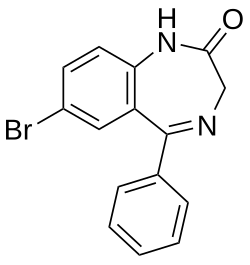
Bromazolam is structurally related to Alprazolam, Triazolam and Clonazolam. It should not be confused with flubromazolam, which has a different substitution pattern and a separate pharmacological record.

Reviews
There are no reviews yet.