
PX-2, also known as 5-fluoro-APP-PINACA or FU-PX, is a synthetic cannabinoid in the fluorinated indazole-3-carboxamide family. It is an analogue of 5-fluoro-AB-PINACA in which the isopropyl-derived amino-acid substituent is replaced by a benzyl group. Its chemical identity is documented in analytical reference databases, but its physiological and toxicological properties are explicitly described as unknown.
Chemistry and identification
PX-2 is (S)-N-(1-amino-1-oxo-3-phenylpropan-2-yl)-1-(5-fluoropentyl)-1H-indazole-3-carboxamide. It contains an indazole core, a 5-fluoropentyl chain and a phenylalanine-derived carboxamide substituent. The FDA Substance Registration System lists 5-fluoro-APP-PINACA, FU-PX and PX-2 as names for this chemical identity (FDA Substance Registration System: PX-2).
Cayman Chemical describes PX-2 as an analogue of 5-fluoro-AB-PINACA in which an isopropyl substituent has been replaced with a benzyl group. The reference standard is intended for forensic and research use, and the supplier states that its physiological and toxicological properties are not known (Cayman Chemical: PX-2 reference standard).
Pharmacology
No reliable compound-specific CB1 or CB2 receptor-binding and functional data were identified in the sources reviewed here. Its classification as a synthetic cannabinoid reflects its structural relationship to indazole-carboxamide cannabinoids, without establishing its potency, efficacy or selectivity at receptors.
Results for 5F-AB-PINACA or other fluorinated indazole compounds should not be transferred directly to PX-2. The benzyl substitution changes the amino-acid-derived portion of the molecule and may alter receptor interactions, metabolism and biological activity.
Reported effects
Reliable human accounts are too scarce to establish a characteristic PX-2 experience. No controlled human study or well-documented clinical case series has established its subjective effects, duration or acute intoxication pattern.
Adverse effects reported for other potent synthetic cannabinoid receptor agonists include confusion, agitation, seizures and cardiovascular disturbances. These class-level observations are not confirmed outcomes for PX-2.
Toxicity and research limitations
The available reference documentation states that the physiological and toxicological properties of PX-2 are unknown. No compound-specific human metabolism study, acute toxicology series, dependence assessment or long-term safety research was identified.
PX-2 should therefore be described as a chemically identified research standard with an uncharacterised pharmacological profile. Its structural similarity to other synthetic cannabinoids is not enough to establish that it produces the same effects or carries the same level of risk.
Related compounds
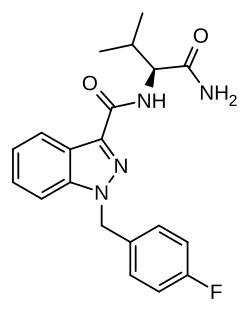
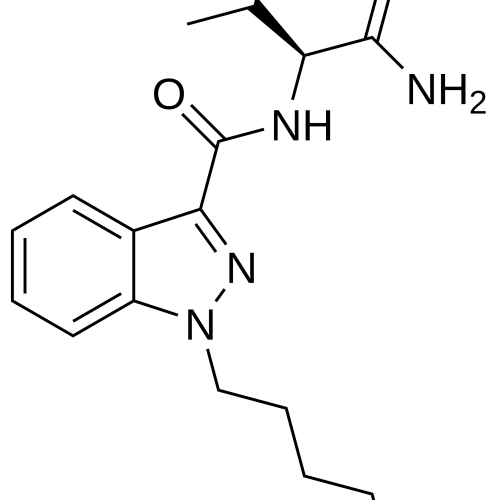
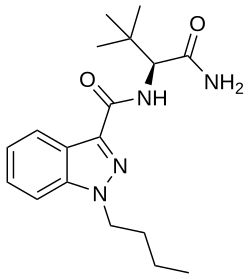
PX-2 is related to 5F-AB-PINACA, AB-PINACA and other fluorinated indazole-carboxamides. Its benzyl-substituted amino-acid group distinguishes it from the isopropyl-derived side chain in 5F-AB-PINACA.
Reviews
There are no reviews yet.