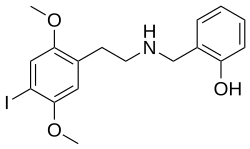
25I-NBOH is a synthetic psychedelic in the N-benzylphenethylamine family. It is an N-(2-hydroxybenzyl) derivative of 2C-I, with an iodine atom at the 4-position of the phenyl ring. The compound has been identified on blotter paper seized in Brazil and has been studied for its activity at serotonin receptors. Human toxicology data are sparse, and its analytical instability can complicate identification.
Chemistry and identification
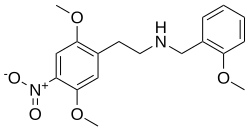
25I-NBOH is derived from 2C-I. Its distinguishing feature is a 2-hydroxybenzyl group attached to the nitrogen. This separates it from 25I-NBOMe, which has a 2-methoxybenzyl group. The two compounds are related, but they are not interchangeable names for the same substance.
Forensic laboratories in Brazil identified 25I-NBOH in seized blotter papers in 2017. The study noted that the compound can break down during routine gas chromatography, producing 2C-I and potentially leading to misidentification. The researchers used complementary analytical methods, including liquid chromatography, infrared spectroscopy and nuclear magnetic resonance, to confirm the structure (25I-NBOH identified in blotter paper seizures in Brazil, 2017).
Pharmacology
25I-NBOH is a potent agonist at the 5-HT2A receptor, which is central to the effects of classical serotonergic psychedelics. In receptor assays, it also showed high affinity and activity at 5-HT2C. A comparative study of N-benzylphenethylamines found subnanomolar-to-low-nanomolar functional potency at 5-HT2A, with much weaker activity at monoamine transporters (Rickli and colleagues, 2019).
Research into its metabolism found that CYP2D6 is a major enzyme involved in its primary biotransformation. The compound can also undergo direct glucuronidation, alongside hydroxylation, O-demethylation and N-dealkylation. These findings are useful for forensic detection, but do not establish its duration or clinical effects in humans (Characterisation of the CYP enzymes involved in 25I-NBOH metabolism, 2016).
Subjective effects
The PsychonautWiki profile of 25I-NBOH describes psychedelic effects, though human reports are limited. Perceptual changes are plausible given its receptor activity, but receptor assays alone cannot establish what the experience is like.
Reports associated with the broader N-benzylphenethylamine group include visual patterning, changes in colour and depth perception, altered thought processes and emotional shifts. Anxiety, agitation and confusion have also been described with related compounds. These observations concern the broader class; they do not amount to a well-documented account of 25I-NBOH itself.
Toxicity and research limitations
No substantial clinical case series has established the acute toxicity of 25I-NBOH. A 2017 accidental-exposure report detected a trace amount of 25I-NBOH in a patient who had taken a product containing 25I-NBOMe, but the main identified substance was 25I-NBOMe; the result does not establish a separate 25I-NBOH intoxication (Bad trip due to 25I-NBOMe: a case report, 2017).
Its metabolism and receptor activity have been studied in vitro, but there is little information on human pharmacokinetics, dependence or long-term effects. The instability observed during some analytical procedures is an additional problem when interpreting forensic results.
Related compounds
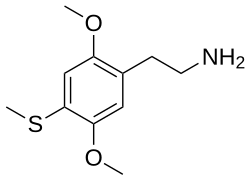
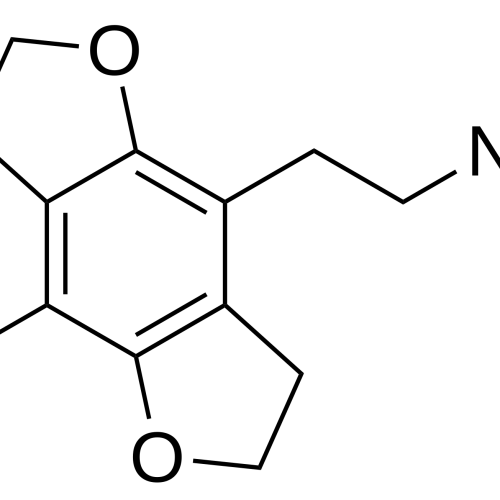
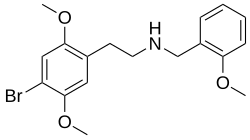
25I-NBOH is related to 25B-NBOH, 25C-NBOH and 25I-NBOMe. The NBOH compounds carry a hydroxybenzyl group, whereas NBOMe compounds carry a methoxybenzyl group.
Reviews
There are no reviews yet.