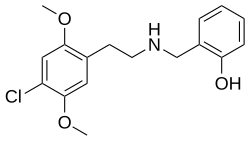
25C-NBOH, also known as 2C-C-NBOH, is a synthetic psychedelic in the N-benzylphenethylamine family. It is an N-(2-hydroxybenzyl) derivative of 2C-C, with a chlorine atom at the 4-position of the phenyl ring. The compound has been identified in seized blotter papers, but its human pharmacology and toxicity remain poorly characterised. Laboratory research has raised concerns about possible cardiovascular effects.
Chemistry and identification
25C-NBOH is based on the 2C-C phenethylamine structure. Its distinguishing feature is a 2-hydroxybenzyl group attached to the nitrogen, rather than the 2-methoxybenzyl group found in NBOMe compounds. This difference places it in the NBOH subgroup.
25C-NBOH was identified in blotter papers seized in Brazil between 2017 and 2018, alongside 25B-NBOH and 25E-NBOH. The researchers used mass spectrometry and nuclear magnetic resonance to confirm the structures and noted that NBOH compounds can be unstable under some analytical conditions (Machado and colleagues, 2020).
Pharmacology
NBOH compounds are related to the 2C-series psychedelics and are expected to act as serotonin receptor agonists, particularly at 5-HT2A. The N-(2-hydroxybenzyl) substitution can increase receptor affinity in this family. However, a complete compound-specific receptor and functional profile for 25C-NBOH has not been established.
Reported effects
The PsychonautWiki profile of 25C-NBOH describes psychedelic effects on the basis of limited human evidence. A typical subjective experience has not been established in any substantial clinical literature.
As a 2C-C-derived serotonergic psychedelic, perceptual changes and altered thought patterns are plausible. However, detailed claims about visual geometry, emotional effects or duration should be treated as anecdotal rather than established clinical findings.
Cardiovascular research
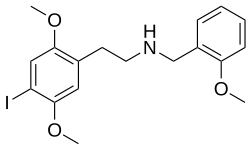
A 2022 study examined 25C-NBOH and 25I-NBOH using cardiomyocyte assays, rat electrocardiography and tests of cardiac ion channels. Both compounds reduced cell viability in the experimental model and prolonged QT and RR intervals in rats. The researchers concluded that the findings suggested possible adverse cardiovascular effects, although the study does not establish the frequency of cardiac events in humans (Yoon and colleagues, 2022).
Toxicity and research limitations
No well-characterised human poisoning series specific to 25C-NBOH has been established in the sources reviewed here. The cardiovascular findings come from preclinical research and have not been confirmed in humans. Its acute toxic range, metabolism, dependence potential and long-term effects remain uncertain.
Clinical cases involving 25C-NBOMe should not be attributed to 25C-NBOH. The two compounds have related 2C-C-derived structures, but differ in the N-benzyl substituent and require separate toxicological assessment.
Related compounds
25C-NBOH is related to 25B-NBOH, 25E-NBOH and 25C-NBOMe. The first two are NBOH analogues, while 25C-NBOMe carries a 2-methoxybenzyl rather than a 2-hydroxybenzyl group.
Reviews
There are no reviews yet.