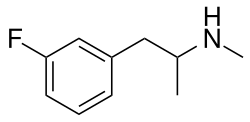
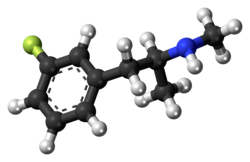
3-Fluoromethamphetamine (3-FMA) is a synthetic stimulant and a fluorinated derivative of methamphetamine. Its fluorine atom is attached to the 3-position of the phenyl ring. User reports describe a mixture of functional stimulation and euphoria, while animal studies have found pronounced psychomotor and reinforcing effects.
Chemistry
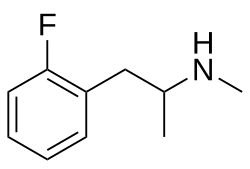
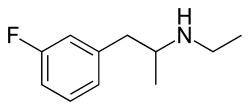
3-FMA retains the N-methylated amphetamine structure of methamphetamine, with a fluorine substituent at the meta position of the aromatic ring. It is the N-methyl counterpart of 3-FA and a positional isomer of 2-FMA and 4-FMA. These compounds differ only in the location of the fluorine atom, but that change can affect their pharmacological and behavioural profiles.
Pharmacology
The pharmacology of 3-FMA is not fully established. It is generally expected to act as a monoamine stimulant, but its selectivity for dopamine, norepinephrine and serotonin transporters is not as well characterised as that of traditional methamphetamine.
Research in rodents has demonstrated substantial behavioural activity. A 2020 study found that 3-FMA increased locomotor activity and produced rewarding and reinforcing effects in animal models. It also reinstated drug-seeking behaviour after extinction in trained rats, leading the authors to identify a potential for compulsive use (Ryu and colleagues, 2020).
A separate 2018 study examined its neurotoxic potential in mice and reported dose-dependent mortality at the higher experimental exposures, alongside changes associated with dopaminergic injury. These findings are specific to the animal models used and should not be translated directly into a human risk estimate (Nguyen and colleagues, 2018). A more recent comparison of fluorinated amphetamines also found methamphetamine-like discriminative effects for 3-FMA in rodents (Gatch and colleagues, 2025).
Subjective effects
The description in the PsychonautWiki 3-FMA profile is based on user reports rather than controlled human trials. It is often characterised as sitting somewhere between the more functional descriptions of 2-FMA and the more euphoric reports associated with 4-FMA.
Physical effects
Stimulation features prominently in user reports, with some describing a strong increase in energy and physical drive, accompanied by physical euphoria or heightened tactile sensitivity. Dehydration, reduced appetite, increased heart rate and perspiration are also reported.
Teeth grinding appears in some accounts, although it is often described as less intense than with MDMA or 2-FMA. Other possible effects include restless legs, muscle tension and difficulty settling physically.
Cognitive effects
Accounts of milder effects describe improved focus, motivation, analytical thinking and wakefulness. Thought acceleration and cognitive euphoria may also occur. As the experience becomes more intense, euphoria can become distracting rather than supportive of concentration.
Increased appreciation of music, time distortion and compulsive redosing are also reported. Anxiety, irritability or paranoia may occur, particularly when stimulation is prolonged or sleep is restricted.
After-effects
Reported after-effects include anxiety, cognitive fatigue, depression, irritability and reduced motivation. Some users report remaining awake long afterwards and struggling to return to a normal sleep pattern.
Toxicity and harm potential
The animal literature gives 3-FMA a more substantial research record than several other fluorinated amphetamines, but it does not establish its safety in humans. The 2020 study found rewarding and reinforcing effects in rodents, while the 2018 work raised concerns about neurotoxicity under experimental conditions. Neither study provides a reliable estimate of the risk associated with human exposure.
There is little clinical information on repeated use, metabolism or long-term organ effects. The reported stimulant profile, together with the animal findings, makes it inappropriate to assume that 3-FMA is a mild alternative to methamphetamine.
Related compounds
3-FMA is related to 3-FA, 2-FMA and 4-FMA. It is the N-methyl analogue of 3-FA, while 2-FMA and 4-FMA are positional isomers. Differences between these compounds are reflected in both laboratory studies and user descriptions.

Reviews
There are no reviews yet.