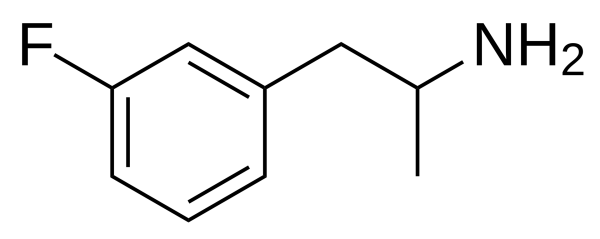
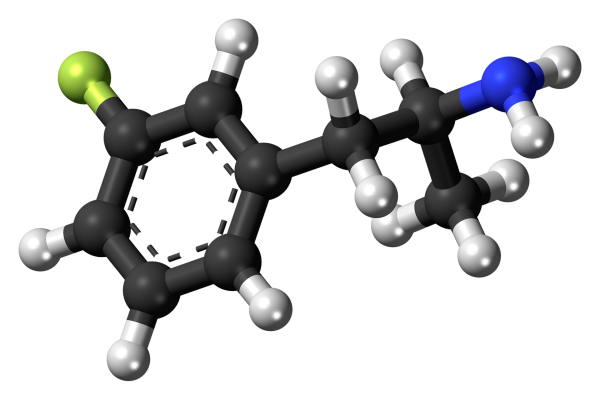
3-Fluoroamphetamine (3-FA) is a synthetic stimulant in the amphetamine family. It is a ring-substituted analogue of amphetamine, with a fluorine atom at the 3-position of the phenyl ring. It is one of three positional fluoroamphetamine isomers and is generally described in user reports as a strong, conventional stimulant rather than an entactogen.
Chemistry
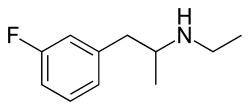
3-FA retains the primary amine structure of amphetamine and differs from it by the addition of fluorine at the meta position of the aromatic ring. It is structurally related to 2-FA and 4-FA, which carry the fluorine atom at the ortho and para positions. It also shares the wider fluorinated amphetamine framework with N-methyl compounds such as 2-FMA and 3-FMA.
Pharmacology
The compound has not been investigated as extensively as traditional amphetamines. Its pharmacology is generally expected to resemble that of other ring-substituted amphetamines, with a stronger influence on dopamine and norepinephrine signalling than on serotonin. This proposed profile is one reason it is often compared with conventional amphetamine-type stimulants.
A 2025 study tested 3-FA alongside several fluorinated amphetamine and methamphetamine analogues in mice and rats. It increased locomotor activity and produced methamphetamine-like responses in drug-discrimination tests. The study also found that the location of the fluorine atom changed the strength and pattern of the behavioural effects, showing why the different isomers should not be treated as equivalent (Gatch and colleagues, 2025).
Subjective effects
The reported experience is summarised from user accounts in the PsychonautWiki profile of 3-FA. These accounts describe a potent stimulant with some euphoric qualities, but generally fewer entactogenic effects than are associated with 4-FA.
Physical effects
Stimulation is the most prominent physical effect in the available reports. Some users describe a strong increase in energy and physical drive, accompanied by a sense of bodily euphoria. Tactile enhancement is also mentioned, although it appears less consistently.
Other reported effects include reduced appetite, dehydration, increased heart rate, sweating and teeth grinding. The latter is often described as less pronounced than with MDMA or 2-FMA. These effects are typical of stimulants, although their frequency and severity have not been established for 3-FA.
Cognitive effects
Reports describe cognitive euphoria, faster thoughts and increased wakefulness. Focus, motivation and analytical thinking may also feel enhanced. Some users describe the experience as relatively functional, with less emotional or social enhancement than that reported for more serotonergic stimulants.
Some users also report greater appreciation of music, a distorted sense of time and reduced anxiety. Compulsive redosing is also mentioned. As with other stimulants, the more positive effects can be accompanied by anxiety, irritability or an increasingly disorganised train of thought.
After-effects
The reported comedown includes anxiety, cognitive fatigue, low mood, irritability and reduced motivation. Thought slowing and lingering wakefulness are also described. The extent of these effects varies between user reports.
Toxicity and harm potential
There is little direct information on the long-term toxicity of 3-FA in humans. The 2025 animal study provides evidence of stimulant-like and methamphetamine-like behavioural effects, but does not determine the risk of repeated exposure in people. The absence of a large clinical literature should not be mistaken for evidence of low toxicity.
Prolonged exposure to amphetamine-type stimulants can be associated with dependence, sleep disruption and stimulant-induced psychiatric symptoms. Whether 3-FA has a distinct toxicity profile from other fluoroamphetamines remains an open question.
Related compounds
3-FA is commonly compared with 2-FA and 4-FA, its positional isomers, and with 2-FMA, 3-FEA and 3-FMA. Although these substances share a fluorinated amphetamine framework, differences in nitrogen substitution and fluorine position can change their pharmacological properties.

Reviews
There are no reviews yet.