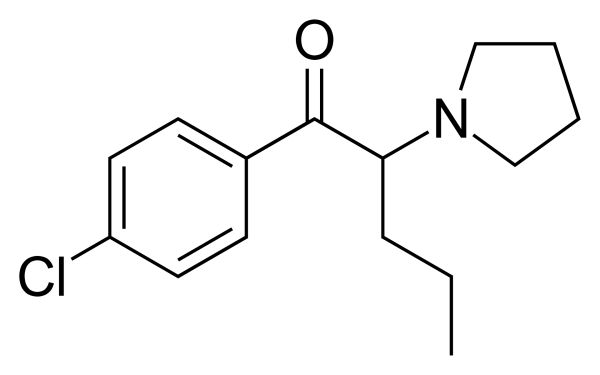
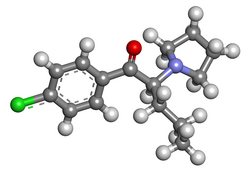
4-Chloro-α-pyrrolidinovalerophenone (4-CL-PVP) is a synthetic cathinone in the pyrovalerone family. It is a chlorinated analogue of α-PVP, with a chlorine atom at the para position of the phenyl ring. Analytical studies have confirmed its identity in seized material, and a later UK assessment summarised one study of its activity at dopamine, norepinephrine and serotonin transporters. Human clinical information remains limited.
Chemistry and identification
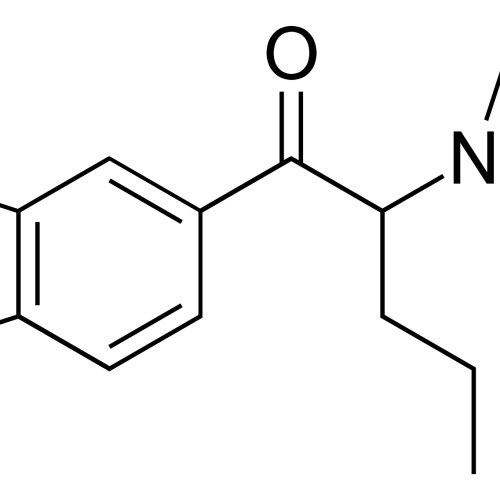
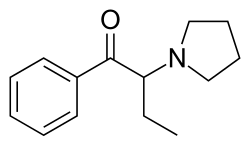
4-CL-PVP is also known as 4-chloro-α-PVP or 4-chloropyrovalerone. Its structure is 1-(4-chlorophenyl)-2-(pyrrolidin-1-yl)pentan-1-one. It retains the pyrrolidine ring and valerophenone side chain of α-PVP, with a chlorine substituent at the 4-position of the aromatic ring.
A 2016 forensic study identified 4-chloro-α-PVP in analytical material using LC-QTOF-MS, GC-MS and nuclear magnetic resonance. The paper also described characteristic fragmentation patterns useful for recognising pyrrolidinyl cathinones in forensic samples (Qian and colleagues, 2017).
Pharmacology
The UK Advisory Council on the Misuse of Drugs included 4Cl-α-PVP in its 2025 review of synthetic cathinones. The table summarised one transporter study, reporting inhibition values of 8 nM at the dopamine transporter (DAT), 70 nM at the norepinephrine transporter (NET) and 1,070 nM at the serotonin transporter (SERT). These results indicate substantially stronger activity at DAT and NET than at SERT (ACMD, Synthetic cathinones: an updated harms assessment, 2025).
The dataset is based on a single study, so the values should not be treated as a complete pharmacological profile or a direct measure of human potency.
Reported effects
Verified human accounts do not yet establish a characteristic 4-CL-PVP experience. The transporter findings are consistent with stimulant activity, but cannot establish which subjective effects people experience or how often.
Effects reported for α-PVP and other pyrrolidinophenones include stimulation, agitation, anxiety, paranoia and cardiovascular activation. These observations provide class context only; they should not be presented as confirmed clinical findings for 4-CL-PVP.
Toxicity and research limitations
No well-characterised clinical case series specific to 4-CL-PVP was identified in the sources reviewed here. Its acute toxic range, metabolism, dependence potential and long-term effects remain poorly documented. Analytical identification in seized material and transporter assays do not establish the frequency or severity of adverse reactions in humans.
Because it is structurally related to potent pyrrolidinophenones, concerns about dopaminergic and adrenergic stimulation are reasonable, but the clinical risk of this particular analogue requires direct study.
Related compounds
4-CL-PVP is related to α-PVP, 3F-α-PVP, α-PBP and α-PiHP. It is the para-chloro analogue of α-PVP.

Reviews
There are no reviews yet.