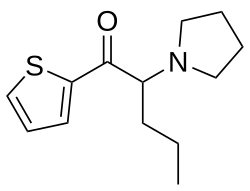
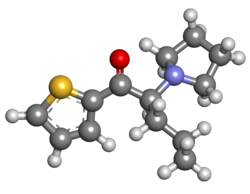
α-Pyrrolidinopentiothiophenone (α-PVT) is a synthetic cathinone in the pyrrolidinophenone group. It is a thiophene analogue of pyrovalerone: the phenyl ring is replaced by a thiophene ring, while the molecule retains the pyrrolidine-containing side chain. α-PVT has been detected in forensic investigations, including a series of 44 analytically confirmed cases, and laboratory research has described its metabolism and transporter activity.
Chemistry and history
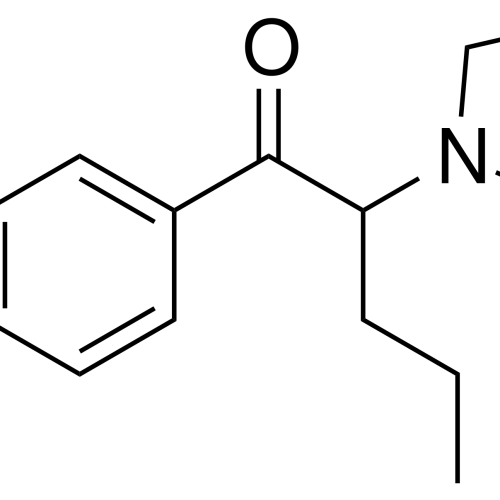
α-PVT contains a thiophene ring attached to a ketone-containing side chain with a pyrrolidine substituent. It is structurally related to α-PVP, but the aromatic phenyl group is replaced by a sulfur-containing heterocycle. This makes it distinct from the phenyl-based pyrovalerones and from cathinones that have a primary or N-methyl amino group.
Pharmacology
In vitro transporter studies classify α-PVT as a monoamine uptake inhibitor, with activity at dopamine and norepinephrine transporters and much weaker activity at serotonin transporters. A comparative study of substituted cathinones found that α-PVT was among the pyrrolidinophenones with a strong DAT-selective profile, although its relative preference for NET differed from several phenyl-based analogues (Eshleman and colleagues, 2017).
Animal research has also examined behavioural sensitisation and inflammatory signalling after α-PVT exposure. These experiments demonstrate biological activity, without establishing the long-term consequences of use in humans.
Reported effects
The available human descriptions are largely forensic rather than controlled subjective reports. A 2021 study of 44 analytically confirmed cases found a high incidence of aggressive or combative behaviour and psychotic changes. Almost all cases involved additional substances, including other stimulants, opioids, benzodiazepines, pregabalin or alcohol, so the clinical findings cannot be attributed to α-PVT alone (Paul and colleagues, 2021).
Metabolism
A metabolism study examined α-PVT in human hepatocytes and authentic urine specimens. Seven metabolites were identified in hepatocyte incubations, with additional hydroxylated and glucuronide products detected in urine. The main pathways involved oxidation of the pyrrolidine ring and modifications to the thiophene-containing structure (Swortwood and colleagues, 2016).
A broader study of pyrrolidinophenone metabolism found that α-PVT forms hydroxylated metabolites and lactams. It also identified CYP1A2, CYP2C9 and CYP2C19 as important contributors to its initial metabolism in the experimental systems used (Manier and colleagues, 2018).
Clinical and forensic findings
The 44-case forensic series reported plasma concentrations ranging from approximately 0.9 to 306 µg/L. The authors noted that the subjects were mostly experienced drug users and that co-consumption was extensive. They observed a relationship between impairment and concentration in some cases, but also found individuals with high concentrations and no obvious behavioural changes, possibly reflecting tolerance or individual differences.
Toxicity and research limitations
α-PVT has a more substantial forensic record than many newer cathinones, but mixed-drug exposure remains a major limitation when interpreting clinical symptoms. There is no controlled human study defining its acute toxic range, dependence potential or long-term effects.
Related compounds
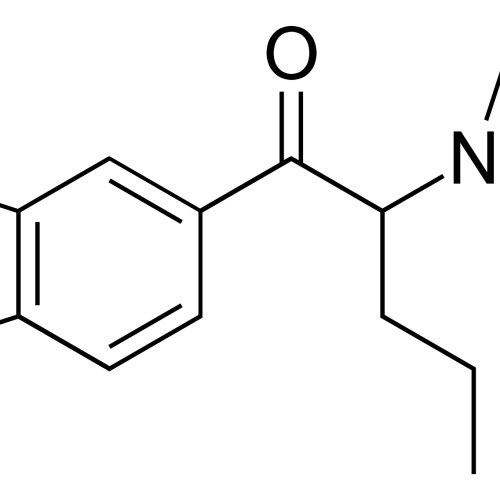
α-PVT is related to α-PVP, α-PBP, α-PHP and MDPHP. Its thiophene ring distinguishes it from the phenyl-based pyrovalerones.

Reviews
There are no reviews yet.