
Hexedrone, also known as β-propyl-methcathinone, is a synthetic cathinone stimulant. It is the higher homologue of pentedrone, with a longer alpha-carbon side chain, and the N-methyl analogue of N-ethylhexedrone. Hexedrone was identified in European drug seizures in 2013. Compared with newer cathinones, its pharmacology and clinical effects have received relatively little direct study.
Chemistry and history
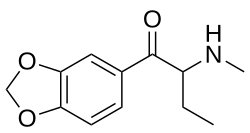
Hexedrone is a beta-keto amphetamine with a methyl group on the amino nitrogen and a butyl-length carbon chain attached to the carbonyl carbon. It belongs to the same homologous series as buphedrone and pentedrone. The European Monitoring Centre for Drugs and Drug Addiction recorded its first reported seizure in Poland in July 2013 (EMCDDA, Synthetic cathinones and injection).
Hexedrone should be distinguished from N-ethylhexedrone, often sold as HEX-EN. The latter has an ethyl group on the nitrogen and is a separate compound with a more extensive recent forensic record.
Pharmacology
Direct pharmacological studies of hexedrone are limited. Its structure places it among the stimulant cathinones, but the precise balance of dopamine, norepinephrine and serotonin transporter activity has not been established as clearly as it has for some related compounds.
Studies of N-ethyl-substituted analogues show that increasing the alpha-carbon side-chain length can change dopamine-transporter inhibition, cytotoxicity and behavioural effects. These findings are useful for understanding the broader chemical series, but they do not provide a direct measurement of hexedrone itself (Nadal-Gratacós and colleagues, 2023).
Subjective effects
The PsychonautWiki profile of hexedrone describes stimulant effects from a limited body of reliable reports. Users tend to compare it with other short-chain cathinones, but no consistent profile emerges from these comparisons.
Physical effects
Reported effects include stimulation, increased energy and physical restlessness. Some accounts mention jaw tension, sweating, reduced appetite and increased heart rate. As with other stimulants, sleep disruption and physical discomfort may follow prolonged wakefulness.
Cognitive effects
Users describe increased alertness, faster thoughts and a sense of motivation or focus. Euphoria and disinhibition are also mentioned, but reports are inconsistent. Anxiety, irritability and compulsive redosing appear among the less desirable effects.
Toxicity and research limitations
There is little compound-specific clinical toxicology for hexedrone. Much of the recent forensic literature concerns N-ethylhexedrone rather than hexedrone itself. Fatal cases involving the N-ethyl analogue should not be presented as direct evidence of hexedrone toxicity.
The available evidence does not establish a human toxic range, detailed metabolism, dependence potential or long-term effects. Its stimulant classification supports caution, but the precise risks remain poorly characterised.
Related compounds
Hexedrone is related to Pentedrone, N-Ethylhexedrone and N-Ethylpentedrone. It is the N-methyl analogue of N-ethylhexedrone and the higher homologue of pentedrone.

Reviews
There are no reviews yet.