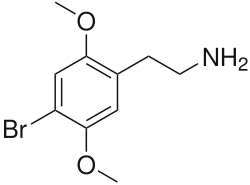
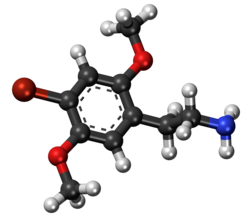
2C-B, or 4-bromo-2,5-dimethoxyphenethylamine, is a synthetic psychedelic in the 2C family of substituted phenethylamines. It was first synthesised in the 1970s and later became known as a recreational psychedelic. Its effects combine changes in visual perception and thought with some stimulant and empathogenic features. Unlike many newer research chemicals, 2C-B has been examined in controlled human studies as well as in laboratory pharmacology research.
History and chemistry
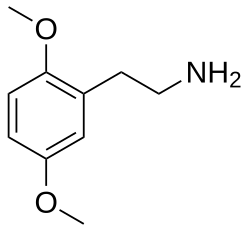
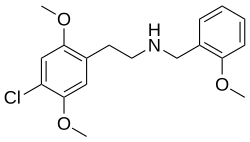
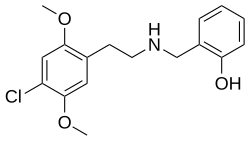
2C-B was synthesised by Alexander Shulgin in the 1970s and described in his work on psychoactive phenethylamines. Its structure contains methoxy groups at the 2- and 5-positions of the phenyl ring and a bromine atom at the 4-position. It is the parent compound for 25B-NBOMe and 25B-NBOH, which carry additional nitrogen substituents.
2C-B appeared in recreational markets during the 1980s and 1990s, sometimes sold under names such as Nexus. It has also been detected in tablets or powders represented as other substances, which can complicate reports of effects.
Pharmacology
2C-B acts primarily through serotonin receptors, particularly 5-HT2A and 5-HT2C. In vitro studies have described it as a partial agonist at these receptors, although the measured efficacy depends on the signalling pathway and experimental model. Its receptor profile differs from that of the more potent N-benzyl derivatives such as 25B-NBOMe (Toxicodynamic insights of 2C and NBOMe drugs, 2024).
Subjective effects
The PsychonautWiki profile of 2C-B describes a psychedelic experience with visual, emotional and sensory changes. Controlled research has now provided a more systematic picture. A 2026 double-blind, placebo-controlled study in 24 healthy participants found dose-related subjective effects, including psychedelic alterations in consciousness and increased emotional empathy. At the highest dose studied, the overall drug effect was comparable to MDMA, while anxiety-related effects were lower than those observed with psilocybin in that trial (Acute dose-dependent effects of 2C-B, 2026).
Visual and sensory effects
Reports commonly describe intensified colours, geometric patterns, changes in visual detail and distortions of movement or perspective. Some users notice changes in tactile sensitivity and sound perception. The character of the visual effects varies, and not every experience is dominated by hallucinations.
Cognitive and emotional effects
Changes in thought, introspection and time perception are reported alongside euphoria and emotional openness. Some accounts describe increased sociability and appreciation of music. Anxiety, confusion or an uncomfortable sense of overstimulation can also occur, particularly when the experience becomes more intense than expected.
Physical effects
Physical reports include increased heart rate, nausea, muscle tension, sweating and changes in body temperature. In the 2026 controlled study, 2C-B produced autonomic changes, although the pattern differed from the MDMA and psilocybin comparison conditions.
Clinical evidence and safety
Clinical reports have described agitation, anxiety, hallucinations and occasional acute psychiatric symptoms after 2C-B exposure. Interpretation can be difficult because products may contain other substances and some reports rely on self-identification rather than analytical confirmation. A review of the 2C family discusses these limitations and the relatively small number of confirmed intoxications (2C or Not 2C: Phenethylamine Designer Drug Review, 2013).
The controlled human study adds evidence on acute subjective and autonomic effects, but it does not establish the consequences of repeated exposure or the risk of rare severe reactions. Long-term effects remain insufficiently studied.
Related compounds
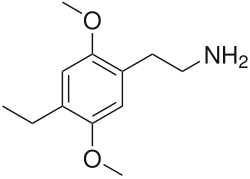
2C-B is related to 2C-C, 2C-D, 2C-E, 2C-I and 2C-B-FLY. Its N-benzyl derivatives include 25B-NBOMe and 25B-NBOH, which have substantially different receptor potency.
Reviews
There are no reviews yet.