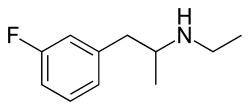
3-Fluoroethamphetamine (3-FEA) is a synthetic amphetamine derivative with a fluorine atom at the 3-position of the phenyl ring and an ethyl group attached to the terminal nitrogen. It is usually described as a stimulant with entactogenic features. Compared with 3-FA, user reports place greater emphasis on emotional effects and a mixture of stimulation and sedation.
Chemistry
3-FEA is the 3-fluorinated analogue of ethylamphetamine. Its structure combines the alpha-methylated phenethylamine backbone with an N-ethyl substitution and a meta-fluorine atom. It is related to 2-FEA and 3-FA, but differs from both in the combination of ring position and nitrogen substitution.
It is also structurally related to fenfluramine, although the substituent on the phenyl ring is different. This comparison is useful for describing the chemical family, but it does not establish that the compounds have the same pharmacology.
Pharmacology
Human pharmacological data on 3-FEA are limited. Based on its structure and reports about related compounds, it has been proposed to act on the dopamine, norepinephrine and serotonin systems. Anecdotal descriptions often characterise it as more serotonin-oriented than conventional amphetamine-like stimulants, with a mixture of stimulant and entactogenic effects.
Animal research provides some additional information. A study published in 2023 examined repeated 3-FEA exposure and subsequent withdrawal in mice. The researchers reported changes in activity and depression-like behaviour after the administration period. These results indicate that repeated exposure can produce measurable behavioural changes in animals, but they cannot be used to predict withdrawal in humans (Jo and colleagues, 2023).
Subjective effects
The experience described in the PsychonautWiki 3-FEA profile is based mainly on anecdotal reports. It is often compared with 4-FA, although some users describe less pronounced stimulation and a more sedating character.
Physical effects
A combination of stimulation and sedation is a recurring feature. Some accounts describe a sense of bodily heaviness, while others report lightness and a strong tingling body sensation. Physical euphoria and tactile enhancement are also mentioned.
Reported side effects include increased heart rate and blood pressure, sweating, raised body temperature, vasoconstriction and dehydration. Dry mouth, headaches, difficulty urinating, appetite suppression, pupil dilation and teeth grinding also appear in user accounts. Some reports mention nausea or diarrhoea.
Cognitive and emotional effects
Users often describe empathy, affection and greater sociability. Users report increased appreciation of music, immersion, motivation and cognitive euphoria. Disinhibition and a temporary reduction in anxiety may also occur.
Thought patterns can change during the experience. Some accounts describe faster thinking at first, followed by slower or less organised thoughts later on. Anxiety may return as the main effects fade. Compulsive redosing, increased libido and time distortion are also reported.
After-effects
Reported after-effects include anxiety, cognitive fatigue, depression, irritability and reduced motivation. Pupil dilation, slowed thinking and lingering wakefulness are also mentioned. How often these effects occur, and how long they last, is unclear from the available accounts.
Toxicity and research limitations
The human toxicity of 3-FEA has not been adequately studied. The 2023 mouse study adds evidence that repeated exposure can be followed by behavioural changes, but it does not establish a human withdrawal syndrome or a clinical risk estimate. Its proposed serotonin-releasing activity also raises questions about cardiovascular and other longer-term effects that have not been answered by direct research on this compound.
There are not enough clinical data to define its metabolism, interactions or long-term consequences. Much of the description of its subjective effects remains anecdotal.
Related compounds
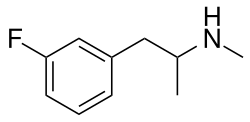
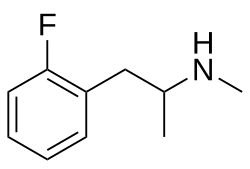
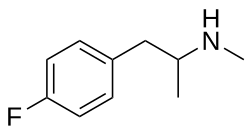
3-FEA is related to 2-FEA, 3-FA, 3-FMA, 4-FA and 4-FMA. It is particularly often compared with 3-FA because the two share the same ring substitution, while the N-ethyl group in 3-FEA changes the structure and may contribute to its different reported profile.

Reviews
There are no reviews yet.