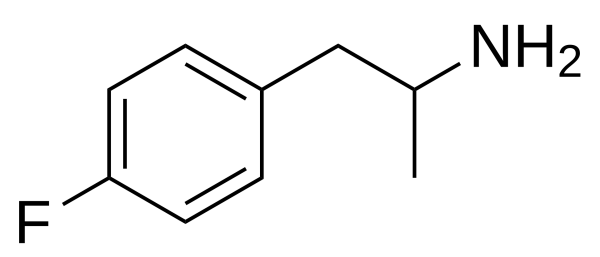
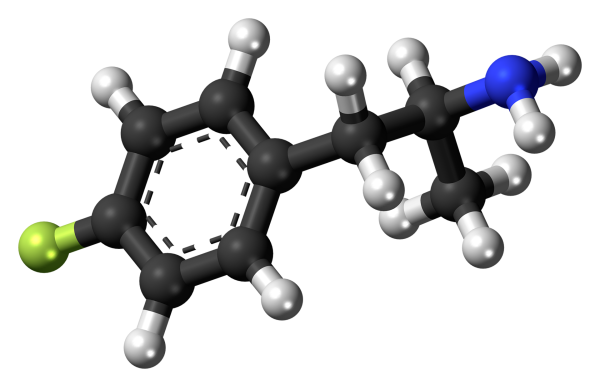
4-Fluoroamphetamine (4-FA), also known as 4-FMP or para-fluoroamphetamine, is a synthetic stimulant with both amphetamine-like and entactogenic effects. It is a para-substituted analogue of amphetamine, with a fluorine atom at the 4-position of the phenyl ring. User reports describe a progression from an early phase with MDMA-like emotional effects to a more conventional stimulant phase.
Chemistry
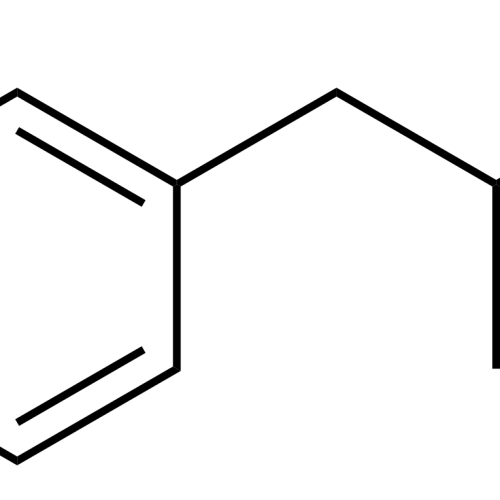
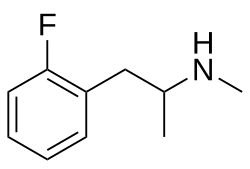
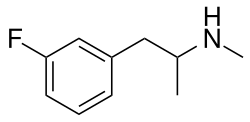
4-FA belongs to the ring-substituted amphetamines. Its structure differs from amphetamine by a fluorine atom at the para position of the aromatic ring. It is a positional isomer of 2-FA and 3-FA and is part of the wider group of fluorinated amphetamines that includes 2-FMA and 3-FEA.
Pharmacology
Unlike compounds whose effects are thought to be driven mainly by dopamine and norepinephrine, 4-FA has activity across all three major monoamine systems. It acts as a releasing agent and reuptake inhibitor involving dopamine, norepinephrine and serotonin. This broader profile is thought to account for the combination of stimulation and entactogenic effects.
Laboratory studies of para-halogenated amphetamines have shown interactions with the dopamine, norepinephrine and serotonin transporters. A review of amphetamine-like new psychoactive substances discusses how these transporter profiles relate to stimulant and MDMA-like effects (Simmler and Liechti, 2018).
Subjective effects
The descriptions below are based mainly on user reports collected in the PsychonautWiki profile of 4-FA. A recurring feature is the change in character over the course of the experience: the initial period is often described as more emotional and entactogenic, followed by a longer-lasting stimulant effect.
Physical effects
Stimulation is usually described as moderate rather than forceful. Early in the experience, some users report a degree of physical calm or relaxation alongside the increase in energy. This may give way to a more recognisable amphetamine-like stimulation later on.
A strong tingling body sensation and physical euphoria are among the more distinctive reports. Other reported effects include reduced appetite, increased heart rate and blood pressure, sweating, dehydration, raised body temperature, dry mouth and teeth grinding. Muscle contractions, headaches, difficulty urinating and temperature-regulation problems are also mentioned.
Visual and auditory effects
Visual changes are generally less prominent than the emotional and physical effects. Some users describe stronger colour intensity and pattern recognition. Auditory reports include enhanced hearing, sound distortion and occasional auditory hallucinations.
Cognitive and emotional effects
Empathy, affection and sociability are frequently mentioned. Some users compare these effects with MDMA, although they are often described as less intense. Cognitive euphoria may occur in waves, while music appreciation, novelty and immersion can become more pronounced.
Other reports include faster thoughts, increased focus, disinhibition and reduced anxiety. These effects can coexist with physical stimulation. As the experience fades, some users describe irritability, disorganised thinking or difficulty switching off.
After-effects
Reported after-effects include anxiety, headaches, cognitive fatigue, depression and reduced motivation. Some accounts mention “brain zaps”, sleep paralysis, lingering wakefulness and slowed or disorganised thinking. Suicidal ideation has also been reported in the context of misuse, although it is unclear how often this occurs.
Toxicity and clinical reports
4-FA has one of the more substantial clinical toxicology records among the fluorinated amphetamines. A prospective Dutch poison-centre study followed 45 people who reported exposure in 2016. All experienced adverse effects; severe toxicity was reported in eight cases, including two deaths, cerebral haemorrhage, cardiomyopathy, myocardial infarction and acute heart failure. The study involved patients referred to a poison centre and should not be interpreted as a measure of risk for every exposure, but it documents serious cardiovascular and neurological complications (Hondebrink and colleagues, 2018).
Cardiogenic shock has also been documented in individual cases of analytically confirmed 4-FA exposure (Al-Abri and colleagues, 2014). Other clinical reports describe seizures, hyperthermia, rhabdomyolysis and severe confusion. These findings contradict the idea that the compound is a mild or low-risk alternative to conventional stimulants.
Although its pharmacology is better described than that of several related compounds, its long-term effects and full toxicological profile remain uncertain. The available clinical evidence points to potentially serious acute cardiovascular and neurological harm.
Related compounds
4-FA is related to 2-FA, 3-FA, 2-FMA, 3-FEA and 4-FMA. Its combination of stimulant and entactogenic effects is often compared with 3-FEA and 4-FMA, although the compounds differ in both chemical structure and reported effects.

Reviews
There are no reviews yet.