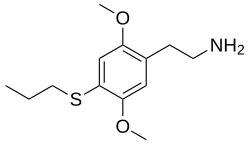
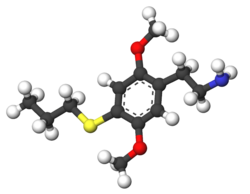
2C-T-7, or 4-propylthio-2,5-dimethoxyphenethylamine, is a synthetic psychedelic in the sulfur-substituted 2C-T family. It has a propylthio group at the 4-position of the phenyl ring and acts primarily through serotonin 5-HT2A and 5-HT2C receptors. Unlike many less documented 2C compounds, 2C-T-7 has a substantial forensic record that includes fatal poisonings, severe agitation, seizures and cardiovascular collapse.
Chemistry and history
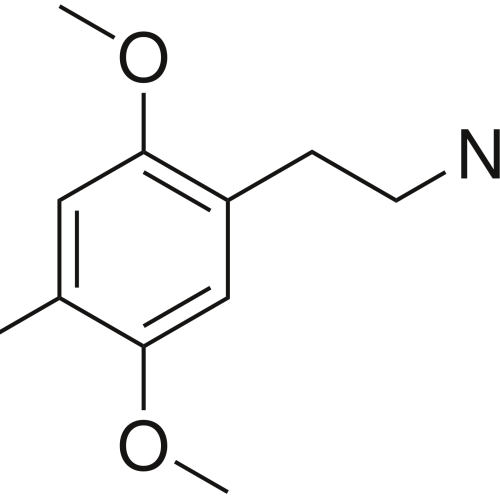
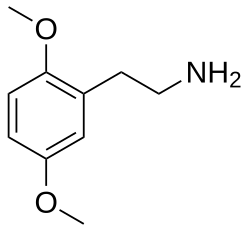
2C-T-7 contains the 2,5-dimethoxyphenethylamine backbone, with a propylthio substituent at the 4-position. It is related to 2C-T and 2C-T-2, which have shorter methylthio and ethylthio groups. It appeared on recreational drug markets in the early 2000s and was included in a European risk assessment alongside 2C-T-2 and 2C-I.
Pharmacology
Animal studies found that 2C-T-7 produces hallucinogen-like responses mediated largely by the 5-HT2A receptor. It showed nanomolar affinity at 5-HT2A and 5-HT2C receptors, and its behavioural effects in mice and rats were reduced by a selective 5-HT2A antagonist (Fantegrossi and colleagues, 2005).
A broader study of 4-thio-substituted phenethylamines found high affinity and partial agonist activity at 5-HT2A and 5-HT2B receptors. These interactions support a serotonergic psychedelic profile, while the compounds showed little activity at monoamine transporters in the tested assays (Luethi and colleagues, 2018).
Subjective effects
The PsychonautWiki profile of 2C-T-7 describes visual changes, emotional intensity and stimulation during the psychedelic experience. Historical user accounts also mention nausea, vomiting, anxiety, confusion and disorientation. These anecdotal accounts cannot predict how an individual exposure will unfold.
Visual and cognitive effects
Reports describe visual patterning, changes in colour and depth perception, and altered thought processes. Emotional responses may include euphoria or feelings of well-being, but anxiety, panic and disorganised thinking are also reported.
Physical effects
Nausea and vomiting are recurrent in historical accounts. Clinical intoxications have involved agitation, tremor, seizures, hyperthermia and severe cardiovascular or respiratory complications. These serious effects distinguish the forensic record of 2C-T-7 from the much thinner evidence available for some other 2C-T compounds.
Clinical and forensic findings
A post-mortem study identified 2C-T-7 in a 20-year-old man who died after exposure. The compound was quantified in blood, urine and liver, providing one of the early analytically confirmed fatal cases (Curtis and colleagues, 2003).
Later reviews describe three deaths associated with 2C-T-7, including cases involving severe agitation, aggression, seizures and cardiopulmonary arrest. Some involved other substances, so not every outcome can be attributed to 2C-T-7 alone (2C or Not 2C: Phenethylamine Designer Drug Review, 2013).
Metabolism and toxicity
Rat studies identified hydroxylation of the propylthio side chain, sulfoxidation, deamination and oxidation among the metabolic pathways of 2C-T-7 (Theobald and colleagues, 2005). Human metabolism is less fully characterised.
The European risk assessment concluded that the available evidence raised serious health concerns and recommended control. Severe intoxications and fatalities have been reported, but the number of cases is too small to establish a reliable concentration threshold or quantify risk across all exposures (EMCDDA risk assessment, 2003).
Related compounds
2C-T-7 is related to 2C-T and 2C-T-2, as well as the broader 2C series. Its propylthio substituent distinguishes it from the shorter-chain sulfur analogues.
Reviews
There are no reviews yet.