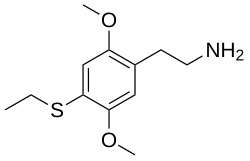
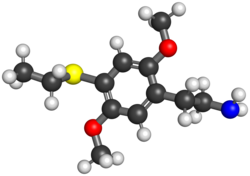
2C-T-2, or 4-ethylthio-2,5-dimethoxyphenethylamine, is a synthetic psychedelic in the sulfur-substituted 2C-T series. It has an ethylthio group at the 4-position of the phenyl ring and acts primarily through serotonin receptors. The compound was reviewed by European drug-monitoring authorities in 2003. At that time, human information consisted mainly of self-reports, with no confirmed fatal or non-fatal intoxications attributed to it.
Chemistry and history
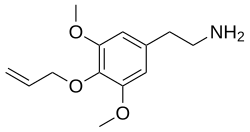
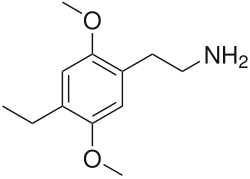
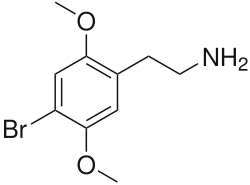
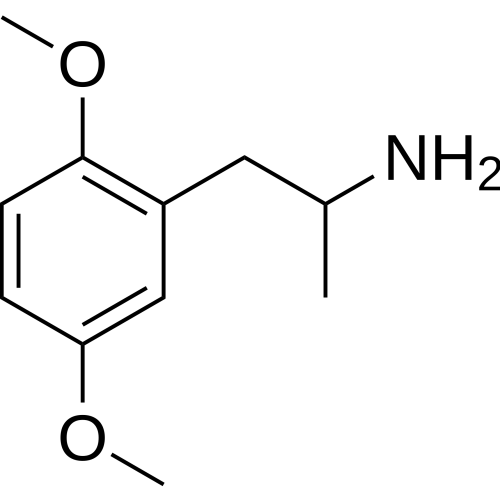
2C-T-2 contains the 2,5-dimethoxyphenethylamine backbone common to the 2C family. Its 4-position ethylthio group distinguishes it from 2C-T, which has a methylthio group, and 2C-T-7, which has a propylthio group.
The compound was first synthesised in the early 1980s and later appeared in online and recreational drug markets. The European Monitoring Centre for Drugs and Drug Addiction carried out a formal risk assessment in 2003, alongside assessments of 2C-I and 2C-T-7 (EMCDDA risk assessment, 2003).
Pharmacology
Laboratory research on 4-thio-substituted phenethylamines found high affinity for 5-HT2A and 5-HT2C receptors. The compounds acted as partial agonists at 5-HT2A, a mechanism consistent with psychedelic activity. They did not potently inhibit monoamine uptake in the transporter assays used (Luethi and colleagues, 2018).
A later mouse study found that 2C-T-2 produced a head-twitch response, a behavioural model associated with 5-HT2A activation. The study supports its classification as a serotonergic psychedelic, but does not establish a human potency or clinical effect profile (4-thio-substituted phenylalkylamine study, 2022).
Subjective effects
The PsychonautWiki profile of 2C-T-2 draws on anecdotal reports. The 2003 European assessment also summarised users’ descriptions of visual and emotional changes, along with comparisons to other psychedelics. Some respondents described anxiety, paranoia, panic, nausea, muscle tension, vomiting and disorientation.
The reports were not collected in controlled conditions. They do not establish how common any particular effect is or whether the experience is consistent between individuals.
Metabolism
A rat study identified several metabolic pathways, including O-demethylation, deamination and oxidation. The work also developed analytical methods for detecting 2C-T-2 and its metabolites in urine (Theobald and colleagues, 2005).
Studies of the wider 2C series found that MAO-A and MAO-B are major enzymes involved in deamination. CYP2D6 also contributed to the metabolism of 2C-T-2 to a lesser extent. These are laboratory findings and do not define the clinical importance of potential interactions in people (Theobald and Maurer, 2007).
Toxicity and research limitations
The 2003 European assessment found no confirmed fatal or non-fatal intoxication cases attributed to 2C-T-2 at that time. It also noted that there were no dedicated clinical or preclinical studies establishing its acute or chronic toxicity. This absence of reports is not proof of safety; it reflects the limited evidence available.
Dependence potential and long-term effects have not been adequately studied. The European Council subsequently included 2C-T-2 in control measures in 2003 (Council Decision 2003/847/JHA).
Related compounds
2C-T-2 is related to 2C-T and 2C-T-7. All three share the sulfur-substituted 2,5-dimethoxyphenethylamine framework, but differ in the length of the thioalkyl group.
Reviews
There are no reviews yet.