
Methoxetamine (MXE), sometimes called Mexxy, is a synthetic dissociative in the arylcyclohexylamine family. It is structurally related to ketamine and phencyclidine (PCP), with an ethylamine group and a methoxy substituent on the phenyl ring. MXE appeared on the research-chemical market in the early 2010s and became known for a longer-lasting, often more stimulating experience than ketamine. It has been associated with severe intoxications and was brought under control in the European Union in 2015.
History
MXE emerged as a research chemical in the early 2010s and was marketed as a legal alternative to ketamine. It was sometimes promoted as less harmful to the urinary tract, although this claim was not supported by adequate clinical evidence. Reports of acute intoxications, psychiatric disturbances and deaths led to a formal European risk assessment in 2014. The European Union subsequently subjected methoxetamine to control measures in 2015 (EMCDDA risk assessment, 2014; EU Council decision, 2015).
Chemistry
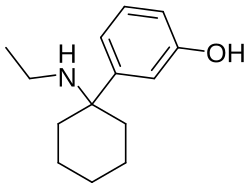
MXE is a chiral arylcyclohexylamine. Its structure contains a cyclohexanone ring, an ethylamine substituent and a methoxy group at the 3-position of the phenyl ring. It is often produced as a racemic mixture of two enantiomers. The structure is related to both ketamine and PCE, but the additional methoxy group and N-ethyl substitution give it a distinct pharmacological profile.
Pharmacology
MXE acts as a non-competitive NMDA receptor antagonist. A receptor-screening study measured an affinity of 259 nM at the NMDA PCP site. The same study found affinity at the serotonin transporter (SERT), with a reported value of 481 nM. This combination may help explain why MXE has been described as both dissociative and more emotionally or perceptually stimulating than ketamine (Roth and colleagues, 2013).
Preclinical research has also reported effects on dopamine signalling in the mesolimbic pathway. A review of case reports and animal findings discusses how these actions may contribute to the desired effects as well as agitation, psychosis and other adverse reactions (Zanda and colleagues, 2016).
Subjective effects
The PsychonautWiki profile of methoxetamine includes reports of dissociation that feels more euphoric and clear-headed than with ketamine or dextromethorphan. The profile is based largely on user accounts, so the effects should not be regarded as predictable.
Physical effects
Sedation and bodily disconnection are common themes. Users describe a tingling sensation, often localised to the hands, feet or head, and a feeling of bodily lightness or weightlessness. This can coexist with impaired coordination and balance. Tactile suppression, pain relief and spatial disorientation are also reported.
Other reported effects include nausea, dizziness, optical sliding and changes in sexual response. Stronger experiences may involve substantial motor impairment, making ordinary movement difficult.
Visual effects
Visual suppression is more prominent in many reports than elaborate visual enhancement. It can include reduced visual acuity, double vision, difficulty recognising patterns and a perceived reduction in frame rate. Some users describe the environment as fragmented or separated into holes, spaces and voids.
Cognitive effects
MXE is often described as euphoric, introspective and relatively clear-headed compared with ketamine. Reported effects include conceptual thinking, creativity, increased appreciation of music, immersion, disinhibition and anxiety suppression. Changes in time perception and memory are also common descriptions.
Amnesia, depersonalisation and derealisation may occur as dissociation intensifies. Mania is reported less often than with more stimulating PCP analogues, but has been associated with repeated or compulsive use. Compulsive redosing is another recurring concern.
Auditory and dissociative effects
Auditory changes include suppression, distortion and occasional hallucinations. Tactile, visual and consciousness disconnection can progress into a deeply detached state, sometimes compared with the ketamine “hole”. Some accounts describe an afterglow involving relaxation, renewed appreciation of music or lingering changes in mood.
Clinical toxicity
Clinical reports have documented acute intoxications involving agitation, confusion, tachycardia, hypertension, hallucinations, seizures and impaired consciousness. In its risk assessment, the EMCDDA reported deaths in which MXE was detected post-mortem, as well as non-fatal intoxications. The presence of other substances in some cases complicates attribution, but the reports establish that serious harm has occurred.
A review of clinical cases and preclinical findings concluded that MXE should not be considered a safe substitute for ketamine. It highlighted both dissociative and stimulant effects, along with reports of severe psychiatric and neurological complications (Zanda and colleagues, 2016).
Metabolism and long-term effects
Metabolism includes N-deethylation and O-demethylation, producing metabolites that may retain NMDA receptor activity. In laboratory experiments, O-desmethyl-MXE showed stronger NMDA receptor inhibition than the parent compound, while N-desethyl-MXE was less potent (Irie and colleagues, 2022).
The long-term effects of repeated MXE exposure are not fully understood. Reports of dependence, memory problems, urinary symptoms and persistent psychiatric effects have raised concern, but their frequency remains uncertain in the clinical literature.
Related compounds
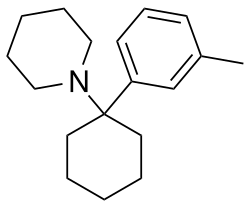
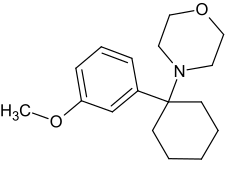
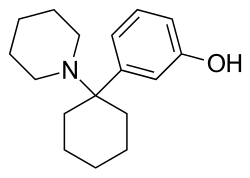
MXE is related to O-PCE, DMXE, MXiPr, MXPr and HXE. These compounds share parts of its arylcyclohexylamine structure but differ in the substituent on the phenyl ring or the group attached to nitrogen.
Reviews
There are no reviews yet.