Cathinones
Cathinone occurs naturally in khat (Catha edulis), a plant whose leaves have long been chewed for their stimulant effects in parts of East Africa and the Arabian Peninsula. Synthetic cathinones are a much larger collection of laboratory-made compounds based on the same general structure. They are often called beta-keto amphetamines because of a carbonyl group on the beta carbon of the side chain.
That chemical feature links compounds such as 3-MMC, mephedrone, methylone and methcathinone. It is also found in pyrrolidine-containing compounds. These overlap with the pages on pyrovalerones and pyrrolidinophenones. The broader stimulants overview sets cathinones alongside other stimulant families.
The beta-keto feature
A cathinone has a phenethylamine-related skeleton with a ketone group at the beta position of its side chain. Beyond that shared feature, chemists can modify the aromatic ring, the nitrogen atom and the carbon chain. These changes can affect how a molecule is metabolised, how it reaches the brain and how it interacts with dopamine, noradrenaline and serotonin transporters.
The differences are not always obvious from a name. Mephedrone (4-MMC) and 3-MMC, for example, are not two names for the same compound. The methyl group occupies a different position on the aromatic ring. Similar distinctions arise when compounds have different nitrogen substituents or side-chain lengths. Those details matter when comparing laboratory results.
Two different ways of affecting monoamine transporters
Much of the pharmacological literature focuses on three transporters: DAT for dopamine, NET for noradrenaline and SERT for serotonin. Some cathinones act as transporter substrates. They enter nerve terminals and promote the release of stored monoamines. Others mainly block reuptake, slowing the removal of neurotransmitters from the synaptic space.
Mephedrone and methylone show releasing activity across monoamine systems, although the relative contribution of each transporter differs. Methcathinone has a more catecholamine-focused profile in many experimental models. MDPV and alpha-PVP, by contrast, are better known as potent DAT and NET reuptake inhibitors. A 2024 review of synthetic cathinone epidemiology and toxicity discusses the range of compounds and the evidence behind these distinctions.
The data show too much variation to describe the entire family in terms of one familiar drug. Even modest structural changes can alter transporter selectivity and functional activity; the 2024 structure-activity review looks at how these changes affect interactions with monoamine transporters.
What recent monitoring has found
Synthetic cathinones have remained visible in European drug-market surveillance. The European Drug Report 2026 records 69 previously reported synthetic cathinones detected on the EU market in 2024 and four new cathinones notified in 2025. It also describes cases in which N-ethylnorpentedrone (NEP) was sold as 3-MMC, leading to unintended exposure and poisonings.
That kind of substitution complicates both clinical care and surveillance. A product name, online description or appearance cannot establish its chemical contents. If a person becomes unwell, the symptoms alone may not identify which cathinone was involved, particularly when more than one substance is present.
Acute effects and clinical concerns
Stimulant effects may include increased wakefulness, activity and heart rate. Reported adverse reactions range from anxiety, agitation and insomnia to hypertension, overheating, seizures, psychosis and cardiovascular complications. Severe cases have also involved muscle breakdown, kidney injury and altered consciousness. Compounds with substantial effects on serotonin signalling raise additional concerns, particularly when combined with other serotonergic substances.
Case reports are valuable because they can alert clinicians to complications that might otherwise be missed. They cannot, however, tell us how frequently those complications occur across all cathinones. Findings from transporter assays, animal studies and clinical reports answer different questions and should not be treated as interchangeable evidence.
Identifying a compound in a sample
Forensic laboratories may use GC-MS, LC-MS/MS and high-resolution mass spectrometry to identify cathinones and their metabolites. Closely related positional isomers can be difficult to distinguish, so validated chromatographic separation and suitable reference standards may be needed. A screening method developed for older substances can also miss newer derivatives or produce an incomplete result.
Identification, concentration and purity are separate analytical questions. Confirming that a cathinone is present does not show how evenly it is distributed through a sample, whether other compounds are present or whether the material is safe. For many newer cathinones, controlled human data and long-term follow-up remain limited.
Common questions
Are synthetic cathinones simply another form of amphetamine?
They share a related chemical framework, but the beta-keto group and other substitutions can change their pharmacology. Some cathinones promote monoamine release; others mainly inhibit reuptake.
Do pyrovalerones belong to the cathinone family?
Yes. Pyrovalerones are generally treated as a specialised branch of synthetic cathinones and are also described as pyrrolidinophenones because of their nitrogen-containing ring structure.
Can a product label tell you which cathinone it contains?
No. A label states what a product is supposed to contain; it does not verify its contents. Reliable identification requires an appropriate laboratory method.
Showing 17–30 of 30 results
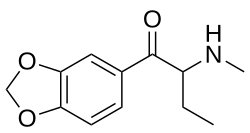
Butylone
Price range: $450.00 through $8,700.00Select options This product has multiple variants. The options may be chosen on the product page
DMC
Price range: $450.00 through $8,700.00Select options This product has multiple variants. The options may be chosen on the product pageEphylone
Price range: $450.00 through $8,700.00Select options This product has multiple variants. The options may be chosen on the product pageEthcathinone
Price range: $450.00 through $8,700.00Select options This product has multiple variants. The options may be chosen on the product pageEthylone
Price range: $450.00 through $8,700.00Select options This product has multiple variants. The options may be chosen on the product pageEutylone
Price range: $450.00 through $8,700.00Select options This product has multiple variants. The options may be chosen on the product pageHexedrone
Price range: $450.00 through $8,700.00Select options This product has multiple variants. The options may be chosen on the product pageMephedrone
Price range: $450.00 through $8,700.00Select options This product has multiple variants. The options may be chosen on the product pageMethcathinone
Price range: $450.00 through $8,700.00Select options This product has multiple variants. The options may be chosen on the product pageMethylone
Price range: $450.00 through $8,700.00Select options This product has multiple variants. The options may be chosen on the product pageMexedrone
Price range: $450.00 through $8,700.00Select options This product has multiple variants. The options may be chosen on the product pageN-Ethylhexedrone
Price range: $450.00 through $8,700.00Select options This product has multiple variants. The options may be chosen on the product pageN-Ethylpentedrone
Price range: $450.00 through $8,700.00Select options This product has multiple variants. The options may be chosen on the product pagePentedrone
Price range: $450.00 through $8,700.00Select options This product has multiple variants. The options may be chosen on the product page